

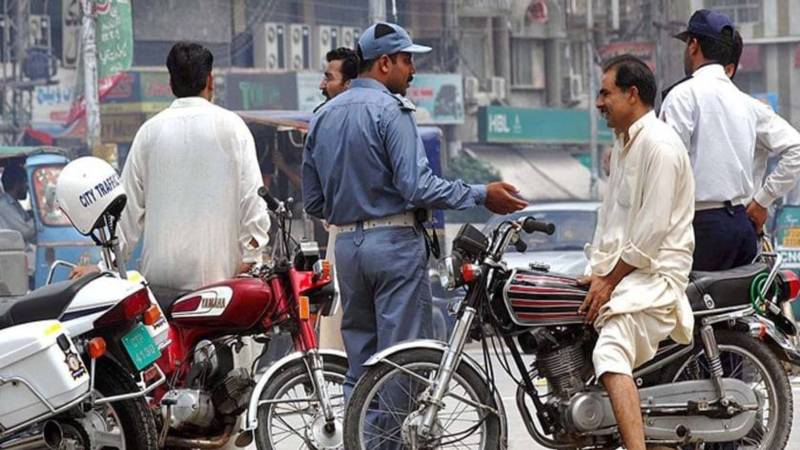
The Punjab government’s recent Motor Vehicle Ordinance 2025 introduces stringent traffic fines, but for many residents, this focus seems disconnected from their daily realities. While the intention behind stricter penalties is to improve road safety and discipline, many believe it is unfair to burden the common man with hefty fines.
For ordinary citizens, these penalties feel out of touch with daily struggles. When people are battling inflation, scarce healthcare, and a lack of quality education, such punitive measures raise serious questions about government priorities. An elderly mason from Shujaabad, Shams ul Haq, recently expressed his fear of losing a week’s income to a traffic fine. “How can I pay a fine when I can barely afford bread for my family?” he asked. His story echoes across Punjab, where corruption, nepotism, and feudal influences continue to deny people their basic rights.
It is not that traffic laws should be ignored; road safety matters. But governance should mean more than just enforcing rules on the weak while ignoring bigger injustices. Public welfare demands the government focus on affordable healthcare, reliable education, and fair opportunities, not just penalties. People deserve more than fines – they deserve facilities and fairness.
The enforced Motor Vehicle Ordinance 2025 sits ready to extract Rs100,000 from a motorist lacking a fitness certificate or imprison them for six months. Meanwhile, in hospitals across Punjab, patients lie on floors for want of beds. In markets, a kilogram of flour costs what a labourer cannot afford. The irony is stark: Punjab’s government has found the will and resources for sweeping traffic reforms after sixty years, yet continues to stumble through fundamental governance failures.
Real progress in Punjab will come not from harsher penalties, but from policies that uplift the common man and address the roots of hardship
Chief Minister Maryam Nawaz’s ambitious traffic overhaul nonetheless represents commendable administrative ambition. The ordinance is administratively complex and impressively detailed. But it exposes a troubling truth about institutional priorities in a province where a huge percentage of the population lives below the poverty line, where infant mortality remains stubbornly high, and where corruption consumes public resources meant for roads, schools, and clinics.
The real question is not whether the law is stringent enough, but whether enforcement energy directed at traffic violations might have been better deployed elsewhere. When hospitals report equipment shortages, when education budgets remain chronically underfunded, and when inflation erodes purchasing power, then announcing weighty penalties for enforcing traffic rules is like steering a sinking ship while ignoring the holes in the hull.
Traffic rules should indeed be strict, but only after creating an environment where citizens can easily follow them. For now, the daily pressures faced by Punjab’s residents, ranging from basic survival to navigating a system rife with inefficiencies, demand more attention than traffic violations.
Real progress in Punjab will come not from harsher penalties, but from policies that uplift the common man and address the roots of hardship. The government’s priority should be to provide necessities, control inflation, and promote transparency and accountability. Only then will reforms be meaningful, not merely symbolic.