

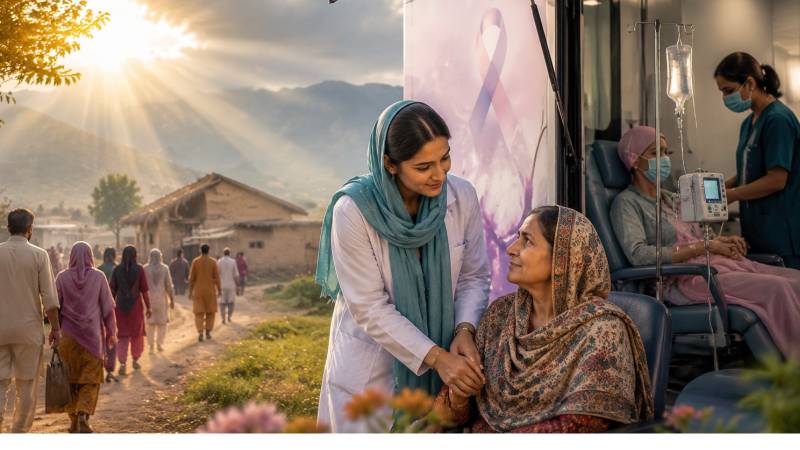
Cancer has become one of the defining health challenges of our time. Every year, millions of people across the world receive a diagnosis that changes the course of their lives and the lives of their families. Tremendous advances in medical science have transformed the treatment of many cancers, making survival possible where it was once unimaginable. Yet these advances have not benefited everyone equally. For millions living in low- and middle-income countries, cancer remains not only a medical condition but also a reflection of inequality. Access to early diagnosis, specialized treatment, and modern technology often depends more on where a person lives than on the nature of the disease itself. This unequal distribution of healthcare resources has created one of the greatest ethical challenges in modern medicine.
In developed countries, cancer care is supported by integrated healthcare systems where patients can move from diagnosis to treatment with relative efficiency. Sophisticated imaging facilities, pathology laboratories, specialized surgeons, radiation oncology departments, chemotherapy services, and rehabilitation programs work together to provide comprehensive care. In contrast, patients in resource-constrained settings frequently encounter delayed diagnoses, shortages of specialists, inadequate treatment facilities, and financial hardships that prevent them from completing therapy. A disease that could have been treated successfully often becomes life-threatening simply because care was unavailable or inaccessible.
The growing global burden of cancer makes this challenge even more urgent. Population growth, increasing life expectancy, environmental pollution, unhealthy lifestyles, tobacco use, obesity, chronic infections, and occupational exposures have all contributed to rising cancer incidence. Health systems that are already struggling to manage infectious diseases and maternal health now face the additional burden of non-communicable diseases requiring highly specialized care. Unless countries invest strategically in cancer prevention, diagnosis, and treatment, this burden will continue to grow in the coming decades.
One of the greatest advances in modern oncology has been the application of nuclear science to medicine. Although the term "nuclear" often evokes concerns associated with power generation or weapons, its contribution to healthcare has been overwhelmingly positive. Nuclear medicine and radiation technologies have revolutionized the diagnosis and treatment of cancer by enabling physicians to identify disease earlier, determine its extent more accurately, and deliver treatment with remarkable precision.
Modern imaging techniques provide clinicians with detailed information about both the structure and biological activity of tumors. They help distinguish benign from malignant lesions, determine whether cancer has spread, monitor treatment response, and identify recurrence long before symptoms become obvious. Accurate diagnosis forms the foundation of effective cancer treatment. Without reliable imaging and pathology services, clinicians are forced to make decisions based on incomplete information, reducing the likelihood of successful outcomes.
Radiotherapy represents another indispensable component of comprehensive cancer care. Nearly half of all cancer patients require radiation treatment at some point during their illness, either to cure the disease, reduce the risk of recurrence, or relieve distressing symptoms such as pain and bleeding. Modern radiotherapy delivers carefully calculated doses of radiation directly to cancer cells while minimizing damage to surrounding healthy tissues. Technological advances have made treatment safer, more accurate, and more effective than ever before.
Despite its proven value, access to radiotherapy remains one of the most unequal aspects of global healthcare. Many developing countries have only a handful of treatment machines to serve populations numbering in the tens of millions. In some regions, patients must travel hundreds of kilometers for every treatment session, often staying away from home for several weeks. The financial burden of transportation, accommodation, and lost income can become overwhelming, forcing many families to discontinue treatment before completion. The consequences are devastating because interrupted or delayed therapy significantly reduces the chances of cure.
However, improving cancer care involves far more than purchasing sophisticated equipment. A radiotherapy machine cannot function effectively without trained professionals, regular maintenance, reliable electricity, radiation protection systems, quality assurance programs, and strong regulatory oversight. Sustainable cancer care depends on building complete healthcare ecosystems rather than isolated facilities.
Perhaps the greatest shortage in many countries is not technology but skilled human resources. Modern oncology requires multidisciplinary teams comprising radiation oncologists, medical physicists, radiologists, nuclear medicine physicians, oncology nurses, radiation therapists, biomedical engineers, dosimetrists, technologists, pharmacists, and support staff. Each professional contributes specialized expertise that ensures patients receive safe and effective treatment.
Training these professionals requires years of education and practical experience. Investment in workforce development therefore yields long-term benefits that extend far beyond individual hospitals. Skilled professionals introduce best practices, improve patient safety, mentor younger colleagues, and strengthen national healthcare systems. A country that develops its own expertise becomes less dependent on external assistance and better prepared to adopt future innovations.
Regional collaboration can play an important role in strengthening cancer care. Centers of excellence can serve as training hubs where healthcare professionals acquire practical skills, exchange knowledge, and develop standardized treatment protocols. Such collaborative networks promote continuous learning while ensuring that advances in oncology are shared across national boundaries. Building professional communities is just as important as building treatment facilities.
Among the most effective strategies for reducing cancer mortality is early detection. Diagnosing cancer before it spreads dramatically improves survival while reducing the complexity and cost of treatment. A breast cancer detected during routine screening often requires less extensive surgery and fewer treatment sessions than one diagnosed at an advanced stage. Similarly, accurate staging through modern imaging allows physicians to select the most appropriate treatment while avoiding unnecessary procedures.
Unfortunately, late diagnosis remains common in many parts of the developing world. Public awareness is often limited, symptoms may be ignored because of fear or stigma, and primary healthcare providers may lack the training necessary to recognize early warning signs. Referral systems can be slow and fragmented, while diagnostic investigations remain expensive and inaccessible for many families. These barriers delay treatment until cancers have progressed beyond the stage where cure is most likely.
A radiotherapy machine cannot function effectively without trained professionals, regular maintenance, reliable electricity, radiation protection systems, quality assurance programs, and strong regulatory oversight.
Expanding diagnostic capacity therefore produces benefits that extend beyond individual patients. Accessible screening programs, improved imaging services, and efficient referral pathways encourage people to seek medical advice earlier. As communities witness increasing numbers of cancer survivors, public confidence grows and misconceptions gradually diminish. Early detection becomes a realistic expectation rather than an unattainable ideal.
Cancer control also requires comprehensive healthcare planning. Prevention, screening, diagnosis, treatment, rehabilitation, palliative care, and survivorship support must function as components of a coordinated national strategy. Investments in tobacco control, vaccination against cancer-causing viruses, environmental protection, occupational safety, and healthier lifestyles reduce the number of future cancer cases while lowering healthcare costs.
Equally important is maintaining the highest standards of safety in radiation medicine. Radiation is an extraordinarily powerful therapeutic tool precisely because it can destroy living cells. This same power requires meticulous quality control. Equipment must be calibrated regularly, treatment plans carefully verified, radiation doses accurately measured, and every procedure performed according to internationally accepted standards. Patient safety depends upon rigorous quality assurance, continuous professional education, and effective regulatory oversight.
Innovation continues to improve access to cancer treatment. Advances in treatment planning have enabled shorter radiotherapy schedules for selected cancers, reducing the number of hospital visits without compromising effectiveness. This is particularly valuable for patients who travel long distances to treatment centers. Similarly, new radiopharmaceuticals combine diagnosis and therapy, allowing physicians to identify cancer precisely while simultaneously delivering targeted treatment. Such innovations improve both patient convenience and clinical outcomes.
Pakistan reflects many of the opportunities and challenges confronting developing nations. Cancer is becoming increasingly common as life expectancy rises and non-communicable diseases assume greater importance. Although specialized cancer hospitals and tertiary care centers provide high-quality services in major cities, access remains uneven across provinces and rural districts. Many patients face delays in diagnosis because specialized investigations are unavailable close to home, while others struggle to afford transportation and repeated hospital visits.
Breast cancer remains one of the most significant health concerns for Pakistani women, many of whom present with advanced disease because routine screening is uncommon and awareness remains limited in many communities. Head-and-neck cancers continue to affect large numbers of patients, often associated with tobacco and smokeless tobacco use. Liver cancer remains linked to chronic viral hepatitis, while cervical cancer prevention requires expanded vaccination and screening programs. Addressing these challenges demands coordinated public-health policies that emphasize prevention as much as treatment.
Pakistan possesses considerable strengths that can support future progress. Its universities produce talented physicians, scientists, engineers, physicists, and healthcare professionals capable of leading the next generation of cancer services. Strengthening medical education, expanding specialist training, investing in biomedical engineering, and improving quality assurance systems can significantly enhance national capacity. Modern technology must be accompanied by reliable maintenance programs, strong governance, and sustainable financing if investments are to produce lasting benefits.
Reliable data are equally essential. Comprehensive cancer registries enable health authorities to understand disease patterns, monitor treatment outcomes, evaluate waiting times, and identify underserved populations. Evidence-based policymaking ensures that resources are allocated where they will have the greatest impact while allowing healthcare systems to measure progress objectively. Without accurate data, improvements remain difficult to assess and future planning becomes little more than informed guesswork.
Cancer care also carries profound economic implications. Even where treatment costs are subsidized, families often bear significant indirect expenses, including transportation, accommodation, supportive medications, and lost wages. These costs can push vulnerable households into poverty. Sustainable financing therefore requires long-term public investment, support from charitable organizations, and responsible partnerships that prioritize equitable access rather than profit alone.
Equally important is changing public attitudes toward cancer. Fear, stigma, and fatalism frequently discourage people from seeking medical attention at the earliest signs of disease. These beliefs are reinforced whenever patients reach healthcare facilities too late for curative treatment. Yet every successful treatment tells a different story. Every survivor who returns to work, every woman successfully treated for breast cancer, every child cured of leukemia demonstrates that cancer is increasingly a disease that can be managed—and often defeated—when diagnosed early and treated appropriately.
The future of cancer care depends not only on scientific discovery but also on political commitment, sustained investment, and social responsibility. Advanced technologies have already transformed the possibilities of cancer treatment. The remaining challenge is ensuring that these innovations reach everyone who needs them rather than remaining concentrated in a few privileged locations.
Reducing the global burden of cancer requires countries to strengthen early detection programs, expand diagnostic services, improve access to radiotherapy, develop skilled healthcare workforces, invest in quality assurance, and establish effective cancer registries. Prevention through tobacco control, vaccination, environmental protection, and healthier lifestyles must remain integral components of national health policies. Above all, healthcare systems must place equity at the center of cancer control so that geography, income, or social status no longer determine a patient's chance of survival.
Hope in cancer care is not measured by technological sophistication alone. It is measured by whether a patient in a remote village can receive the same timely diagnosis as someone living in a major city, whether a child with cancer can complete treatment without financial ruin, and whether every family can trust that effective care will be available when it is needed most. The knowledge, technology, and expertise to transform cancer outcomes already exist. The responsibility before the global community is to ensure that these life-saving advances reach those who have for too long remained beyond their reach. Only then will the true promise of modern oncology be fulfilled, bringing genuine rays of hope to those who have been left behind.