

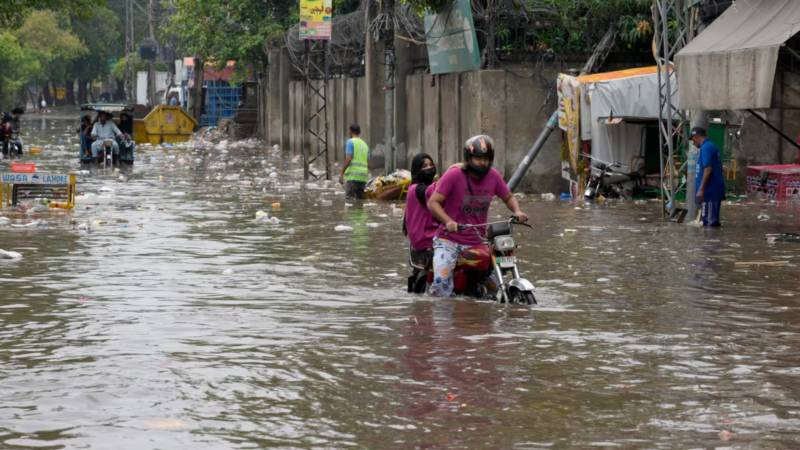
Problem – overlapping roles, lack of accountability, inefficient spending
On 21 July, two weather advisories were issued side by side — one by the Pakistan Meteorological Department (PMD), the other by the Punjab Provincial Disaster Management Authority (PDMA). Both warned of rain and thunderstorms across Islamabad, Sindh, southern Punjab, Kashmir, northeastern and southern Balochistan, and parts of upper Khyber Pakhtunkhwa. District-level forecasts were included for vulnerable areas.
To the average citizen, the advisories looked nearly identical — just another heads-up about dangerous weather. But to a trained observer, they raise a deeper question: Why are two agencies doing the same job?
In a country drowning in debt, can we afford overlapping mandates in disaster management? PMD’s role is well-defined: monitor atmospheric conditions, issue forecasts, and operate early warning systems. PDMAs are supposed to act on those forecasts — devising response plans and coordinating ground-level action. Yet both are now issuing alerts — one grounded in science, the other in bureaucratic protocol.
Which leads to a larger concern: Are NDMA and the PDMAs doing what they were created to do? Let’s examine their staffing, budgets, and most importantly, their performance during this monsoon.
NDMA & PDMAs: Staffing and Spending
The National Disaster Management Authority (NDMA) functions at the federal level, while Provincial Disaster Management Authorities (PDMAs) work under provincial governments. Their collective workforce is around 3,000–3,200 — yet their impact varies starkly.
| Authority | Approx. Staff | Key Roles |
| NDMA | ~500–600 | National coordination, foreign aid, policy planning |
| Punjab PDMA | 1,000+ | Flood response, early warnings |
| Sindh PDMA | ~800 | Drought and cyclone preparedness |
| KP PDMA | ~600 | Earthquake, GLOF response |
| Balochistan PDMA | ~300 | Sparse coverage, often reliant on federal support |
Rs. 8 Billion and No Public Record
After the 2022 floods, the federal government allocated Rs. 8 billion to the NDMA for monsoon-related procurement — on top of Rs. 362.6 million in regular funding. Since then, there has been no audit, no review, and no public disclosure. NDMA’s website provides no accessible record of how the money was spent.
Countries with smaller budgets than ours have built robust, community-based disaster systems; they train volunteers, install hyper-local alert systems, and pre-position emergency supplies
In Nepal, landslide alerts are sent out in real-time. In Pakistan, even post-disaster data disappears into a bureaucratic void. This isn’t just red tape — it’s institutional amnesia. A disaster authority that can’t account for funds isn’t reducing risk — it’s compounding it.
Last month, when 17 people were stranded in the Swat River, there were no boats, no ropes, no helicopters. Once again, Rescue 1122 and the military stepped in. So where is the equipment NDMA was supposed to procure? If billions have been spent on preparedness, why does the front line always show up empty-handed?
Where the Real Work Happens — and the Real Money Doesn’t
Two institutions keep working in silence: Rescue 1122 and the PMD. Funded by the Punjab government, Rescue 1122 handles millions of emergencies each year — from traffic crashes to floods — and even operates air ambulances. PMD, meanwhile, powers the country’s forecasting network, using radars, satellites, and rain gauges to issue timely warnings.
These two — one scientific, one operational — work with far smaller budgets than NDMA, yet they deliver consistent, life-saving results. No media fanfare. No bureaucratic theatre. Just performance.
Contrast that with NDMA and PDMAs: reactive, not proactive. Their presence spikes only during televised updates or post-disaster briefings. Their tools? Control room numbers, vague “action plans,” and press releases. Rarely do these translate into field-level support.
As thousands remain displaced this monsoon, it is Punjab’s governor — not NDMA or PDMA — who raised the alarm. Meanwhile, Gilgit-Baltistan’s government is pleading for Rs. 7 billion in emergency aid. NDMA? Nowhere in sight.
This isn’t a mere communication failure — it reflects a deep erosion of trust. NDMA was designed to anticipate disasters. Instead, it’s chasing them from behind.
Execution, Not Paperwork
Take the 21 July twin advisories again. PMD forecasted heavy rain. PDMAs released “readiness” plans with control room numbers and emergency contacts. But that’s not preparedness — it’s paperwork.
During the recent Saiful Malook rescue, where over 500 tourists were evacuated, the response was led by local agencies, the military, and the district administration. NDMA’s role? Non-existent — or invisible. This is not an isolated case. It’s a pattern. When real emergencies strike, local actors respond while NDMA remains on mute.
And those local responders — from mosque committees to police outposts — are rarely trained or equipped. Many lack basic tools like loudspeakers, rafts, or even rope lines. In most villages, WhatsApp rumours travel faster than official alerts. And nobody knows who is officially allowed to sound the alarm or order an evacuation.
What Pakistan Really Needs
Countries with smaller budgets than ours have built robust, community-based disaster systems; they train volunteers, install hyper-local alert systems, and pre-position emergency supplies.
Pakistan doesn’t lack resources — it lacks the will to use them wisely. Even a modest share of NDMA and PDMA funds could:
- Stock rescue kits in flood-prone villages
- Install rope lines and loudspeakers at mosques and union councils
- Distribute radios and fuel vouchers to local responders
- Conduct pre-monsoon drills at the tehsil level
But instead, our disaster management system functions like a post office: the warning starts at PMD, passes through NDMA, filters down to PDMA — and by the time it reaches the public, it’s either too late or too vague.
Final Word
We don’t need more plans. We need boats, ropes, radios — and people ready to use them. Until disaster management in Pakistan becomes a system of action rather than announcements, we’ll keep asking the same question after every flood: Who saved lives — and who just filed reports?