

How does one make sense of the emerging new world order, whose contours are still being shaped as war rages on in our part of the world? While it is still too early to say how the dust—or rather ashes—will settle, one thing is for sure: the old world order is not coming back in this era of “gangster imperialism”. As the Canadian Prime Minister Mark Carney said in his recent speech at the World Economic Forum in Davos, if you are not at the table, you are on the menu.
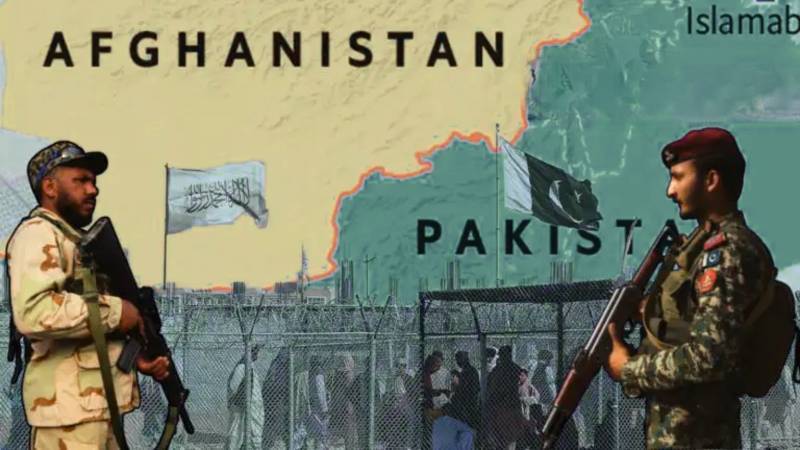
Nuclear-powered Pakistan, which consistently ranks as a top 10 global military power, is definitely not on the menu. We cannot be seen to be weak in this cruel new global era, and our borders cannot be messed with. We demonstrated that amply to the world during last year’s skirmish with India in May, and we have no choice but to show no mercy to the current Taliban government in Afghanistan, who have launched increasingly hostile cross-border aggression against us in recent months. In the words of a military insider: “There is no good Taliban/Bad Taliban anymore”.
The only power that matters in this new era is hard. Countries that want to survive in this era, now that the old rules-based order is dead, will need to arm up. Luckily, given our location in a tough neighbourhood, we have been armed for years. If you are not strong enough militarily and if you do not have nuclear cover of your own, you are in serious trouble.
Only hi-tech weapons and the readiness to use them will protect you, and it is in keeping with this new strategic reality that Pakistan recently launched “Operation Ghazab Lil Haq (Rage for a Righteous Cause)”, carrying out coordinated air and ground strikes against Afghan Taliban positions in Kabul, Kandahar, Paktia, and Nangarhar, as well as several other locations.
The Operation, which was on hold over the Eid holidays and has now resumed, was long overdue. Pakistan has ranked number one on the Global Terrorism Index for the first time this year, recording a six per cent increase in terrorism-related deaths—1,139—in 2025, according to a recent report by the Institute for Economics & Peace, an independent think tank. Pakistan is now the country most impacted by terrorism in the world.
The report states: “This follows a sharp resurgence in terrorist activity driven in part by the Taliban’s return to power in Afghanistan in 2021”. The report further adds that: “Terrorism in Pakistan had been declining from 2014 to 2019. However, Pakistan experienced six times as many terrorist incidents in 2025 as in 2020. Deaths from terrorism are now at their highest level since 2013”.
Kabul, which has much more to lose in terms of damage to infrastructure and loss of its leadership, must realise that the TTP is a serious security threat to Pakistan and rein them in
It noted that the largest attack carried out by the Tehreek-e-Taliban Pakistan (TTP), or simply the Pakistani Taliban, in 2025 “was an armed attack targeting military forces, resulting in the death of 21 people”. According to the report, the Afghan Taliban’s rise to power in Afghanistan had “profoundly impacted Pakistan’s security and stability… It provided the TTP with the means and motivation to significantly expand their geographic reach and operational efficiency, resulting in a considerable rise in violent extremism in the region.” Pakistan has clearly run out of patience and turned to its hard power to take the fight directly to the Taliban leadership.
Pakistan’s relations with Afghanistan, its mountainous landlocked neighbour, have not always been so fraught. Once part of the Mughal empire, like Pakistan, Afghanistan became independent in the mid-18th century, and in the 19th and early 20th centuries was a focal point for conflicting Russian and British interests on the North-West Frontier during the so-called “Great Game” by the then superpowers of the time. When Afghanistan was invaded by the Soviet Union in 1979, four million Afghan refugees migrated to Pakistan to seek shelter, and we readily gave them a home, hosting them for over 40 years before sending them back once Afghanistan stabilised.
Pakistan played its part in collapsing the Soviet Union with the help of the US and Western forces. After Soviet forces withdrew in 1988–89, Afghanistan was thrown into turmoil, with various Islamic groups struggling for power, and Pakistan choosing its favourites to carry out its policy of “strategic depth”, which has proven to be a failure in the long run.
In 1996, the Taliban gained control of Kabul and set up an Islamic state; this was overthrown in 2001 by US-led forces in conjunction with Afghan groups following the attacks on the World Trade Center and the Pentagon on 11th September 2001. A new US-backed government was formed, but instability continued in many areas of the country until the Taliban came back to power after the withdrawal of US forces in August 2021, marking the end of almost two decades of war. Since returning to power, the Taliban have deliberately concentrated on the long, contentious border with Pakistan to stir up nationalist sentiments and openly supported the TTP’s terrorist activities in Pakistan.
Clearly, Pakistan has gained little from providing support to the Taliban in the past—it has proven to be a strategic failure, as it has only escalated militancy within Pakistan, while ordinary Afghans have also turned against Pakistan. The battle-hardened Taliban, while buoyed no doubt by their victory against the invading US forces, remain no match for Pakistan’s hi-tech firepower as the nuclear power zealously protects its own territory.
Instead of meddling in each other’s affairs, as has been the case in the past, both sides need to de-escalate. Kabul, which has much more to lose in terms of damage to infrastructure and loss of its leadership, must realise that the TTP is a serious security threat to Pakistan and rein them in. As the military insider explains: “They need to read the room in Islamabad clearly: any future attack inside Pakistan will be answered inside Afghanistan by targeting those who enable the attackers”.