

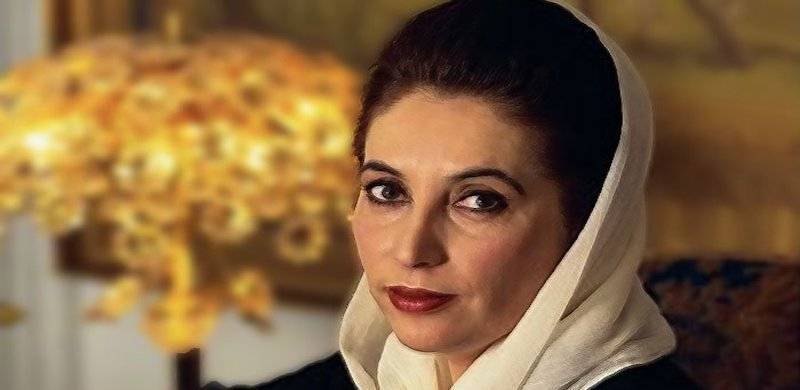
There are moments in a nation’s life when politics feels distant, something that happens on television screens, in parliament buildings, or in speeches we half-listen to. But there are also moments when politics enters homes, hearts, and memories so deeply that it becomes personal. Shaheed Benazir Bhutto belongs to that second category. For many Pakistanis, she was not just a Prime Minister or a party leader, but a presence sometimes hopeful, sometimes controversial, often burdened, but always impossible to ignore.
I am not a political worker. I have never carried a party flag or stood on a container shouting slogans. Like most citizens, my connection to Benazir Bhutto was shaped by news headlines, television images, conversations at home, and the collective mood of the country. Yet even from that distance, her life and death left a mark that refuses to fade. Years have passed since she was assassinated, but her name still stirs something deeper than ordinary political debate. Perhaps that is because her story reflects not just power and politics, but struggle, loss, courage, and unfinished hope, and these are things that ordinary people understand instinctively.
BB was born into privilege, but privilege did not protect her from tragedy. She grew up in a political household, the daughter of Zulfiqar Ali Bhutto, a leader who himself remains a powerful and contested figure in Pakistan’s history. From an early age, she was exposed to politics as something serious and consequential, not merely a career, but a responsibility. Her education abroad gave her confidence and polish, but it did not shield her from the harsh realities waiting at home. When her father was removed from power and later executed, her life changed forever. That moment was not just a family tragedy; it was a political earthquake that reshaped Pakistan and its destiny.
Many people might have retreated after such a loss. Few would have blamed her if she had chosen a quieter life, far away from the turbulence of Pakistani politics. But she returned, again and again, to face arrest, confinement, exile, and constant pressure. Watching from the outside, one could not help but notice how often she seemed surrounded by storms. Governments rose and fell. Institutions clashed. Democracy appeared fragile, always at risk of being interrupted. Through all of this, she remained a central figure.
When she became Prime Minister in 1988, the moment carried meaning far beyond her own victory. For ordinary people, especially women, it felt symbolic. In homes where daughters were often told that leadership was not for them, her rise quietly challenged that belief. She did not suddenly erase social inequalities or deeply rooted cultural attitudes, but she cracked a door open. That mattered. It mattered even to people who were sceptical of politicians, because it showed that history could move, however slowly.
For years, her husband remained in prison under cases widely seen as politically driven. She raised her children while leading a party and facing relentless pressure from multiple fronts
Her time in office was not smooth. No Pakistani government ever is. There were political rivalries, institutional tensions, accusations, dismissals, and constant instability. Ordinary citizens watched as governments were formed and dissolved with unsettling speed. In that environment, it is difficult for any leader to deliver long-term change. Still, many people remember certain initiatives that touched everyday life, especially in health and social welfare. Programmes aimed at basic healthcare, women’s participation, and social support stood out because they spoke directly to people who are often invisible in policy discussions.
What made her story more compelling, however, was not only what happened in public view. It was the personal cost behind the scenes. While headlines focused on power struggles, she was also navigating deeply painful personal circumstances. For years, her husband remained in prison under cases widely seen as politically driven. She raised her children while leading a party and facing relentless pressure from multiple fronts. In a society where women are often judged harshly for choices men are never questioned about, she lived under constant scrutiny, both political and personal.
This is where many ordinary Pakistanis, especially women, found an unspoken connection with her. Life in this part of the world is not easy for most women. Education, independence, decision-making, etc., are still privileges rather than guarantees. Many girls grow up with expectations placed on them before they even understand what choice means. Against this backdrop, seeing a woman endure pressure without retreating carried quiet power. One did not have to agree with her politics to recognise the strength required to keep going.
Her return to Pakistan in 2007 revived emotions that had long been dormant. The country felt stuck, politically tense, socially divided, and uncertain about its direction. Her arrival generated crowds not only because of party loyalty, but because people sensed a turning point. There was excitement, but also fear. Everyone knew the risks. The attack that greeted her on the very day of her return was a brutal reminder of how dangerous Pakistani politics had become. And yet, she stayed.
Then came December 27, 2007.
Most Pakistanis remember that day with unsettling clarity. It was one of those moments when time seemed to pause. News spread rapidly, then chaotically. Rumours, denial, shock, and finally confirmation. Streets filled with grief. Homes fell silent. Even those who had criticised her felt shaken. Her assassination was not just the killing of a political leader; it was an attack on the idea that political disagreements could be resolved without bloodshed.
Shaheed BB is missed not as a symbol frozen in time, but as a human being whose life intersected with the lives of millions
For ordinary citizens, the loss felt heavy and confusing. What does it mean when someone who had already suffered so much is taken in such a way? What does it say about a country when the price of participation is death? These were not abstract questions. They lingered in conversations, in classrooms, in tea shops, and in the quiet moments when people watched the news alone.
One of BB’s most quoted lines, “Democracy is the best revenge”, gained new meaning after her death. To many, it no longer sounded like a political slogan. It sounded like a moral instruction. It suggested that the answer to violence is not more violence, but patience, participation, and faith in the process. In a country repeatedly shaken by force and disruption, that idea continues to resonate, even if it is often difficult to practise.
With time, political narratives shift. New leaders emerge. New crises demand attention. But some figures remain lodged in public memory because they represent unfinished journeys. BB is one of them. Her life raises uncomfortable but necessary questions: Why does democracy struggle to stabilise here? Why are women still fighting for space that should be theirs by right? Why does political disagreement so often slide into hostility?
She is remembered differently by different people. Some admire her deeply. Some remain critical. Many hold mixed feelings. That diversity of opinion is natural and healthy. But what unites those perspectives is the recognition that her life and death shaped Pakistan in lasting ways. She became part of the country’s emotional and political landscape, not because she was perfect, but because her journey reflected the contradictions of Pakistan itself.
For younger generations who did not witness her rule directly, her story arrives through fragments of photographs, documentaries, family conversations, and anniversary debates. Even then, something about her continues to draw attention. Perhaps it is because she stood at the intersection of so many struggles: democracy versus authoritarianism, tradition versus change, public duty versus private pain.
She is gone, but she is not erased. Her memory lives on in discussions about civilian supremacy, women’s leadership, and political sacrifice. It lives on in the awareness that progress is fragile, and that it often comes at a cost paid by individuals rather than institutions. It lives on in the quiet hope that future leaders, women and men, might learn from both her strengths and her struggles.
For an ordinary citizen, remembering BB is not about slogans or party lines. It is about acknowledging a chapter of our collective story that continues to shape who we are. Her life reminds us that leadership is rarely clean or comfortable. Her death reminds us how dangerous indifference and intolerance can be. And her legacy reminds us that democracy, however flawed, remains a worthy goal to strive for.
Shaheed BB is missed not as a symbol frozen in time, but as a human being whose life intersected with the lives of millions. Her story is not finished, because the questions she left behind still await answers. And perhaps that is why, years later, her name still matters.