

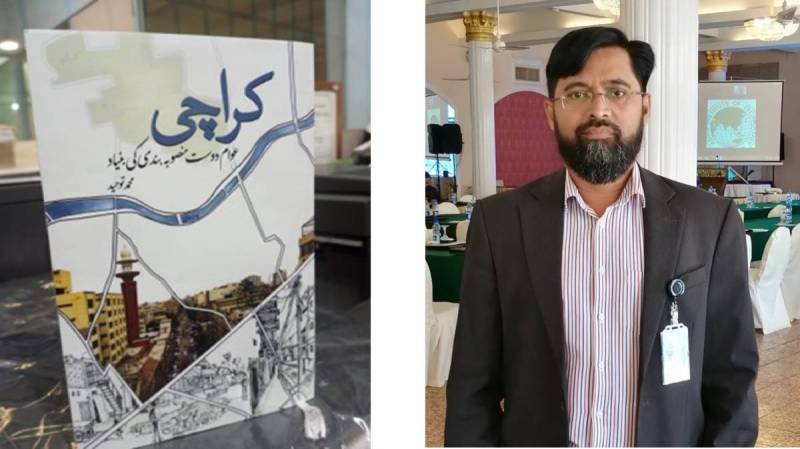
Karachi, a city of deep personal significance to me, remains close to my heart. Any initiative aimed at its development and welfare captures my attention. In September 2024, during a visit to the Caritas Pakistan office in Karachi, I met urban planner Muhammad Toheed, who shared with me his recently published book, “Karachi – Basis of People-Friendly City Planning.” Although I had initially committed to reading and reviewing it, other responsibilities delayed my response. With a gentle reminder from Toheed, I now offer my impressions.
At first glance, the book stands out for its quality. From the title and design to its binding and paper, it reflects careful thought and professionalism. Published by Fazlee Sons (Private) Limited in 2024, the 291-page volume is both visually appealing and rich in content. Toheed dedicates the book to his parents and teachers, crediting them for shaping his understanding of language, society, governance, and people-centric city planning.
Mr.Toheed is a trained urban planner and geographer with research interests spanning informal urban economies, basic service provision, climate change, land use, informal settlements, and urban rights. He is currently affiliated with Karachi Urban Lab as Acting Director at the institute of Business Administration, a platform known for interdisciplinary research, mentorship, and advocacy.
To create a successful master plan, it is essential to have deep knowledge and analysis of the city’s current realities, including citizens’ needs, desires, and lifestyles
The book’s cover, designed by architect Sabha Mukhtoom, visually captures the complexity of Karachi’s urban landscape—its infrastructure, informal settlements, and the socio-environmental challenges it faces. Landmarks like M.A. Jinnah Road, the Lyari River, and Gutter Baghicha, once a symbol of green space, are prominently featured.
In the book’s preface, prominent sociologist Arif Hasan describes the collection of essays as essential reading for anyone interested in urban issues. He highlights how the essays examine global challenges such as climate change, pandemics like COVID-19, and the consequences of poorly executed policies that have displaced thousands.
Another endorsement comes from academic Dr. Gulnaz Anjum, who writes that the book goes beyond technical discourse. She praises its grounded analysis of life in Karachi and its focus on marginalised communities. According to her, Toheed effectively translates lived urban experiences into meaningful insights on planning and inequality.
The book is organised into five chapters:
- People-Friendly Planning in Karachi that focuses on the Karachi Master Plan, particularly the 2047 vision.
- Land Politics, Housing, and Evictions explores the politics of land, housing shortages, and eviction crises.
- Environmental Changes: From Heatwaves to Urban Flooding, which investigates the city’s vulnerability to climate-related events and infrastructure failures.
- Pandemics and Urban Systems analyses the impact of COVID-19 and public health responses in urban settings.
- Karachi: An Informal City discusses informal settlements, encroachments, and pollution.
Supporting maps, tables, and research data supplement the narrative, making the book both informative and accessible. Throughout, Mr.Toheed emphasises that successful master planning must reflect citizens’ needs and realities. In his own words: “To create a successful master plan, it is essential to have deep knowledge and analysis of the city’s current realities, including citizens’ needs, desires, and lifestyles. While institutions make master plans to guide city development, if these plans don’t reflect citizens' needs, they lead to informal development and temporary solutions.”
“Karachi – Basis of People-Friendly City Planning” is a timely and critical contribution to urban discourse. It will be of interest not only to urban planners and researchers but also to policymakers, activists, and citizens invested in Karachi’s future. Muhammad Toheed’s work deserves recognition for spotlighting the people at the heart of city planning, and for offering a path toward more inclusive urban development.