

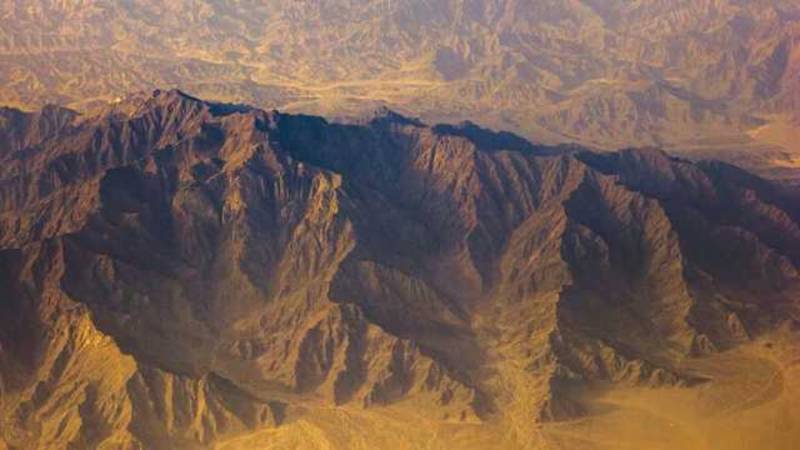
In the arid landscape of Balochistan, where water scarcity and contamination have become the biggest issues, emerging pilot initiatives are offering a glimmer of an oasis in the desert. Having mountains, deserts, and a plain arid landscape, Chagai is the largest district of Pakistan, covering an area of 44,748 square kilometres. It connects Pakistan with Iran and Afghanistan. According to the 2023 census, Chagai District has a population of 269,192.
Despite its abundance of mines, minerals and natural resources, and beautiful landscapes, residents of Chagai District have remained deprived of education for decades. Lack of healthcare, clean drinking water, and other basic facilities are burning issues due to the neglect of the federal and provincial governments. Chagai is known as the “Golden-Bird,” but it lags behind other districts of Pakistan.
Reko Diq Mining Company (RDMC) initiated community development initiatives in District Chagai in 2023. These efforts portray RDMC’s commitment to sustainable development. RDMC has launched multiple projects to support the local population in neighbouring villages.
There is no proper water source. Local residents rely on “Chaah” (mud wells in the Balochi language) for drinking water and the local irrigation system. Some parts of the population use tube wells to access water. Unfortunately, due to climate change, rising temperatures, and prolonged drought, the water level is rapidly declining and some wells have dried up.
The study reveals drought trends in Balochistan using the Standard Precipitation Index (SPI) at the 3-month accumulation timescale. The monthly rainfall data of 10 stations were collected from the Pakistan Meteorological Department (PMD) for 37 years (1980–2017). Drought trends were analysed at each station using the Mann-Kendall test. The SPI identified extreme drought events in 1996, 2001, 2002, 2004, 2009, and 2014. Barkhan was the station that most frequently experienced extreme to severe drought events, as defined using SPI. A statistically significant decreasing precipitation trend was found in four stations (Dalbandin, Jiwani, Quetta, and Zhob). The analysis of drought characteristics showed Barkhan faced the most prolonged drought—22 months from 1999 to 2001. The findings from the present study can give guidance on how strategies of water management should be adjusted based on the changing patterns of droughts in the Balochistan Province.
Locals consider that RDMC is working to improve their lives, and they hope that such initiatives will be extended throughout Chagai and all over Balochistan
Back in Chagai, women and children are carrying hand-carts and are compelled to fetch water from far-flung areas. During the summer season, it is a very hard and tiresome activity, but they are compelled to go for it.
According to available data, before RDMC’s intervention, water in the region, particularly in project-nearby villages, was predominantly saline and high in Total Dissolved Solids (TDS), making it unfit for drinking.
Community Investment Specialist at RDMC, Hafeez Ullah Shahi Baloch, said that RDMC conducted water quality tests in these areas, which revealed TDS levels often exceeding 1,000 mg/L, along with elevated levels of conductivity and, in some cases, microbial contamination, which is hazardous for human beings. After installing RO (Reverse Osmosis) plants, drinking water quality has significantly improved, now meeting World Health Organization (WHO) standards for potable water.
Mr Hafeez Ullah Shahi Baloch added that the main causes include high natural mineral content in underground aquifers (geological salinity), poor sanitation infrastructure leading to microbial contamination, inadequate storage including the use of unclean containers, and lack of awareness about water safety and hygiene practices. Consuming contaminated or saline water has directly contributed to a range of health issues, including dehydration, gastrointestinal infections, diarrhoea, kidney problems, skin irritations, and weakened immune responses, especially in children and the elderly. The most common diseases are diarrhoeal diseases, typhoid, hepatitis A, kidney stones and urinary infections (due to high salinity), and skin and eye infections.
To ensure the provision of clean drinking water, RDMC has initiated pilot projects and installed four RO filtration plants in Humai, Mashki Cha, Nok Cha, and Dorbun Cha. This is part of its community development initiatives and aims to supply potable water to local communities. These plants provide a total of 30,000 gallons of clean drinking water per day, meeting the needs of all residents. The company also implemented regular water quality monitoring and trained local operators for plant operation and maintenance. Community water tanks and tap points have been established for easy access to the water.
“We used to drink and use water from mud wells. It was very salty and mineralised,” said Hazoor Bakhsh, a resident of Nok-Chah, located 45 kilometres north of the RDMC site. More than 21 households have lived here for over 50 years. Health, education, and clean drinking water were major issues. Since RDMC began operations, the company has launched community development projects in nearby villages. Community-managed reverse osmosis (RO) plants have been a blessing, ensuring access to clean drinking water, said Hazoor Bakhsh.
According to a 2025 report released by European think tank Germanwatch, Pakistan’s ranking has been mainly due to the massive 2022 floods, which inundated a third of the country, aside from killing over 1,700 people. Mr Baloch said that to minimise climate change effects, RDMC is operating the RO plants using solar energy. This ensures sustainability, addresses the region’s electricity distribution challenges, and guarantees continuous operation.
“Disease surveillance data indicates a notable decrease in waterborne illnesses. For example, reported cases of diarrhoea have significantly dropped following the establishment of clean water access. Similarly, household reports of kidney pain and urinary discomfort have also declined,” said Hafeez Shahi Baloch. RDMC conducted an Environmental and Social Impact Assessment (ESIA) a couple of years ago. The findings revealed high TDS levels and an increased incidence of waterborne diseases. As a result, RDMC began implementing water intervention projects in villages near the project site, he added.
RDMC has launched healthcare services through permanent and mobile health units in inaccessible areas of Tehsil Nokkundi. The company has established two state-of-the-art hospitals in Humai village and Nokkundi town, providing 24/7 healthcare services. Additionally, through IHHN, RDMC regularly reaches remote areas with mobile health units and provides quality health services to the masses in the region free of cost. RDMC also distributed clean and hygienic water containers for the collection and storage of water.
Moreover, community development committees are formed to represent the local communities and propose their community development schemes.
“Education is the only way to light the path out of darkness,” said Hazoor Bakhsh. RDMC has supported the repair and renovation of schools and hired staff to start the journey of learning and knowledge. Boys and girls from neighbouring villages are thrilled with the reopening of schools in their villages, he added.
The locals of Chagai have also requested RDMC to establish a hospital closer to their homes for easier access to healthcare services. Locals consider that RDMC is working to improve their lives, and they hope that such initiatives will be extended throughout Chagai and all over Balochistan.