

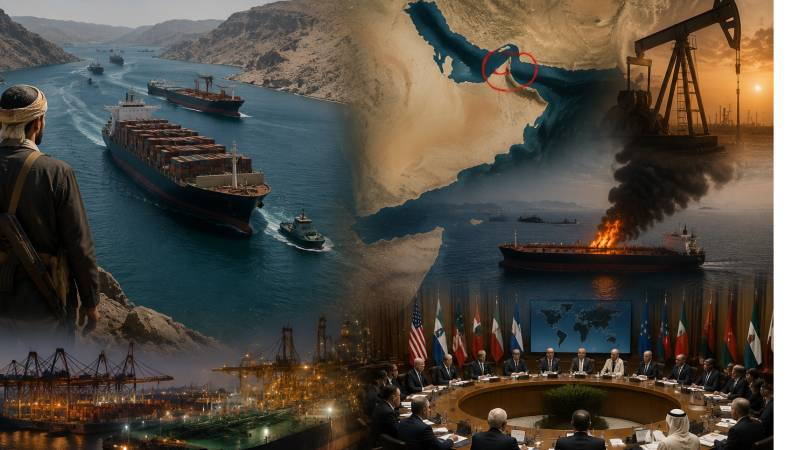
The Bab-el-Mandeb is a strait and a major global chokepoint between Yemen on the Arabian Peninsula and Djibouti and Eritrea in the Horn of Africa, connecting the Red Sea to the Gulf of Aden and the Indian Ocean. Like the Strait of Hormuz, Bab al-Mandeb is an exceedingly narrow waterway through which a significant chunk of the global economy transits. It’s just 14 miles wide at its narrowest point between Saudi Arabia and Djibouti, about 40% narrower than Hormuz. Free transit of ships in the Strait of Hormuz is now blocked due to the ongoing violent conflict between Iran and the USA.
Energy specialists and oil traders are now worried about the new choke point in the area called Bab Al-Mandeb on the Red Sea. If the transit of ships is blocked through this waterway the results will be very serious and catastrophic on the oil markets and on global commerce and there are fears that hostilities in the gulf region will spread wider leading to a more destructive and bloody war. The Houthi Militia known as a proxy of Iran in Yemen announced a blockade of all Saudi ships after the attack on Sanaa airport on 13th July. The Houthi Militia has successfully blocked the Red sea in the past and stopped all traffic from Israel after the Israeli attacks on Ghaza, in solidarity with the Palestinians.
The latest threat of a complete blockade will have a much wider global impact because of the conditions in the Strait of Hormuz due to the American Iranian conflict. Pakistan will be severely impacted by this closure and the Pakistani Prime Minister has strongly condemned this action and has warned against any attacks on Pakistan Flag vessels. The Pakistan Govt. has expressed complete solidarity with Saudi Arabia during a telephonic conversation between Shehbaz Sharif and the Saudi Crown Prince Mohd. Bin Salman. Keeping in mind the effects of a wider war in the region and the severe blow to the global economy if the Bab Al-Mandeb is blocked the Houthis should reconsider their actions at the same time the Iranian Govt. Should use all the pressure at their command to stop the Houthi Militia from blocking this vital choke point.
Moreover, since Pakistan has maintained active channels with Iran, Islamabad should suggest to Tehran that closure of the Red Sea route is not a good idea, and will, in fact, further complicate the situation. The need of the hour is to revive the Houthi-Saudi truce and ceasefire before there is a start of the Yemeni conflict in full force. Donald Trump has already announced publicly that Iran will be held totally responsible for all Houthi attacks on Saudi Targets If anything, efforts need to be made to revive the Houthi-Saudi ceasefire before the largely frozen Yemen conflict restarts. All efforts must be made to bring about a permanent ceasefire in the Gulf region and prevent any escalation in the hostilities between the Houthis and Saudi Arabia.
If the transit of ships is blocked through this waterway the results will be very serious and catastrophic on the oil markets and on global commerce.
Pakistan as the main mediator between Iran and the USA must increase its diplomatic efforts to the maximum and along with countries like Qatar, Turkey and other regional powers must make all possible efforts to extinguish the flames of war and prevent the violence from spreading to the wider Middle East Regions. A full blockade of Bab al-Mandeb could send oil through that price ceiling, at least $5 to $10 a barrel higher – above $100 a barrel, according to Dan Pickering, chief investment officer at Pickering Energy Partners. The Houthi forces, who announced a blockade of Saudi ports claimed responsibility for an attack in the Red Sea targeting two Saudi Arabian oil tankers. Iran and the Houthis are betting that the economic consequences of the war will bring Donald Trump back to the negotiating table.
After the Strait of Hormuz, another strategic route for global trade – the Bab al-Mandab Strait, at the entrance to the Red Sea – faces the threat of closure from the Houthi rebels, the Yemeni insurgents backed by Iran. The deadlock in the peace process they initiated in 2022 with Saudi Arabia to end seven years of war in Yemen, along with Tehran's desire to increase pressure on the United States, currently involved in a military escalation with Iran, has led to the opening of a new front in the war in the Middle East. The Houthis, who announced a blockade of Saudi ports on Monday, July 20, claimed responsibility on Wednesday evening for a "military operation" in the Red Sea. They used drones and missiles against "two Saudi oil tankers that violated the blockade," identifying the vessels as the Encelia and the Layla.
A senior Houthi official explained that the blockade of ships linked to Saudi Arabia would remain in effect until the kingdom lifts the blockade it has imposed on them for years, raising fears of further attacks on ships in the Red Sea. "If they do this again, the US will hold Iran responsible and major military punishment will be inflicted upon Iran and, of course, the Houthis," Donald Trump warned on Thursday on his Truth Social network. That evening, the US president said that Iranian funds frozen in the US would now be used to pay for damage to ships hit in the Gulf. The Iran-backed group's military spokesman said it would begin immediately and was in retaliation for a Saudi blockade of ports and airports in Houthi-controlled north-western Yemen. He gave few details about the embargo, but a Houthi media official said they were closing the Bab al-Mandab Strait - the Red Sea's southern gateway - to Saudi vessels.