

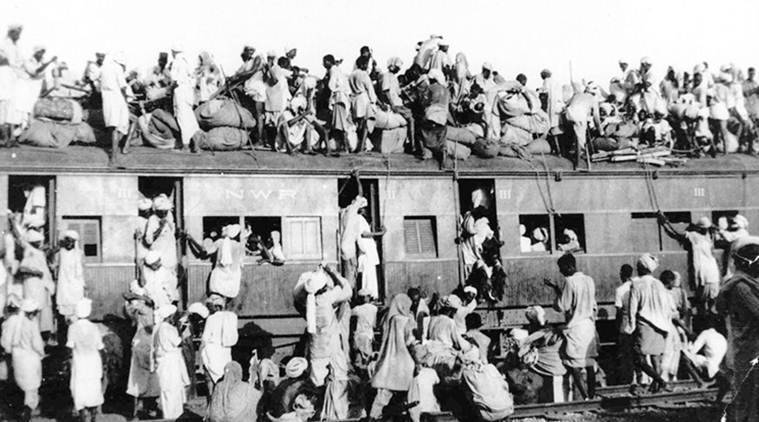
The great human tragedy of hundreds of thousands of lives lost at the time of Partition had more to do with the partition of the province of Punjab than the division of India. The primary responsibility for the loss of life at Partition should thus lie with those who sought to tear asunder the unity of this historic province. Congress is squarely to blame for these partitions and by this I mean both the division of India and the partitions of Punjab and Bengal. On both counts, the Congress leadership was callously unconcerned with the toll it would take.
Anyone who has studied the events of the 1940s knows one immutable truth: Jinnah and the Muslim League would have agreed to a suitably federal and consociational India with an autonomous “Pakistan” within it. As Anil Seal and H. M. Seervai have pointed out—and this must be underscored—it was the Congress leadership that partitioned India, not Jinnah or the Muslim League. Even Maulana Azad grudgingly admits this in his memoir. Even in the aftermath of the Partition, Jinnah told Hashoo Kewal Ramani: “Look here, I never wanted this damn Partition! It was forced upon me by Sardar Patel. And now they want me to eat humble pie and raise my hands in defeat.”
Second was the question of partition of Punjab and Bengal. It was the Congress which argued that if there must be a partition of India, the logic should be extended to constituent units as well. Punjab and Bengal, unlike United India (which was a British creation), were primordial entities that predated British rule. India had never been a single political entity in its history except briefly under Asoka and Aurangzeb. A united India thus had to be formed by the consensus of federating units. Whatever number of federations that were to be born from within the British Indian Empire was to have the consent of these federating units as a whole, i.e., all of Punjab and all of Bengal.
Even if we accept that the maximum demand of the Muslim League was the creation of a separate federation of Muslim majority provinces, there was no legal or constitutional inconsistency in asking for a division of India (division, not partition) into two federations and the proposition that provinces should stay together as a whole. Indeed, it was the correct constitutional and legal position. Provinces were constituent units and sovereign under the Government of India Act 1935. Any federations, one or two or more, had to be formed with the consent of these provinces. That was the constitutional logic, as is apparent to anyone who has read the history of constitutional development in that all-important decade of the 1930s.
It is true that Iqbal in his famous address in 1930 had spoken of territorial adjustment. Ambedkar had later written about the need to redraw the boundaries of Punjab and Bengal. Still, the demand as posited by the Muslim League in the Lahore Resolution spoke of constituent units, and these units were the provinces, not districts or tehsils. One is not oblivious to the apparent inconsistency in the demand for a Muslim national state and the retention of large populations of Hindus and Sikhs as minorities. However, it may be stated here that as much as many imagined Pakistan as a homogenous Muslim national state as opposed to a Muslim national home, this was just not Jinnah’s line. There is a remarkable consistency with Jinnah when it comes to his pronouncements on the issue that all inhabitants of Muslim majority provinces would be equal citizens of the new states and that citizenship in Pakistan he proposed would not be tied with any religious identity. To be sure, Pakistan has, despite being an Islamic Republic, remained true to this principle, i.e., the Citizenship Act of 1951 makes it clear that religion is no determinant of citizenship in the country.
The idea behind Pakistan, for better or for worse, was to unhitch the Muslim majority provinces from a Hindu-dominated unitary centre
The idea behind the creation of Muslim majority regions, whether autonomous or independent, was to ensure an equipoise between the Hindus and Muslims, which were warring communities (Hindus called them races, Muslims called them nations) in the subcontinent, so that neither lived in perpetual subjection of the other, that there would be no need for statutory majorities and minorities, which had been the main obsession of Muslim politicians in Punjab and Bengal. The Lahore Resolution speaks very clearly about the status of minorities. It says:
“(3) That adequate, effective and mandatory safeguards should be specifically provided in the constitution for minorities in these units and in these regions for the protection of their religious, cultural, economic, political, administrative and other rights and interests in consultation with them; and in other parts of India where the Mussalmans are in a minority, adequate, effective and mandatory safeguards shall be specially provided in the constitution for them and other minorities for the protection of their religious, cultural, economic, political, administrative and other rights and interests in consultation with them.”
Thus, there was no question of the Muslim homeland being a Muslim national state, i.e., where Muslims would be the citizens and everyone else non-citizen. Even today, when Pakistan has reached the nadir of theocracy, the Pakistani non-Muslims are in theory (though regrettably not in practice) equal citizens of Pakistan. In short, Pakistan may be an Islamic republic, but it is not a Muslim national state, nor was it ever envisaged as such. The idea behind Pakistan, for better or for worse, was to unhitch the Muslim majority provinces from a Hindu-dominated unitary centre. It was a call for the creation of a Muslim majority state in the subcontinent. That a new centre could be reconfigured based on parity was never out of the question. Short of that, there could be treaty arrangements which could and may still preserve the broader cultural unity of the subcontinent, which was never dependent on political unity at any time before British rule. In North America, there are two sovereign nation-states, i.e., Canada and the US, but their essential culture is the same for the most part. So can be the case in the subcontinent.
The Lahore Resolution envisaged Hindus and Sikhs, minorities to stay on in Pakistan and the Muslim minority in Hindustan to stay on in Hindustan. Their respective rights in either state would be guaranteed not just in the constitutions of Pakistan and Hindustan but the all-encompassing Constitution of India as a whole. India in this conception, would be the reconstituted centre where Pakistan and Hindustan would be equal members based on sovereign equality, either in a federation or at most a confederation. It was a vision of unity more in touch with the ground realities of the subcontinent than the majoritarian united India proposed by Gandhi and Nehru. What Gandhi and Nehru proposed may look alluring, especially given their own outlooks, but in substance, their prescription of one-man-one-vote democracy without safeguards was something that V. D. Savarkar also agreed with. Unlike the Congress leadership, Savarkar conceded that there were two major nations in the subcontinent but he saw the advantages the prospect of democracy without safeguards held for the Hindu majority in the subcontinent. He wanted the Muslim nation to live as subordinate to the Hindu nation in one Akhand Bharat.
Would Gandhi and Nehru’s plural, non-ethnic Indian nation state have been better? They had ample opportunity to prove their bona fides when they got power from 1937–1939. Even Maulana Azad claims in his book that Congress did not live up to the national ideal and discriminated against Muslims and Parsis within the Congress. As for Muslims outside the Congress, their attitude was even more imperial. 1937–1939 was a golden opportunity to prove to the Muslims that their fears of Hindu majority were unfounded. Even the Muslim League was ready to co-operate and join the Congress in forming governments in UP and Bombay. However, the Muslims were spurned and Congress governments proved to be majoritarian and one could even say soft Hindutva. Even a neutral party like Ambedkar admits in his book Pakistan or Partition of India, that Muslims had legitimate grievances against Congress rule from 1937–1939.
By deliberately distorting the Two-Nation Theory and applying it cynically to Punjab and Bengal, the Congress leadership is not just responsible for the 200,000 to a million dead at Partition, but they also laid the foundations of perpetual conflict in the subcontinent
What Jinnah and the League posited was a consociational vision aimed at joint governance of the common motherland. These are Jinnah’s own words as he wrote them in an article less than two months before the passage of the Lahore Resolution. Jinnah’s article in Time and Tide of London, on 19 January 1940, said:
“A constitution must be evolved that recognises that there are in India two nations who both must share the governance of their common motherland. In evolving such a Constitution, the Muslims are ready to co-operate with the British Government, the Congress or any other party so that the present enmities may cease and India may make its place amongst the great countries of the world.”
These are not the words of a partitionist by any stretch of imagination.
Jinnah’s conception of the Indian subcontinent did not entail an iron curtain between Pakistan and Hindustan. As he told Tahira Mazhar Ali, there would be free movement of people between the two political entities. That vision was torpedoed by a calculating Congress leadership which was too caught up in its push for land grab, i.e., the eastern districts of Punjab and western districts of Bengal, to actually see the damage it was about to do to the future of the entire subcontinent.
It must be remembered that Jinnah was ready to accept an independent united Bengal as late as May 1947 but it was vetoed by Nehru and the Congress who insisted on partitioning Bengal and Punjab. Similarly, Jinnah tried very hard to convince Sikhs to keep Punjab united. He gave them a blank cheque, in a manner of speaking. Till very late in the day, Jinnah tried to convince notable Sikhs like Khushwant Singh to stay on, offering Khushwant Singh a judgeship in the Lahore High Court. Other than constitutionally mandated positions for Sikhs in Pakistan, there was also the possibility of an autonomous Sikh homeland in United Punjab. Sikhs refused it to their detriment. Independent India not only cut up the province of East Punjab into three—Punjab, Haryana and Himachal Pradesh—but Congress-led Hindus carried out the genocide of Sikhs in the 1980s.
Belatedly, a great majority of Sikhs have come to accept the error of their leaders in 1947, not the least because the Indian constitution forcibly brackets them with Hindus, denying them their individuality as a community. Ever the constitutional lawyer thinking in terms of numbers and constitutional equipoise, Jinnah calculated that having large numbers of Hindus and Sikhs as part of Pakistan were the best guarantees against majoritarianism in the new state. Had Punjab been allowed to stay united, not only would the great tragedy of Partition violence have been avoided, but Pakistan would have emerged as a secular and consociational democracy, far more diverse than its Indian counterpart. Once having thus fashioned itself as a phalanx, it would be in a position to come together with the rest of India in a confederation. There would be no question of an arms race and the spectre of nuclear war that haunts the subcontinent now.
Congress leadership under Gandhi, Nehru and Patel did untold harm to the very Indian civilisation that they claimed to be fighting for. By deliberately distorting the Two-Nation Theory and applying it cynically to Punjab and Bengal, the Congress leadership is not just responsible for the 200,000 to a million dead at Partition, but they also laid the foundations of perpetual conflict in the subcontinent, thus internationalising Hindu-Muslim conflict in perpetuity.
It is fashionable in certain quarters to lay the blame for these tragedies at the door of Muslims’ desire for self-determination, but the principle of contributory negligence must apply to the Congress leadership. The right to self-determination is an accepted principle of international law. For their part, the League leaders—especially Jinnah—tried till the very end to come to an honourable settlement on the basis of united India, but it was the Congress leadership that was insistent on a narrow-minded conception of a centralised Indian federation without any consociational safeguards that rendered such settlement impossible.