

Since its inception in August 1947, Pakistan has been resolute in strengthening its defences, ever mindful of the challenges posed by its eastern neighbour. The fledgling state pledged to prioritise security needs, even at the cost of hardship, and it has remained true to this commitment. Only a few months ago, the world witnessed Pakistan’s firm response to Indian aggression, demonstrating remarkable prowess in conventional warfare by dismantling fourteen layers of the Indian threat with striking effectiveness.
Yet, even with this mastery, there remained one domain where we stayed indifferent—or perhaps even accepted our ignorance. In this neglected sphere, India once again prevailed; not with gun or missile, but with the waters that flow unchecked. Following our triumph in conventional war, India turned to a quieter yet equally potent form of aggression: releasing the waters of rivers under its control into our territory. The consequences are now upon us in the form of catastrophic floods. Wisdom dictates that one must always remain vigilant against the enemy and harbour no expectation of generosity. Yet in this matter, Pakistan has suffered from prolonged inertia and neglect.
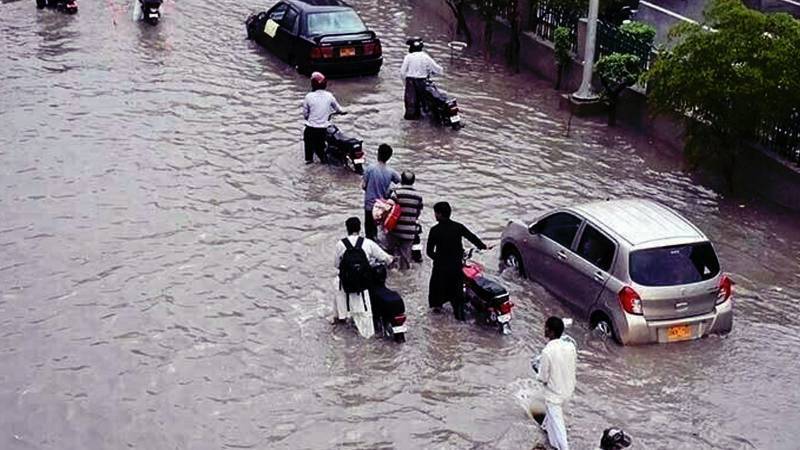
This year, beginning in late June and continuing into August, Pakistan has endured unprecedented flooding. Heavy monsoon rains, augmented by cloudbursts, triggered flash floods and landslides across Khyber Pakhtunkhwa (KP), Punjab, Sindh, Balochistan, Gilgit-Baltistan, Azad Jammu and Kashmir, and the capital region. As of late August 2025, the National Disaster Management Authority reported that more than eight hundred people had perished and over one thousand were wounded. In KP alone, nearly 479 lives were lost and 347 people were injured.
KP bore the worst of the calamity. Catastrophic flash floods and landslides claimed hundreds of lives—over three hundred fatalities in total—and several districts, including Buner, Swat, Bajaur, Battagram, Mansehra, Shangla, Lower Dir, and Abbottabad, were severely affected. In Buner District, tragedy struck with particular severity: at least 158 perished, many more remain missing, and a rescue helicopter crashed during operations, claiming the lives of five rescuers.
Punjab, too, stands imperilled. More than 150,000 people have been evacuated from eastern districts such as Kasur and Bahawalnagar, following Indian warnings of dam water releases from swollen rivers. These rivers—Ravi, Sutlej, and Chenab—originate in India and now threaten Pakistan’s agricultural heartland and food supply. The deteriorating Kavawali bridge in Fazilka, vital to ten villages, teeters on the brink of collapse; its destruction would further compound the plight of rural communities already facing crop damage and washed-away embankments.
Broader factors deforestation, poor urban planning, illegal construction, weakened embankments, and climate change, aggravating cloudbursts and monsoon intensity, have all conspired against us
The economic consequences are immense. Since 26 June, over 1,676 buildings, 562 of them destroyed, have been reported lost across Swat, Abbottabad, Charsadda, Malakand, Shangla, Lower Dir, and Torghar. In KP alone, infrastructure losses amount to roughly Rs 20 billion, including thirty-seven schools, eighty-three roads, ten bridges, over two hundred irrigation channels, and nearly seventy water-supply schemes rendered unusable. Losses to the irrigation authority alone exceed Rs 10.3 billion.
Nationwide, the human and agricultural toll is staggering. Thousands of livestock have been swept away; thousands of homes destroyed; entire farmlands ruined; and tens of thousands displaced—forced to higher ground yet left with shattered livelihoods. The crops of Pakistan, particularly in Punjab and Sindh, are under grave threat. Vast fields of rice, wheat, and sugarcane lie submerged. This devastation of agriculture will inevitably deepen the food crisis. Economists warn that such destruction will intensify inflation, compounding the misery of the common man already burdened by soaring prices. The flood, then, is not merely a natural calamity but a peril to Pakistan’s economy, sustenance, and stability.
One must ask: why did we fail to attend to the water sector with the same vigour as defence? Why have vital infrastructure projects—such as the Kalabagh Dam—remained unbuilt, when they could have stored these waters and forestalled disaster? Responsibility lies squarely upon our leadership. For decades, parochial politics, provincial rivalries, and vested interests have obstructed Kalabagh’s construction. Successive governments, despite enjoying authority and resources, lacked either the courage or the will to build it. Had some rulers been true statesmen, they might have secured Pakistan’s future by pressing forward with this vital project. Instead, they chose silence or expediency. Future generations thus inherit calamity in place of security, floods in place of reservoirs, and perpetual vulnerability in place of stability.
It was not solely an external agency that caused this ruin. Broader factors deforestation, poor urban planning, illegal construction, weakened embankments, and climate change, aggravating cloudbursts and monsoon intensity, have all conspired against us. Experts and residents testify to the swiftness and ferocity of the torrents: many were forced onto rooftops, stranded without clean water or medical supplies, while devastation spread unchecked.
This calamity is a clarion call. Pakistan must redouble its efforts to pursue water storage infrastructure, strengthen embankments, expand early-warning systems, and enforce land-use regulations. Above all, it must rise above the paralysis of political discord. Agricultural heartlands and rural communities require protection—not only emergency rescue in times of crisis, but mitigation and resilience in times of peace.
Thus, the nation remains ever committed to its defence, clinging to that creed of resilience. Yet this year, we have learnt anew that defence must also encompass the conservation and governance of vital natural resources. The floodwaters descending from India’s rivers demand not only lamentation, but foresight, preparation, and resolve. Let this disaster awaken within us a renewal of vigilance—for without mastery over both arms and waters, our sovereignty remains incomplete.