


Click here to read about how the Hainan Expo is redefining wellness travel - the first half of our coverage
This was not your ordinary expo. Here, you could try on a pair of sleek black glasses and suddenly understand nearly 90 languages in real time. You could ask for directions in English, hear the answer in Chinese, and somehow still feel like you were in a sci-fi movie. As if that wasn't enough, the glasses could also guide you wherever you wanted to go. Convenient... or slightly intimidating?
That’s the kind of “wait, is this real?” moment that awaited visitors at this year’s China International Consumer Products Expo. From 13 to 18 April, the Expo took place across three major cities in Hainan, China's tropical island paradise, showcasing thousands of examples of the next big thing.
But that was far from all Hainan offered. Because once you stepped outside the exhibition halls, the experience expanded. You might have stumbled upon an international cycling race, wandered into beachside food pop-ups, or found yourself watching a sunset concert by the sea. As the island integrates retail, tourism, and sports into a coordinated experience, the line between “consumer” and “traveler” starts to blur.
Global shopping under duty-free rules
Inside the expo, it was essentially a curated world tour — minus the jet lag. Brands spanning more than 60 countries and regions brought everything from Canadian health and wellness products and French fashion design to Swiss watches and shoes, and food and handicrafts from Russia and Bulgaria. The Expo also featured more than 200 new product launches, offering an early look at emerging trends.
But the experience went well beyond window shopping. Many items were available for on-site purchase, allowing visitors to take them home at tax-deducted prices thanks to Hainan’s duty-free policies. These remove the need for traditional tax refund procedures, making buying more immediate and convenient.
And let’s be honest, this makes it far more dangerous for your wallet.
Beyond the halls: Coastal leisure and tourism
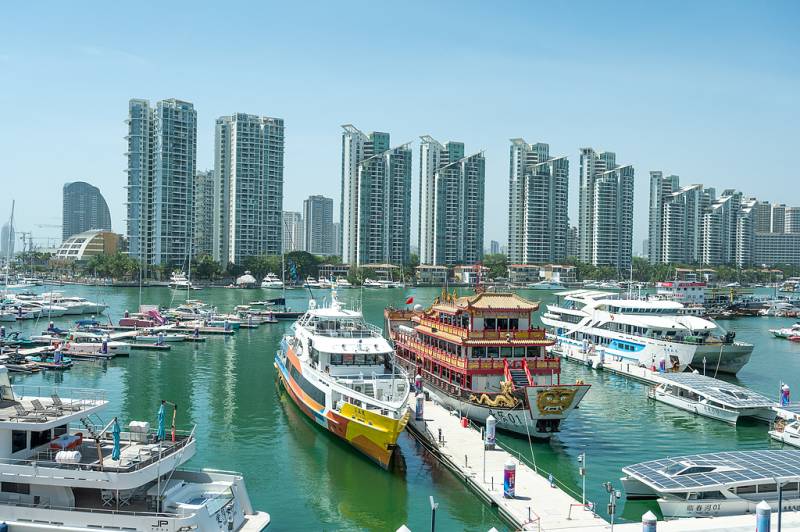
Yachts on display at sea during the China International Consumer Products Expo in Hainan, 16 April 2025 [Photo: VCG]
To stay only inside the expo halls meant missing half the story.
From 15 to 18 April, the Sanya section of the expo also featured a yacht exhibition showcasing leading names from around the world, including Lagoon from France, Ferretti from Italy, and Princess Yachts from Britain. Alongside static displays inside exhibition halls, on-water demonstrations allowed visitors to step aboard and experience the yachting lifestyle at sea for themselves.
Hainan's unique approach represents an emerging event-driven consumption model, where buying and exploring are part of the same seamless journey
Wanning is just one example of the island's reach. Situated in the southeast of Hainan, the city is home to a chain of bays stretching across roughly 110 kilometres of coastline.
Riyue Bay, on a similar latitude to Hawaii, has become a well-known surfing destination that draws enthusiasts year-round. In addition to gliding across the waves, visitors could experience the speed and excitement of motorboat rides on open water. Divers could explore clear seas filled with schools of colourful fish, while adventure seekers could take to the skies by parachute, with stunning views of the ocean, coastline, and drifting clouds below.
That meant going from trying on smart glasses to flying over the ocean in a single day. This is the kind of itinerary the event provided.
As evening fell, the focus shifted again. Open-air night markets came alive with the aroma of food, the scent of coffee, and charming folk performances, while the sounds of splashing water and laughter from nearby waterparks added to the lively atmosphere.
It was less “trade fair,” and more “island festival.”
From expo to island circuit: Cycling becomes a consumption engine
And just when it seemed the schedule couldn't get more packed, Hainan added another layer — a full-scale international cycling race. From 15 to 19 April, the event brought together 20 world-leading cycling teams and a total prize pool of $200,000.
Over five days, spanning nearly 900 kilometres across 12 cities in Hainan, the race took riders deep into and around the island, with each stage offering different landscapes, riding conditions, and cultural encounters.
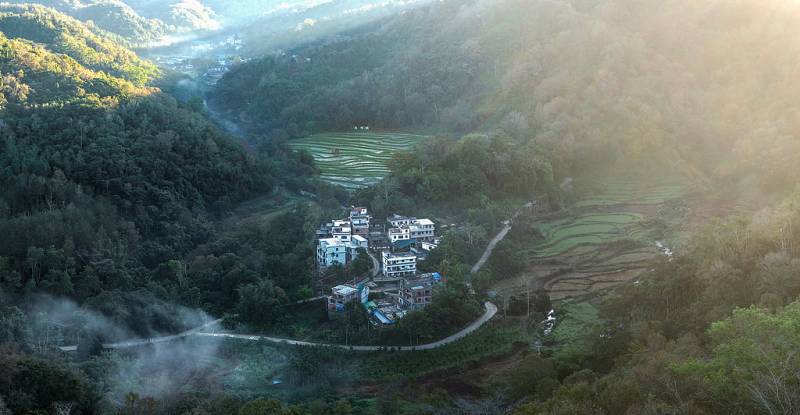
Starting from flat coastal highways where riders battled the sea winds, the route moved onto winding mountain roads rising toward forested peaks. It passed through Li ethnic villages with traditional thatched houses dotted along the roadside, and cut through tropical forests filled with the sounds of birds, monkeys, and frogs, eventually looping back toward the modern urban centres.
Designated viewing areas not only allowed expo visitors a front-row seat to the competition, but also offered a chance to engage with local ethnic culture and cuisine. Visitors could pick tea on dreamy mist-covered hillsides, learn to weave traditional textiles, or explore tropical forests where streams cascade down the mountains and diverse wildlife thrives.
According to the People’s Daily, the cycling race attracted around 200,000 visitors to the designated viewing areas in five cities in 2024, generating more than $1.5 million in direct tourism spending and boosting hotel occupancy rates by 30%.
The China International Consumer Products Expo evolved into a festival that extended beyond commerce and sport. It also featured a range of cultural and entertainment performances, including violin concerts, bamboo flute recitals, and folk song performances, along with national-level exhibitions of Cambodian stone sculpture and pottery.
And perhaps that was the real experiment here.
Taken together, the expo was no longer just a showcase of global products, but part of an emerging event-driven consumption model—one where buying, experiencing, and exploring are no longer separate activities, but part of the same journey.
Because in the end, people may have come for the expo — but they stayed for everything else.