

Shikarpur produced a remarkable array of eminent figures, mystics, merchants, saints, scholars, poets, philanthropists, and politicians, each of whom earned distinction in their respective fields. Their enduring legacy is still visible in the city's historic quarters, where the shrines of mystics, mosques built by religious scholars, landlords, merchants, and politicians stand as witnesses to a rich spiritual and intellectual tradition. The religious scholars of Shikarpur devoted their lives to imparting religious education, nurturing generations with knowledge and moral guidance. Among these personalities, Maulana Khalifo Yar Muhammad Qureshi emerges as a prominent and revered figure.
Maulana Khalifo Yar Muhammad Qureshi was born in Shikarpur. His date of birth is unknown, but he was likely born in the second quarter of the 19th century. He received his early education from his grandfather, Hafiz Khalifo Allah Rakhio Qureshi, a man of knowledge and learning. Later, he received further education from two eminent religious scholars, Maulana Abdul Rahim Qureshi (d 1905) and Maulana Hafiz Muhammad Hafat Siddiqui, both noted for their religious knowledge in Shikarpur. According to Abdul Khaliq ‘Raz’ Soomro (1984:143), who states in the article 'Shikarpur Ja Sufia Kiram,' published in Shikarpur Mazi Ain Haal (Shikarpur: Past and Present), a book compiled by Dr Memon Abdul Majeed Sindhi, that Maulana Hafiz Muhammad Hayat Siddiqui was born in 1265 AH/1849 AD. He was an eminent religious scholar who received his early education under the guidance of his respected father, Maulana Ahmadi Siddiqui (d 1303 AH/ 1885/6 AD), who was also a distinguished religious scholar of Shikarpur.
The semicircular spaces on the upper sections of the mosque's doors feature the finest floral and geometric motifs, drawing the visitor's eye to the region's historic wood-carving traditions
After completing his formal studies, he was appointed as a teacher at Victoria Jubilee School in Shikarpur, where he taught for some time. Later, he left his job and started teaching at the madrassah established by his forefathers. He remained actively engaged in teaching throughout his life and was regarded as a prominent figure among the leading religious scholars of Shikarpur. He also started a small business to support himself. However, he remains dedicated to imparting religious education to the scholars. Owing to his scholarship, he earned great respect in scholarly circles. He passed away in 1340 AH/ 1922 AD, leaving behind a legacy carried by his students, Maulana Khalifo Yar Muahmmad, Maulana Abdul Rehman Memon (d 1921), Khalifa Abdul Hameed, and Qazi Syed Abdul Ghafoor.
A considerable number of individuals benefited from his scholarship, among them Khalifo Yar Muhammad Qureshi, who occupies a prominent place. Another most influential teacher of Khalifo Yar Muhammad Qureshi was Maulana Abdur Rahim, a member of the distinguished Qureshi family of Shikarpur. He was a scholar of notable repute and, in addition to his religious learning, was also an accomplished practitioner of tibb (traditional medicine), for which he was widely known as Hakim Molvi Abdur Rahim.
He received his early education under the supervision of his uncle, Maulana Nooruddin Qureshi, and subsequently completed his religious studies under the guidance of the eminent scholar Maulana Noor Muhammad Shadadkoti (d 1296 AH/1879 AD). His training in tibb was acquired from Abdul Rauf of Hyderabad, which enabled him to establish himself as a reputable physician. Over time, he gained recognition in both scholarly and medical circles, attracting followers and patients from Jacobabad, Hyderabad, and as far as Multan.
After settling in Multan, his reputation continued to expand, and individuals from regions such as Bahawalpur and Jhang Sial sought his medical expertise. He remained actively engaged in both teaching and medical practice until he died in Multan in 1905. His career reflects a significant intersection of religious scholarship and traditional medical practice in the region.
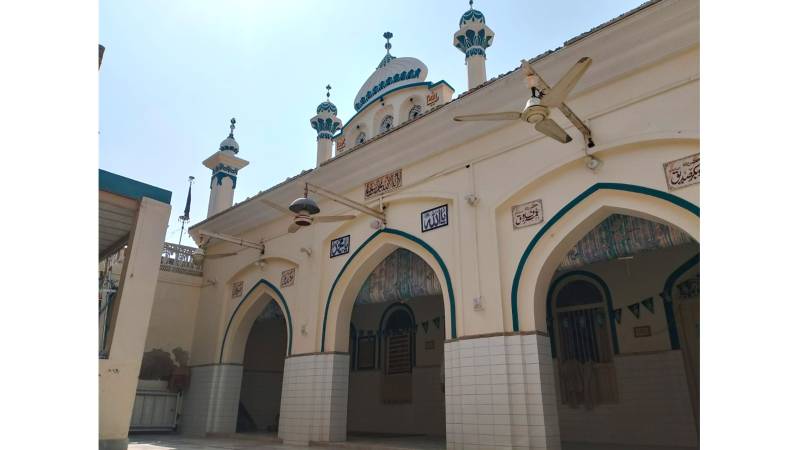
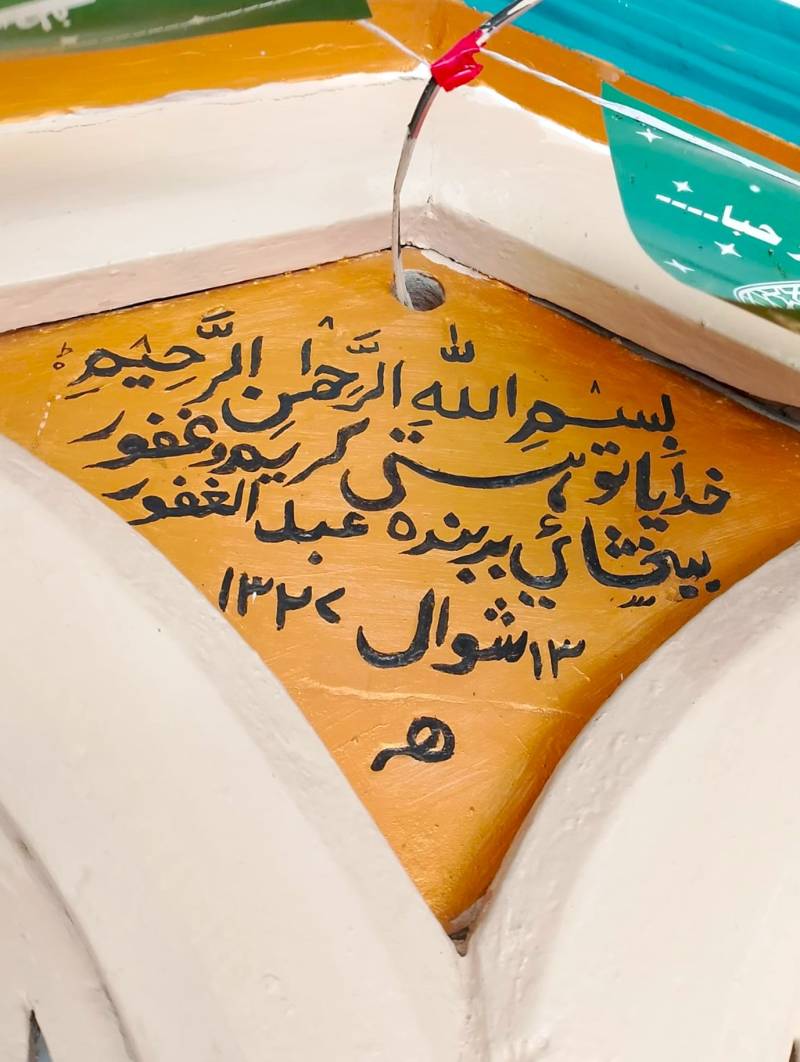
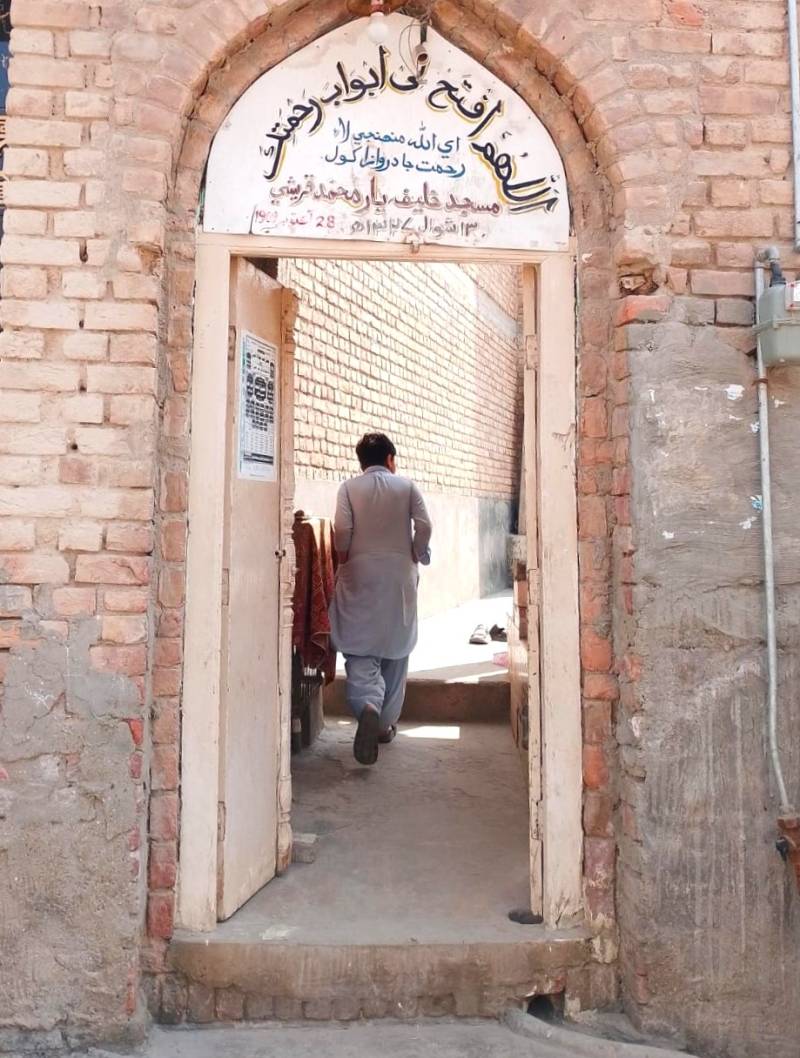
These eminent teachers greatly influenced Maulana Khalifo Yar Muhammad. Maulana Khalifo Yar Muhammad used to teach and lead prayers in a mosque located in the Mehar Qubo neighbourhood of Shikarpur. That mosque later became known as the Khalifo Yar Muhammad mosque. According to Maulana Naeemullah Qureshi, who is the current Pesh Imam of the mosque, it was a small mosque built of unbaked bricks. Later, Abdul Ghafoor Deho, the landlord of Shikarpur, rebuilt. The date of construction of the mosque by Abdul Ghafoor Deho is inscribed on the central wooden door leading to the main prayer hall. The inscription bears the date of construction of the mosque on 13 Shawwal, 1327 AH/27 October 1909 AD. Later, it was renovated and expanded by Asghar Ali Qureshi, the adopted son and disciple of Khalifo Yar Muhammad.
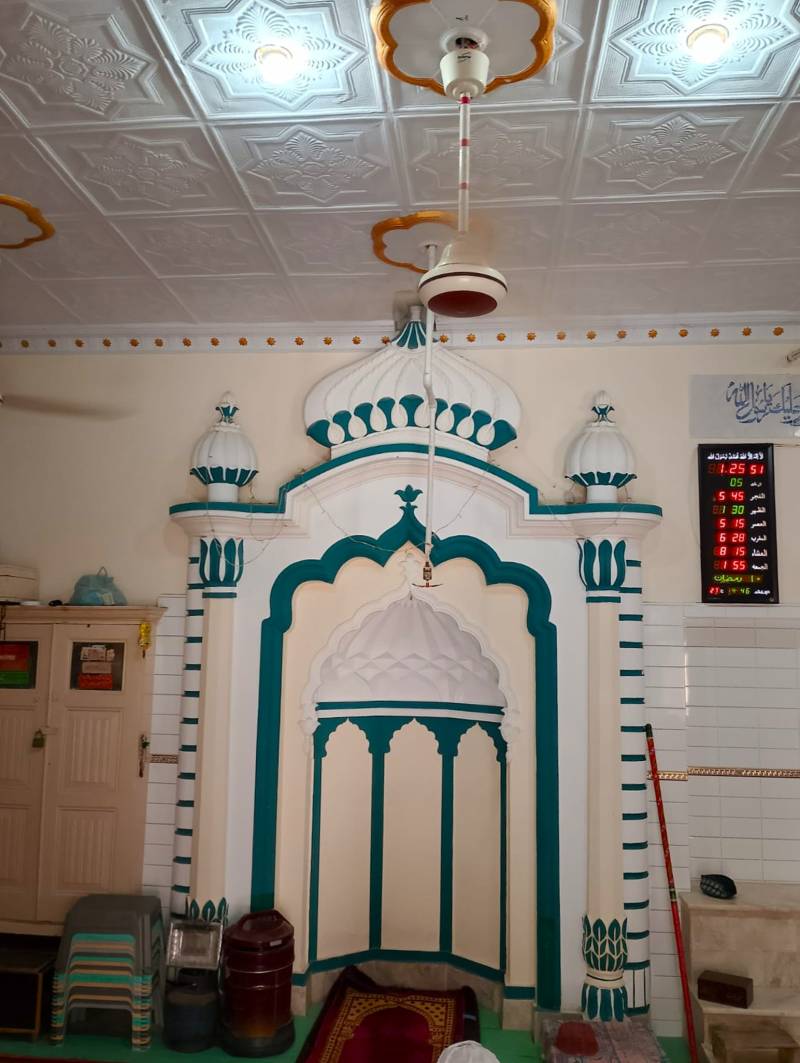
The mosque has triple arches with a covered verandah. From the verandah, three wooden doors open to the main prayer hall of the mosque. The central door, which carries the inscription of the mosque's date of construction, is engraved on the tympanum. Richly decorated fretted floral panels flank the inscription on the tympanum. Tympana are semicircular spaces on the upper section of doors, often decorated with floral and geometric designs. In most wooden doors in mosques and shrines, the tympana draw the visitor's attention. It is also this space that inspired the wood carvers to create the finest floral and geometric motifs.
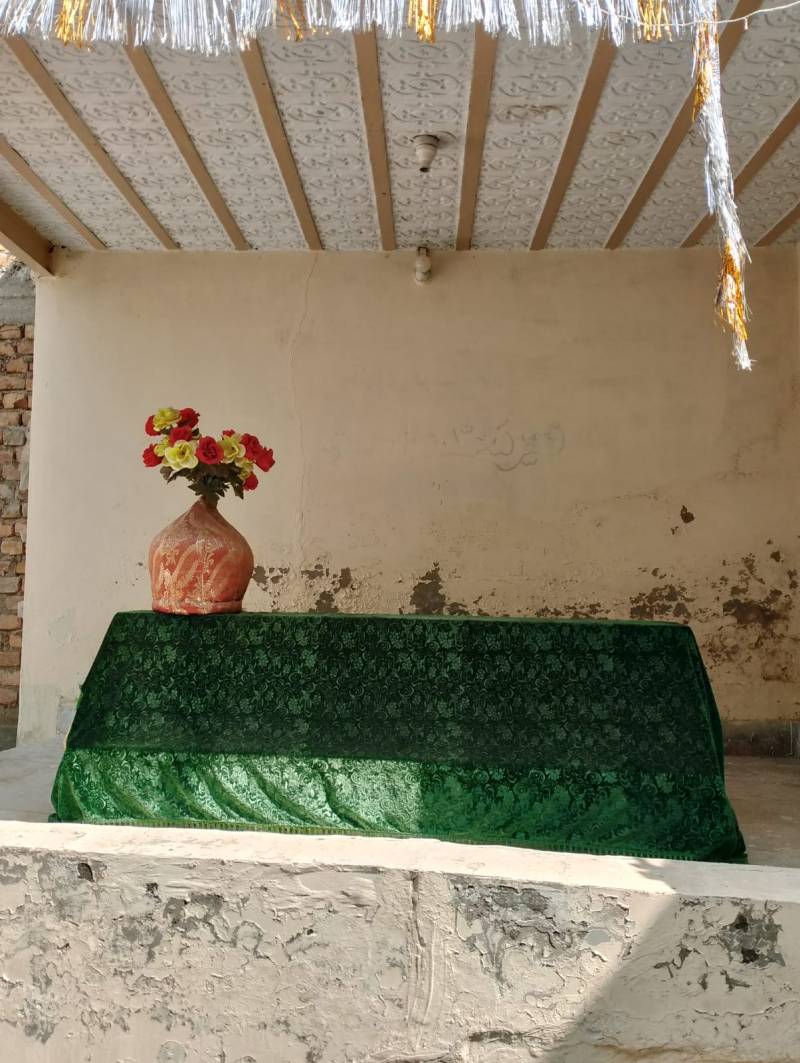
In the courtyard of the mosque is the grave of Muhammad Murad Channa, who, according to Maulana Naeemullah Qureshi, devoted himself to the humble service of cleaning the mosque daily. When he died, he was buried in the courtyard of the mosque.
According to Tehreek-e-Azadi Men Sindh Je Aliman Jo Hisso (The role of Sindh's scholars in Freedom Movement) by Dr Mazharuddin Soomro (2008:437), Maulana Khalifo Yar Muhammad joined the Khilafat Movement and was an active member.
He was also a distinguished scholar whose intellectual and spiritual influence extended to a wide circle of students and followers. Illahi Bakhsh Awan (1957:166) states in his article that among his prominent students were Hakim Molvi Illahi Bakhsh Awan (d 1964), Molvi Pir Fazal Ahmad Shikarpuri (d 1987), Molvi Abdul Fatah Siddiqui Shikarpuri, and Pir Ghulam Mujaddid Sirhandi (d 1970), each of whom carried his legacy in different ways. A valuable insight into Maulana Khalifo Yar Muhammad's life and spiritual affiliations is provided in the article written by Illahi Bakhsh Awan (1957:166), published in Mehran Sawaneh-Hayat in 1957. From this article, one learns that Maulana Khalifo Yar Muhammad belonged to the Chishti Sabri Sufi order. Illah Bakhsh Awan further notes that Maulana Khalifo Yar Muhammad was a disciple of Maulana Ashraf Ali Thanvi (d 1943), a renowned Sunni Islamic scholar and Sufi master. He was associated with the Deobandi movement.
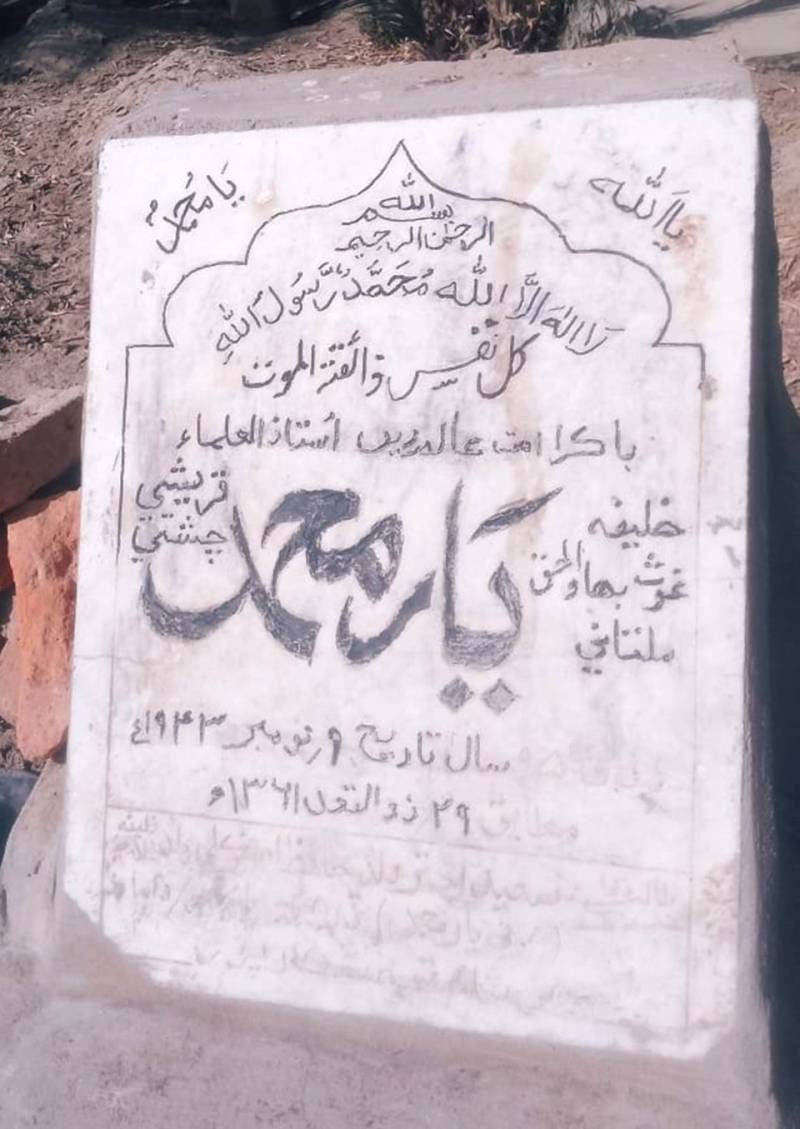
According to Dr Mazharuddin Soomro (2008:437), Maulana Khalifo Yar Muhammad passed away on 29 Shawwal 1361 AH/November 9, 1942. He was laid to rest in Wali Shah graveyard, adjacent to Garhi Yasin Road in Shikarpur. The date inscribed on his grave is 8 November 1943. According to Maulana Naeemullah Qureshi, Maulana Khalifo Yar Muhammad had four daughters, each married to a notable individual: Ghulam Hyder Qureshi, Jamaluddin (commonly referred to as Juman Shah), Akbar Ali Shah Bukhari, and Hasan Ali Shah Bukhari.
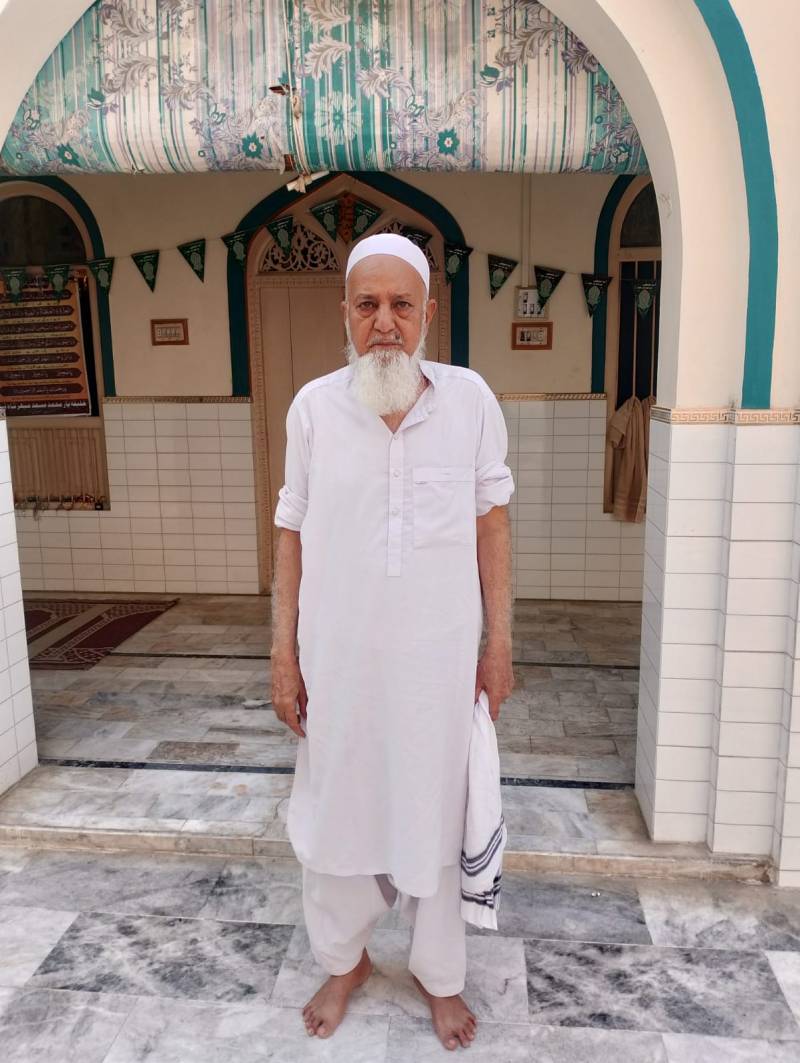
After the death of Maulana Khalifo Yar Muhammad, the legacy was carried forward by Maulana Asghar Ali Qureshi, son of Ghulam Hyder Qureshi. Maulana Asghar Ali Qureshi continued to teach and lead prayers in the Khalifo Yar Muhammad mosque. Maulana Asghar Ali Qureshi passed away on 26 April 2003. Following him, his son, Maulana Naeemullah Qureshi, assumed the role of the Pesh Imam of Khalifo Yar Muhammad Mosque. Known for his gentle demeanour, humility, and sound knowledge, he continues to uphold and carry forward his family's legacy with dedication.