

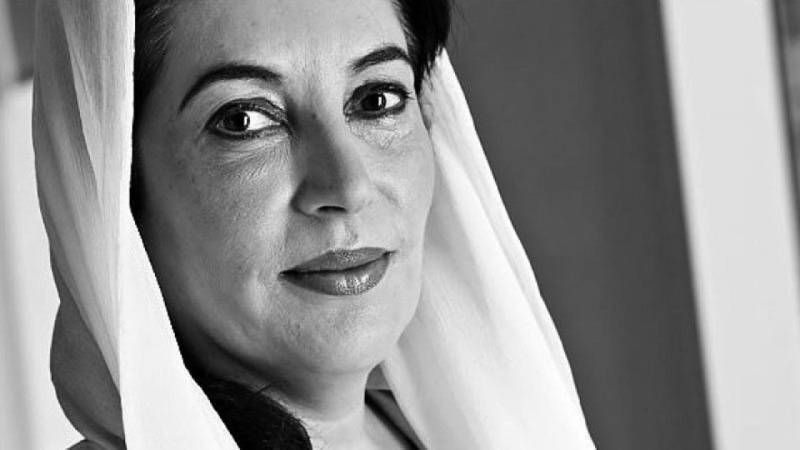
“We learned at an early age that it was men’s interpretation of our religion that restricted women’s opportunities, not our religion itself. Islam, in fact, had been quite progressive towards women from its inception”—Benazir Bhutto, 11th and 13th Prime Minister of Pakistan, who was assassinated on December 27, 2007.
The East is where the sun rises every day, giving the world a new morning, a new hope, and a new meaning to life. But alas, for the majority of daughters born here, each dawn is a harbinger of tough challenges which they have to cope with throughout their lives. For many, it means no education, no economic independence, no say in important decisions of their lives, total subjugation to men in their families, and a life of absolute, thankless servitude with no holidays. Their birth is rarely celebrated, especially if a son is expected.
In this bleak scenario, females who defy all norms, duly supported by their guardians, and who emerge as women of substance, deserve full kudos. The time, energy, and effort involved in rearing, educating, grooming, and transforming a girl or even a boy into an accomplished person are priceless. A person has to undergo immense struggle in order to gain knowledge or learn skills. A lot of hard work, sleepless nights, financial sacrifices, and rigorous activity go into attaining education, which does not involve just one person but, at times, the entire household, teachers, and institutions. It is very easy to live a life of leisure where a person does nothing more than satisfy his animal instincts with no concern for intellectual pursuits, but life is tough, perhaps even tougher for members of the fairer sex who are keen on improving themselves.
Loss of human lives at the hands of murderers or terrorists is bad in itself, but when the deceased happens to be talented and accomplished, like an intellectual, a teacher, or a social activist, the whole nation suffers an insurmountable loss. When those who have the capacity to bring about positivity are eliminated, what is left behind can only be described as negativity.
Even a short period of worship by a scholar has been given preference by the Almighty over a long duration of worship by an ignorant person. Such is the importance of knowledge, and losing anyone, let alone a female, can have very detrimental effects on society and, of course, on the quality of human beings.
Benazir Bhutto, one such woman of substance who came from a privileged background that enabled her easy access to the best educational institutions and perfect guidance for achieving an enviable distinction, remarked: “Clearly it is not easy for women in modern society, no matter where they live. We still have to go the extra mile to prove that we are equal to men. We have to work longer hours and make more sacrifices. And we must emotionally protect ourselves from unfair, often vicious attacks made on us via the male members of our family.”
How unfortunate for her followers that they were forced to bear her loss when their leader had reached her prime and was fully geared to take head-on all her political and ideological adversaries
Having become the first female Prime Minister in 1988, Ms Bhutto resolved to change the destiny of the women of Pakistan, as in her own words: “As a woman leader, I thought I brought a different kind of leadership. I was interested in women’s issues, in bringing down the population growth rate… as a woman, I entered politics with an additional dimension—that of a mother.”
Now the question is: did she succeed in her commitment to turn around the fate of the women of her country during her two (though incomplete) terms of premiership? Maybe not in the way she would have desired. Consequently, Pakistan’s population experienced an explosive increase, and unfortunately, there has not been much improvement in the misogynistic outlook of society.
One of the factors, as pointed out by the lady herself, is men’s interpretation of religion, which prevents women from taking the reins of leadership. Although Benazir managed to become Prime Minister twice, she faced opposition from so-called Islamists who resented her secular and modern agenda. What ensued later is history. She was forced into self-exile.
However, throughout this entire turbulent period, there can be no two opinions about the fact that Benazir herself emerged as a person of sound education, political acumen, and wisdom derived from experiences that were uniquely hers.
Losing a person of her calibre meant reducing a treasure trove of wealth to dust. Many may not agree with her credentials as a leader, but none would deny that she has to her credit immense scholastic achievements. How unfortunate for her followers that they were forced to bear her loss when their leader had reached her prime and was fully geared to take head-on all her political and ideological adversaries.
Her return in October 2007 was marked by great determination and a renewed resolve to make Pakistan an outstanding country. Alas, within a matter of weeks, all these aspirations were shattered by just one bullet that snuffed out a knowledge-bearing beacon, leaving everyone in a state of utter shock.
Even those who never regarded her as a competent leader were stunned, but perhaps her loss came as the biggest blow to the dreams of those daughters of the East who were looking towards her to salvage them from the shackles of centuries-old traditions that denied them their birth rights as human beings. For them, Benazir was a source of inspiration and hope, who combined in her person qualities of both knowledge and leadership that few men can boast of. It is not every day that mothers give birth to such talented personalities.
May her soul rest in eternal peace.