

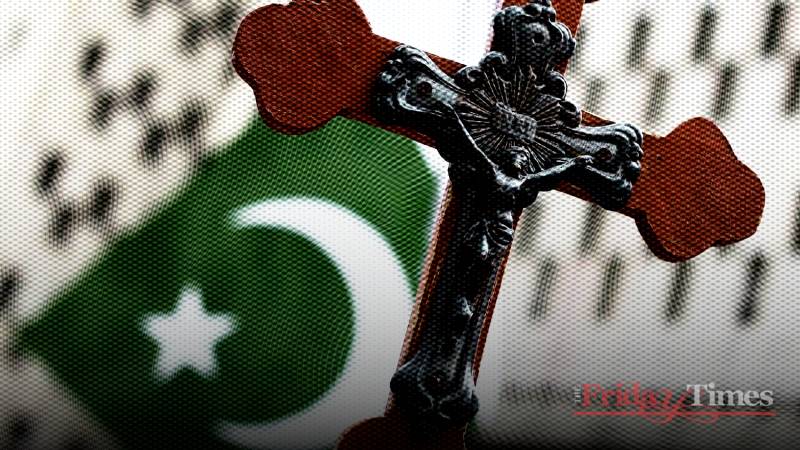
The Pope's inauguration is likely to be one of the most significant events of the century, serving as a powerful reflection of peace, diplomatic engagement and dialogue—not only in the protection of Christian faith but also in supporting other faiths around the world.
Pope Leo XIV expressed his hope for the Catholic Church to serve as a “small heaven of unity” amid an era marked by “too much discord and too many wounds.” He made the statement during his inaugural Papal Mass which was attended by more 200,000 people at St Peter’s square on 18 May 2025.
Unfortunately, we missed a crucial opportunity to demonstrate our genuine commitment to uphold the promise of equality and acceptance for all. This time, it wasn't just a domestic oversight—it played out on the world stage during a landmark event attended by world leaders including Mark Carney, JD Vance, and Marco Rubio.
Yet, the Pakistani government’s delegation shockingly included no Christian representative, despite the presence of millions of Catholics in Pakistan. Like many, I am stunned that not a single Christian representative was picked, especially when we have capable and respected Christian members in both the National Assembly and the Senate.
It is profoundly disheartening—and, regrettably, a growing point of widespread disapproval—that the Pakistani government seems to deliberately overlook its Christian lawmakers, both in the political arena and during one of the world's most significant events for the selection of their spiritual leadership.
Consequently, many overseas Christians around the world—particularly across the USA, Pakistan and Europe—came on streets to protest and took to social media to express their disappointment and concern, strongly condemning any actions or decisions that contribute to the exclusion of Christian representation.
The Pakistani delegation—featuring Yousaf Raza Gillani, Kheal Das Kohistani, and Ramesh Singh Arora—showed up at the Pope’s Inaugural Mass looking like a diversity checklist gone wrong. Not a single Christian representative in sight at one of the most important Christian events on the planet. One has to wonder what the government was thinking… if they were thinking at all.
The delegation also met with Pakistani Cardinal Joseph Coutts, more like an attempt to mask the stark absence of Christian representatives in the official delegation. Nevertheless, this oversight occurred without apparent reflection or concern only highlights a troubling disconnect from the aspirations of Pakistan’s Christian community.
This glaring omission has raised serious concerns. Many are now questioning whether the government has grown accustomed to sidelining Christians—not only having fair representation in the Prime Minister’s cabinet but also being denied visibility on international platforms.
In a country where Christians have long contributed to the nation’s fabric, this exclusion wasn’t just disappointing—it was heartbreaking. It sent a message that, even on the world’s most unifying spiritual stage, some voices are still being silenced.
To my mind, we must seize every opportunity to ensure equal access and inclusion for all individuals, guided by both relevance and reason. Many are left wondering why the Pakistani government failed to exclude Christian voice in its delegation to such a landmark event. Particularly, at a time when Pakistan is striving to strengthen ties with Christian-majority nations for trade, diplomacy, foreign investment, and broader cooperation, it is crucial that we demonstrate a genuine commitment to inclusivity—particularly towards our Christian citizens and other minority communities.
The Pope’s Inaugural Mass, steeped in centuries of tradition and spiritual meaning, echoed a powerful call for peace, unity, and compassion across all faiths and nations. It was a moment that brought the world together—leaders, believers, and seekers alike. Yet, amidst this profound celebration of inclusivity, one absence was impossible to ignore: Pakistan’s official delegation without Christian voice.
Pakistan is home to millions of Christians of the Catholic faith, who have made immense contributions to the nation—particularly in the fields of education and healthcare. Thousands of Catholic schools across the country continue to serve communities with dedication and excellence. In fact, the government's decision to snub Christian lawmakers in its delegation also raises concern about its commitment to the principles of equality and justice, as envisioned by our founding father, Muhammad Ali Jinnah.
The unfair representation in Pakistan’s delegation has become even more striking when we recall a moment of true dignity and unity—when Catholic Senator Khalil Tahir Sandhu attended the funeral service of Pope Francis on behalf of Pakistan’s government. In that solemn setting, his presence carried the weight of a nation’s respect and the shared grief of millions of Pakistani Catholics and Clergy in Pakistan. Millions of Pakistani Christians, many from the Catholic faith, become the voiceless at the Pope’s Inaugural Mass. It was a meaningful moment, and their absence made no sense at all.
We must never forget that every citizen of Pakistan—regardless of faith, ethnicity, or background—has an equal right to be recognised, included, and represented. The role of Christians in the creation and development of Pakistan is both significant and undeniable. Leaders like Dewan Bahadur Singha stood alongside Quaid-e-Azam Muhammad Ali Jinnah at critical junctures, lending their unwavering support to the Pakistan Movement.
Let’s never forget the concept of underrepresentation not only contradicts the vision of our founding father—who envisioned a nation where religious minorities would enjoy full rights and protections—but also sends a troubling message to the global community about Pakistan's commitment to pluralism, equality, and religious freedom. At a time when representation matters more than ever, this exclusion is both disappointing and deeply concerning.