

I finally visited Risham Syed’s Destiny Fractured at the Newark Museum of Art in late May. I had missed the opening—travel, deadlines, the usual whirlwind—but I’m so glad I made it in time. Risham is a dear friend whose work I’ve admired for years. Her practice has always inspired me—not only as an artist and musician but as someone navigating the overlapping maps of Lahore and the world, interrogating colonial memory and contemporary dislocations. This exhibition was, in a word, extraordinary. It didn’t just speak to me—it unsettled, stirred, and stayed with me.
Risham has long been known for her intricate, layered reflections on history, space, and identity. But this show marked a deepening, a widening of scope. From the first step into the gallery, I felt like I had entered a conversation between worlds—between Lahore’s dust-filled skies and Newark’s industrial edges, between the colonial past and a climate-stricken present. The exhibition doesn’t impose that connection; it reveals it, slowly, gently, with the kind of care and confidence that only a seasoned artist like Risham can summon.
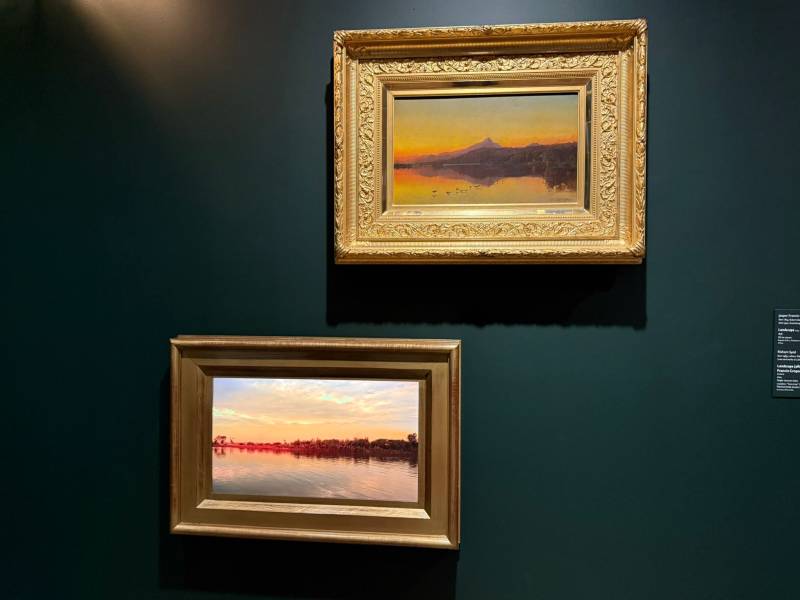
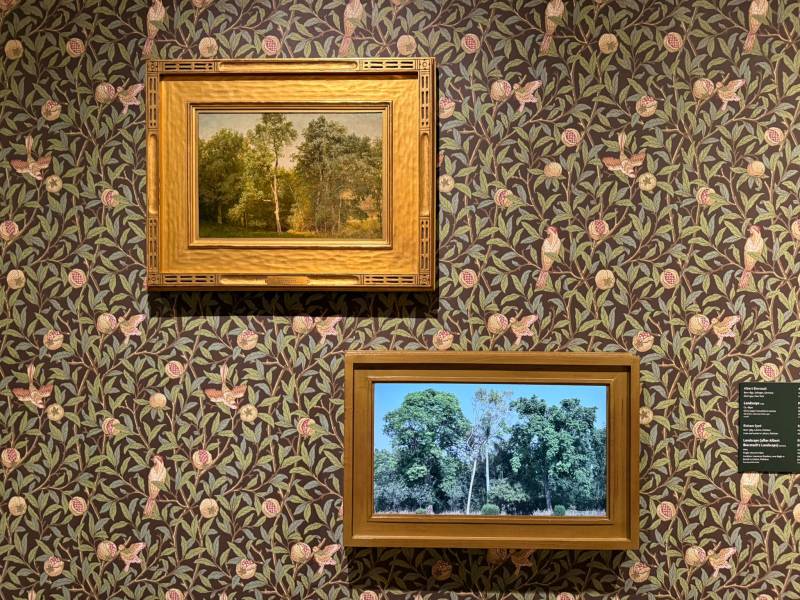
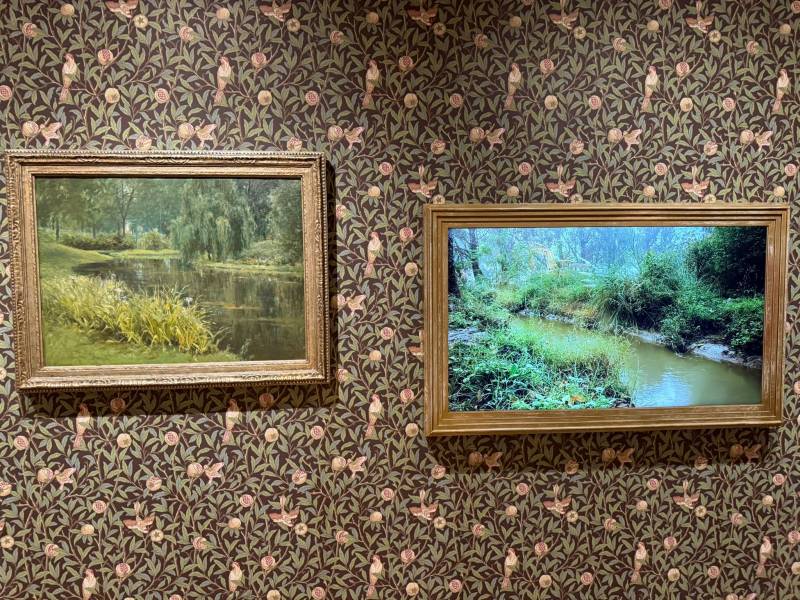
I was fortunate to walk through the exhibition with Atteqa Ali, the brilliant curator behind this project. Atteqa didn’t just explain the works—she opened up their silences, their contradictions. She guided me through the museum’s Victorian period rooms, Chinese scrolls, and industrial landscape collections that Risham had subtly intervened in through video, textile, painting, and assemblage. It became clear this wasn’t simply a show about Lahore or Newark, or even about colonialism or climate change—it was about the fragile, tangled ways in which our destinies are, in fact, shared.

We often look to science and policy to explain our current condition—but it is art that makes us feel it
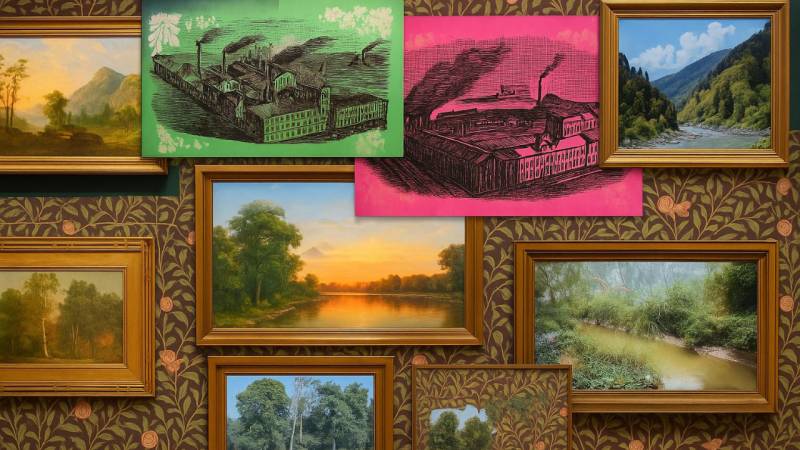
The banners of Pittsburgh: Oliver Iron & Steel Company and Akron: Sewer-Pipe Company, embroidered on vintage Chinese silk, shimmered under the gallery lights. At first glance, they are dazzling, beautiful objects. But the closer I looked, the more unsettling they became. The fabric whispered of trade routes, textile mills, and exploited labour; the thread seemed to glint like oil. These pieces, like so much of Risham’s work, ask us to see how aesthetics can seduce and indict at the same time.
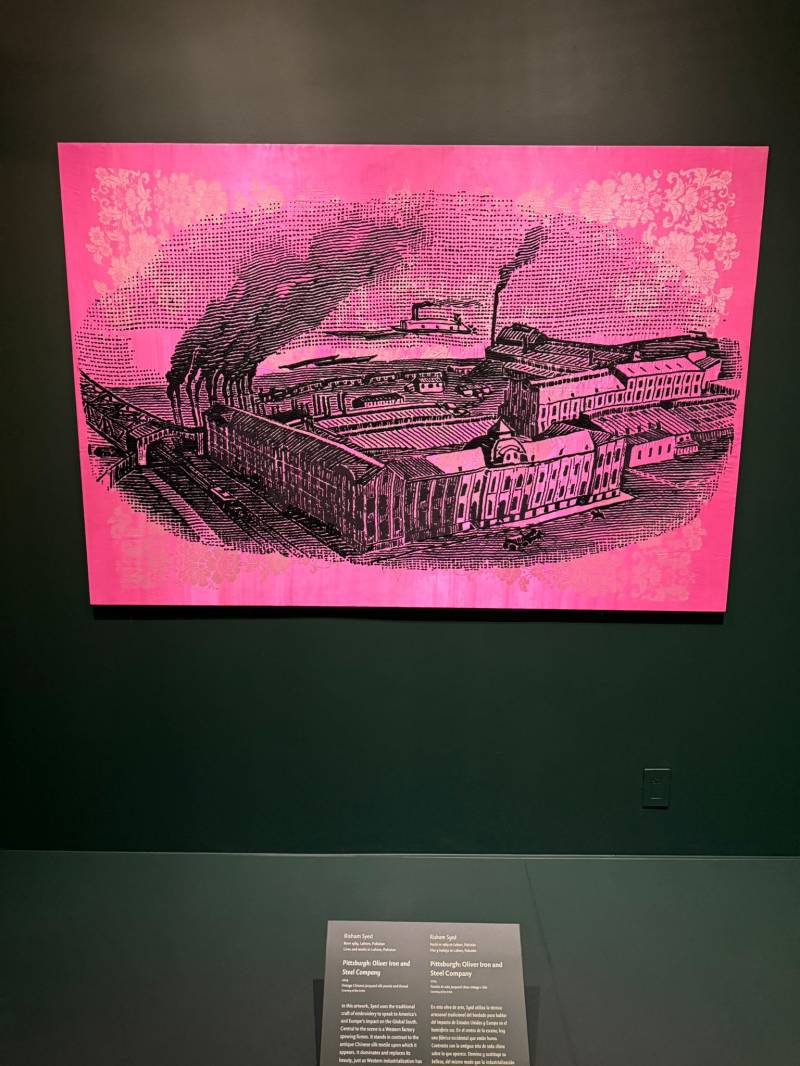
That balance—between beauty and critique, between memory and urgency—is what makes this exhibition so powerful. And so timely. Climate change isn’t addressed here as a slogan or a campaign, but as an atmosphere, a sediment, a consequence of centuries of extraction and dispossession.
A video loop of the Ravi River—its current sluggish, its edges crowded with debris—mirrors Newark’s own Passaic River, long poisoned by industrial waste. These rivers aren’t just metaphors; they are living archives of our collective failure to listen to the land.
Risham’s work exists in dialogue with other artists exploring empire and environmental collapse—Yinka Shonibare, Kader Attia, Shahzia Sikander—but what sets her apart is her intimacy with place. Her materials feel lived-in: the silks, the soil, the maps, the relics of ordinary life. She doesn’t position herself outside the histories she critiques—she’s inside them, stitching from within. There’s no aesthetic distance here. There is presence, vulnerability, and profound attention.
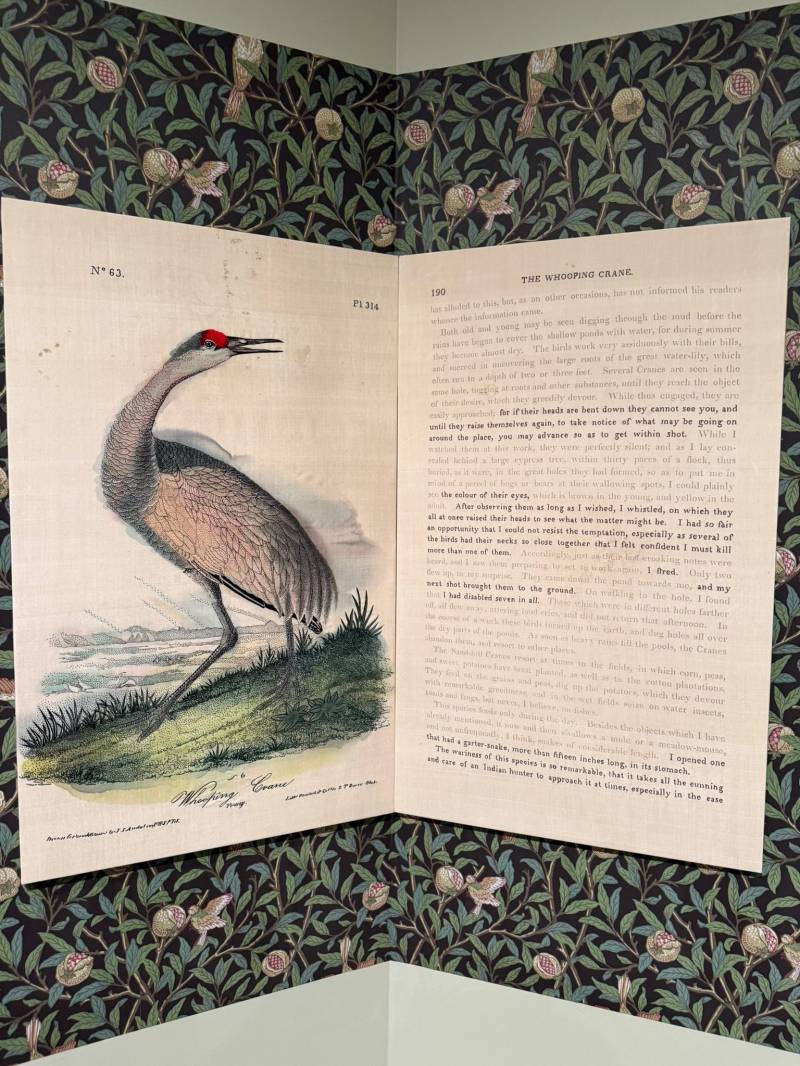
One vitrine especially lingered with me: her miniature cityscape installed next to a set of delicate bird illustrations by John James Audubon. I remembered, as Risham intended, that Audubon shot the birds he painted—killed them, wired them into lifelike poses. This moment in the show becomes a quiet revelation: the violence beneath the beauty, the violence of “scientific curiosity”, of collecting, of naming and displaying. It felt deeply personal—because we’ve inherited those same systems of classification, conquest, and forgetting. The British plundered India and what would become Pakistan with that same cold logic; Native American land was claimed and mapped with similar precision. It’s all part of the same archive.
As a Pakistani-American, someone who belongs to both—and at times to neither—this exhibition resonated deeply. I saw Lahore in the rust of Newark, and Newark in the murky waters of the Ravi. We are all breathing the same contaminated air, mourning the same broken systems. Climate change is not something that is coming; it is already here, and it touches everything: memory, identity, economy, even the act of making art.
And that’s why exhibitions like Destiny Fractured matter. We often look to science and policy to explain our current condition—but it is art that makes us feel it. Risham doesn’t offer solutions. She offers texture, history, and the painful elegance of acknowledgement. Her work reminds us that while fracture is inevitable, repair is still possible. That to face what we’ve inherited—colonial scars, capitalist debris, warming skies—is not just an intellectual act but a moral one.
The exhibition showcases a video: a river, slow and shimmering. It trembles as you walk past it, almost as if it breathes. I stood there for quite some time. Watching. Feeling. Wondering if repair begins like this—quietly, with attention, with witness. With a stitch.