

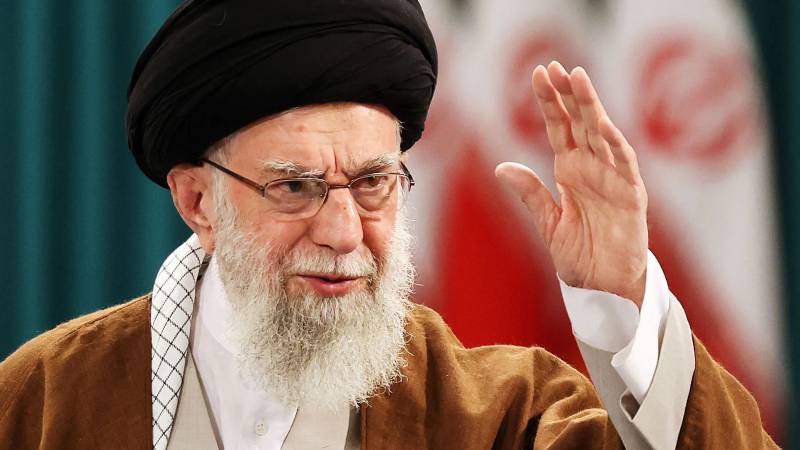
One of the central dynamics that has defined the balance of power in the Middle East for decades has been the fierce rivalry between Israel and Iran. Both sides have, on innumerable occasions, advocated for the collapse of the other’s ruling regime as the only path towards peace. With Israel opting for all-out war to prevent Iran from building nuclear weapons, it has continued to demand that the United States become directly involved and invade Iran to depose the Iranian government. Calling for regime change is easy but creating a framework for what should follow is extremely difficult. In my opinion, there are five possible scenarios that would likely emerge as a result of the collapse of the ruling regime in Tehran. To prepare for the turbulent times ahead, let us assess each of these outcomes on their merit and feasibility to determine their likelihood.
Democratic System
This is the most unlikely scenario. The United States has used the “spread of democracy” to justify numerous foreign policy decisions since the end of the Second World War, however it has never succeeded in forcibly imposing a democratic system of governance on another state. Iran, throughout its history, has never been a proper democracy. While the current system does include democratic elements such as a Parliament and a President who are elected by the people, their powers are ultimately subservient to the Supreme Leader. As it stands, Iran lacks some of the essential ingredients to foster a healthy democratic system, such as an impartial judiciary.
Western-backed Dictatorship
The imposition of a new regime backed by the West is likely to end in disaster. The Iranian people would never accept a leadership that is put in place by the United States and Israel; therefore any such regime would undoubtedly face a popular revolt. In order to stay in power, the new leader would be forced to carry out widespread repression. Moreover, to appease Western backers, the regime would likely adopt a secular stance, thus leaving itself open to religious sentiments being weaponised against it. Ultimately, it would suffer the same fate as the Afghan government following the American withdrawal.
The consequent regional instability would likely have an adverse impact on trade through the Strait of Hormuz and force foreign powers to deepen their involvement
Complete Balkanisation
This scenario, which would involve not just the collapse of the current Iranian government but the complete dissolution of Iran as a state entity, would likely be the preferred outcome for Israel. It is, however, highly unlikely as the people of Iran have a strong and centralised national identity which goes back to the Persian Empire. While its somewhat diverse ethnic make-up may expose some vulnerabilities, the level of religious homogeneity in the country would likely supersede any ethnic divisions and make widespread ethnic violence unlikely.
Collapse of the Ayatollah Regime, Retention of the Islamic Republic
This scenario would emerge if Israel were able to successfully eliminate the entirety of Iran’s leadership through its aerial campaign but fails to initiate a ground campaign, thus leaving the state structure of the Islamic Republic intact and allowing new leaders to take power. This new leadership would likely soften its stance on Israel and the West in the short term to end hostilities and consolidate its grip on power. In the long term, in order to appeal to the anti-Western sentiments of the Iranian people and as a result of the Islamic Republic remaining intact, we would likely see a return to the status quo, with the new leadership cementing power through opposition to the West.
Widespread Insurgency
This is the most likely scenario to emerge from an invasion of Iran and a consequent occupation by a Western coalition led by the United States and Israel. The insurgency would likely be made up of remnants of the Islamic Revolutionary Guard Corps and the Iranian military. Similar to the aftermath of the Soviet-Afghan War and the collapse of Saddam’s regime in Iraq, religious extremism would become widespread. With the collapse of the Islamic Republic, new groups would likely seek to replace it as the spiritual leader of Shia Muslims. The consequent regional instability would likely have an adverse impact on trade through the Strait of Hormuz and force foreign powers to deepen their involvement.
War-hawks in the United States and Israel who continue to call for an end to the current regime in Tehran likely understand the regional instability they would be unleashing. While they may believe that any of the above outcomes would be preferable to the Islamic Republic’s organised opposition to Israel, this just shows a lack of understanding of the regional and global consequences of such a course of action. The Trump Administration ought to remember the lessons of the Iraq War and avoid making the same mistakes, lest the United States find itself embroiled in another ‘forever war’.