

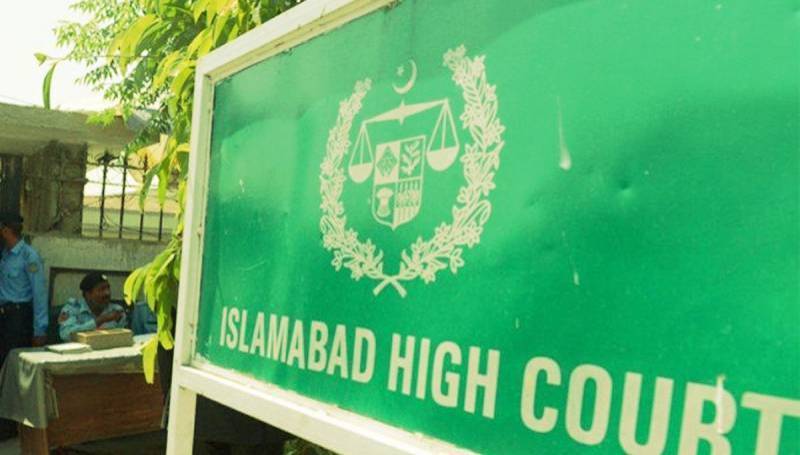
The Islamabad High Court was once the guardian of fundamental rights, a sentinel against arbitrary authority and a steadfast protector of liberties enshrined in the Constitution. It stood as the premier forum for habeas corpus petitions, a beacon of hope for families of abducted or missing persons and held the executive accountable for any overreach. Yet, in a twist of cruel irony that no mortal could have foreseen, the very judges of the Islamabad High Court, once its protectors, would themselves seek justice and due process.
In the wake of the 26th Constitutional Amendment and the controversial transfer of Justice Sarfraz Dogar as Chief Justice of the Islamabad High Court, a grim shadow has descended upon its once-solemn halls. Its moral stature, painstakingly nurtured over years, has withered, leaving the nation to witness an institution retreating from its loftiest ideals. The venerable mantle has all but vanished; the court, once a vigilant guardian of rights, now seems shackled and its independence seemingly subordinated to the will of the executive.
Another lamentable development is the disappearance of judicial deliberation. Authority, once a shared process, has now become centralised, wielded with the unyielding rigidity of a solitary will. The administrative powers of the Chief Justice have crept insidiously into the judicial domain of his fellow judges. It is painfully evident that when the interests of the executive or other powerful quarters are at stake, cases are arbitrarily fixed, transferred, delayed, or, if convenient to the powerful quarters, expedited with alarming speed. The court’s once-resounding moral authority is faltering under the oppressive weight of a despotism within its own walls.
The plight of Justice Tariq Mahmood Jahangiri further exemplifies this decay. Many believe that he is being persecuted for passing orders that did not align with the designs of the powerful quarters. The executive is intolerant of any judicial order that upholds the legal rights of any person associated with PTI or Imran Khan. Whether it was the case concerning Imran Khan or demanding the submission of original Form 45s in the election tribunal, Justice Jahangiri was upholding constitutionalism. Now he faces a frivolous petition regarding the veracity of his law degree. It appears to be a witch-hunt.
The five judges of the Islamabad High Court may appear to be the immediate victims, but as the case proceeds, it is the Supreme Court itself that will truly be on trial
Instead of protecting his colleague, the Chief Justice entertained a petition against Justice Jahangiri in a division bench and restrained him from performing his duties. This was patently unlawful, as the Supreme Court in the Iftikhar Muhammad Chaudhry Case held that a superior court judge cannot be stopped from working except through proceedings under Article 209 before the Supreme Judicial Council. The procedure here was equally flawed: the petition’s maintainability was undecided, the main counsel was on medical leave, and no notice was issued to Justice Jahangiri. What should have been dismissed with costs became the basis for barring him from work.
Judges being targeted is not something new. Earlier, six judges of the Islamabad High Court, including Justice Jahangiri, filed a complaint with the Supreme Judicial Council warning about unlawful interference from intelligence agencies and elements of the executive. They described threats, surveillance and pressure exerted on judges and their families. Yet, the then Chief Justice Qazi Faez Isa failed to act.
Under Justice Dogar, the five judges have complained of being marginalised, stripped of committee roles, and their influence diminished. The court, once a space of deliberation, has become a theatre of arbitrariness. Committees have been reconstituted, rules have been imposed and cases reassigned. The Islamabad High Court Practice and Procedure Rules, 2025 stand adopted without consultation with the full court. Justice Saman Imtiaz, in a cruel inversion of logic, was stripped of her authority by the Chief Justice himself to entertain a harassment complaint against the Chief Justice. Moreover, Justice Jahangiri, via entertaining a frivolous petition, has been restrained from performing his duties by the Chief Justice-led bench.
Feeling constrained, the five judges of the Islamabad High Court have filed petitions in the Supreme Court of Pakistan. In the petitions, they have assailed: i) the illegal exercise of administrative powers by the Chief Justice undermining judicial powers of fellow judges; ii) reconstitution of benches once formed by the Chief Justice; iii) the claim that the Chief Justice is master of the roster, contrary to the judgment of the Supreme Court in PLJ 2024 SC 114; iv) the approval of High Court Rules 2025 by the Administrative Committee, which should have been approved by the High Court in its entirety; and v) the act of entertaining a writ of quo warranto against a judge of the High Court.
On Friday, the nation witnessed these five judges marching towards the filing branch of the Supreme Court of Pakistan, seeking justice. The visual of judges walking with measured dignity evokes both admiration and sorrow: admiration for their bravery and sorrow for the circumstances compelling them to fight for rights they were appointed to guard.
Previously, many judges filed petitions, but mostly for personal grievances. This time it is different: five standing tall to preserve the sanctity of their court. Indeed, a Tolstoyan tableau of conscience confronting power. The walk to the Supreme Court and the filing of petitions is an assertion that the law, though besieged, can still restrain overreach. These judges seek to preserve the soul of the judiciary. Their action is both a protest and a plea: that authority must respect law, that power must be constrained by conscience, and that justice must remain above the whims of one individual.
While it appears that the system of justice is under siege, the courage of five judges inspires hope. This whole drama reminds us that justice is a living pursuit, sustained by courage and conscience. The bravery of the IHC judges and their refusal to submit quietly to administrative autocracy, stand as a testament to the enduring strength of conscience in law.
The fate of all this now rests with the Supreme Court, in particular its Constitutional Bench. The five judges of the Islamabad High Court may appear to be the immediate victims, but as the case proceeds, it is the Supreme Court itself that will truly be on trial. Will it rise to defend judicial independence or merely continue as a spectator applauding its own silence? Perhaps then we shall see whether the Court dares to restore the sanctity of the Islamabad High Court, or whether Molière’s words will haunt it: “It is not only what we do, but also what we fail to do, for which we are accountable.”