

In contrast to the foundational roles occupied by figures such as Muhammad Ali Jinnah, Abul A'la Maududi did not actively participate in the creation of Pakistan. In fact, he initially opposed the partition movement, arguing that the proposed state was being conceptualised by secularists and modernists through the lens of Muslim nationalism. Maududi was staunchly opposed to political and social modernism and rejected nationalism as a construct entirely foreign to Islamic theology, maintaining that the concept of a nation-state was a secular European invention with no legitimate place in Islam. Nevertheless, despite being marginalised by the state during the initial years following independence, Maududi’s intellectual legacy remains deeply embedded across Pakistan’s contemporary social, political, and economic frameworks, where his theories continue to dominate religious discourse. Although he faced state suppression, including a death sentence in 1954 and the proscription of his political party, the Jamaat-e-Islami (JI), in 1964, Maududi consistently retained a strategic network of influential supporters who facilitated his navigation of these political crises. This influence culminated in his eventual positioning as the preeminent Islamist ideologue for the state, especially in the 1970s.
Despite these ideological inroads, Maududi's JI has historically faced electoral failures, never securing more than four seats in any general election. Furthermore, the party has experienced numerous internal schisms over the decades, leading to the departure of prominent ideologues and members who subsequently established independent followings. A significant faction of the membership defected to non-Islamist centre-right parties, notably the Pakistan Muslim League-Nawaz (PML-N) and Pakistan Tehreek-e-Insaf (PTI), where these former JI affiliates achieved considerably greater electoral success than they had within their parent organisation. JI's student wing, the Islami Jamiat-e-Talaba (IJT), has maintained its status as one of the largest and highly structured student organisations in Pakistan. While the IJT initially struggled to compete with leftist student groups like the National Students Federation (NSF) until the late 1960s, it successfully established hegemony across the country’s major colleges and universities by the 1970s. The IJT functions as the primary incubator for JI’s leadership, though its alumni have also significantly populated the ranks of both the PML-N and PTI.
Abul A'la Maududi was born in 1903 in the princely state of Hyderabad Deccan. His father had briefly attended Sir Syed Ahmad Khan’s Muhammadan Anglo-Oriental College in Aligarh before being withdrawn by Maududi’s paternal grandfather, who perceived the institution as excessively ‘Westernised.’ Although his father eventually qualified as a lawyer, his religious conservatism deepened over time. Seeking to insulate his son from Western educational paradigms, he arranged private tutoring for Maududi in Islamic theology, Urdu, Arabic, and Persian. At age 12, Maududi entered the Oriental High School, an institution selected because its curriculum had been developed by the renowned Islamic scholar Shibli Nomani. Alongside theological instruction, the school offered courses in mathematics and English. Maududi subsequently transitioned to a more traditionalist institution, the Darul Uloom in Hyderabad. However, his formal education was prematurely truncated when he relocated to Bhopal to tend to his ailing father. In Bhopal, the young Maududi formed a close acquaintance with the Urdu poet and novelist Niaz Fatehpuri, an intellectual frequently censured by the orthodox ulema.
Fatehpuri encouraged Maududi to pursue a career in literature and journalism. During this formative period, Maududi aligned himself with modernist thought, engaging extensively with the works of European Enlightenment philosophers and the writings of Sir Syed. Following his father's death in 1919, Maududi relocated to Delhi to advance his journalistic ambitions, having previously contributed to a weekly publication that supported the secular Indian National Congress (INC). In a seminal early essay, Maududi enumerated the Enlightenment philosophers whose works he had studied, arguing that their intellectual frameworks had directly catalysed the rise of Western colonial powers. He lamented the negligible impact of Muslim philosophers over the preceding centuries. During this period in Delhi, Maududi also befriended Mohammad Ali Jauhar, an Aligarh alumnus and political activist.
When Jauhar assumed a leadership role in the Khilafat Movement in 1920, he invited Maududi to join the campaign. Maududi accepted, despite reservations from modernists within the All-India Muslim League (AIML) who advocated dissociation from the movement due to its religious and militant undertones. Maududi’s political sympathies during this phase aligned more closely with the INC, which had strategically merged its anti-colonial agitation with the Khilafat platform.

Following the collapse of the Khilafat Movement in 1924, Maududi divided his focus between acquiring formal Islamic theological training and analysing the political philosophy of the liberal Turkish statesman, Kamil Pasha (d. 1913), a prominent secular nationalist. In 1925, Maududi authored a biography of Pasha. However, within a year of its publication, he began to publicly denounce Pasha's ideology. This shift was reminiscent of Allama Iqbal's brief fascination with, and subsequent rejection of, Mustafa Kemal Atatürk. During this period, Maududi maintained a largely secular personal lifestyle. He did not wear a traditional beard, frequented the theatre, appreciated music, and routinely dressed in Western attire. He cultivated a deep interest in Urdu and Persian poetry, with Iqbal remaining one of his primary literary influences. Throughout these formative years, Maududi also briefly engaged with the Deobandi-led Jamiat Ulema-e-Hind (JUH) and the puritanical Ahl-e-Hadith movement, signalling an impending transformation in his perspectives regarding the Indian National Congress (INC).
To Maududi, separating Islam from politics was like separating a vital component of the Quran from the faith; his “asli Islam” had no room for such a separation
Maududi's disillusionment with nationalism intensified following Atatürk's abolition of the Ottoman Caliphate and the subsequent implementation of state-led secularisation in Turkey. He concluded that nationalism offered no strategic benefit to Muslims facing European colonial subjugation. This scepticism was further compounded by his alienation from the INC, which he increasingly perceived as harbouring an underlying Hindu majoritarian bias. Maududi transitioned from endorsing Indian nationalism toward adopting a communalist framework, accompanied by a hardening of his religious views. Despite this theological evolution, he maintained his secular lifestyle and explicitly rejected the designation of cleric or member of the ulema. Nevertheless, he grew increasingly committed to safeguarding the socio-political interests of Indian Muslims against Hindu majoritarian assertions. In 1937, at the age of 34, he married Mahmudah Begum, an educated, liberal woman who rode a bicycle and chose not to observe the traditional veil (purdah). This was a personal choice Maududi fully accepted.
The Making of an Ideologue
The 1930s marked a critical juncture in Maududi's intellectual trajectory. Although he succeeded in meeting Muhammad Iqbal, the encounter reportedly left the poet unimpressed. In 1937, Maududi met Manzoor Nomani, a prominent Islamic scholar who sharply admonished him for his lack of a traditional beard and his perceived lack of spiritual direction. This encounter precipitated an existential crisis, out of which Maududi emerged with a more assertive and definitive authorial voice. Following the decisive victory of the INC in the 1937 provincial elections, Maududi's rhetoric grew increasingly urgent. He warned that Muslim nationalism was insufficient to prevent the political marginalisation of India’s Muslims. Instead, he advocated for a return to an unadulterated form of Islam to prepare for future political struggles, suggesting that Muslims should reject Hindu political ascendancy by asserting an Islamic civilisational claim over the whole of India.
In a subsequent essay, Maududi attributed the decline of Muslim power in India to the Mughal Empire, particularly criticising Emperor Akbar for allegedly undermining Islamic orthodoxy and deviating from orthodox tenets. He dismissed the architectural achievements and cultural grandeur of the Mughal court as decadent symbols of an unprincipled dynasty, arguing that their syncretic policies had initiated the decay of Islam in the subcontinent. This reactionary critique stood in stark contrast to the 19th-century perspective of Sir Syed Ahmad Khan, who had attributed the fall of the Mughals to their failure to adopt scientific and technological advancements and new knowledge. Maududi’s critique aligned closely with the traditional views of the ulema, who historically blamed the Mughal rulers for failing to strictly enforce Sharia laws and for being excessively accommodating toward the Hindu majority.
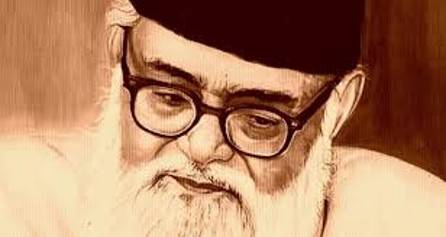
To articulate the specific theological baseline from which he argued the Mughal Empire had strayed, Maududi employed the term asli Islam (authentic Islam). While 19th-century ulema had posited a similar critique of Mughal decadence, Maududi's definition of the concept diverged sharply from both traditionalist and modernist contemporaries. To Sir Syed, asli Islam was inherently rational, accessible primarily through the faculty of aql (reason). Muhammad Iqbal posited that authentic Islam must be embraced through ishq (spiritual passion), viewing aql merely as a pragmatic tool for material existence that, if overemphasised, risked reducing a spiritual force into a sterile intellectual exercise. Maududi, however, departed from the epistemological rationalism of Sir Syed and the spiritual intuitionism of Iqbal. He conceptualised asli Islam as a comprehensive blueprint for the governance of a society, thereby transitioning into his final and most influential intellectual phase: that of an Islamist ideologue.
By the late 1930s, the political discourse in British India had become thoroughly dominated by the modern concept of the state, a construct originating in Enlightenment-era Europe and subsequently diversified by the 1917 Bolshevik Revolution in Russia. Within this context, the All-India Muslim League advocated for a separate Muslim-majority nation-state, the Indian National Congress sought a pluralistic state, and Indian leftists campaigned for a socialist state. Maududi exhibited a parallel fascination with state theory, adapting it to formulate his vision of a Sharia-based state model, which he termed hukumat-e-ilahi.
To realise this vision, Maududi founded the Jamaat-e-Islami (JI) in 1941 with the explicit purpose of propagating asli Islam through a highly disciplined vanguard of trained Muslims with the task to engineer an Islamised polity capable of creating and sustaining a hukumat-e-ilahi. This vanguard methodology was heavily influenced by Maududi’s reading of Marxist-Leninist political theory. Orthodox Marxist doctrine posited that specific socio-economic conditions, namely, the rise of a revolutionary bourgeoisie to overthrow an agrarian aristocracy, were historical prerequisites before the proletariat could launch a socialist revolution. Recognising that imperial Russia lacked a robust bourgeoisie but possessed a massive agrarian and nascent working-class population, Vladimir Lenin bypassed historical determinism by establishing a disciplined communist vanguard to actively manufacture the requisite revolutionary conditions through propaganda and strategic political agitation.
Maududi observed the efficacy of this methodology firsthand when a small cadre of Indian communists successfully mobilised widespread public support in Hyderabad Deccan. He remarked to a colleague that despite the general populace not subscribing to communist ideology, a select group of dedicated organisers had successfully channelled popular discontent.
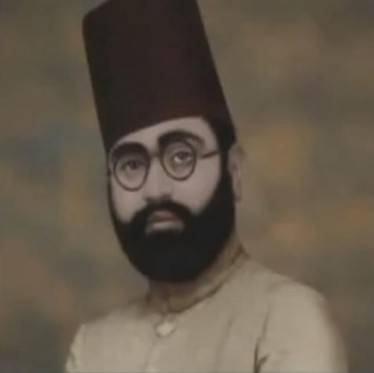
Convinced of the utility of this Leninist strategy, Maududi structured the JI along similar lines. He recruited educated, predominantly middle-class, ‘pious’ Muslims, transforming them into an ideological vanguard tasked with popularising his conception of asli Islam. The JI prioritised rigorous party discipline and organisational cohesion over mass membership. While Maududi also observed the organisational techniques of Inayatullah Khan Mashriqi's far-right Khaksar movement, which drew inspiration from European fascist structures, Maududi maintained that his primary organisational model was the early Islamic community, wherein a cohesive group successfully institutionalised and propagated the new faith.
In Maududi’s historical framework, once the early Islamic community secured sufficient adherents and displaced the ruling elites of Makkah and Medina, the group established a societal framework to govern the faith's inaugural ‘state.’ However, historical scholarship indicates that premodern polities lacked the administrative infrastructure and institutional capacity required to regulate the daily private and public affairs of their subjects in the manner of a modern state. Though likely aware of these structural differences, Maududi chose to conceptualise the 7th-century caliphate as an ideological precursor to the 20th-century bureaucratic state. His hukumat-e-ilahi was thus designed as a modern, totalitarian manifestation of this idealised 7th-century model. By fusing theology with the mechanics of modern statecraft, Maududi challenged a prevailing consensus among contemporary Muslim intellectuals who, even when acknowledging the early historical governance role of the first Muslims, cautioned against grafting a modern political dimension onto Islam due to the risk of contaminating religious ethics with the moral compromises inherent in modern politics.
But to Maududi, grabbing political power was a vital component of Islam. One of the earliest advocates of what Maududi was suggesting was Hasan al-Banna (d. 1949). Banna was an Egyptian imam opposed to British rule in Egypt. But unlike Egyptian nationalists who were modernists, Banna sought Egypt’s liberation not only from the British, but also from ‘Westernisation.’ To Banna, Islam was a ‘complete code of life.’ He declared that the Quran was the only ‘constitution’ that a Muslim society required to form a morally sound community. To achieve this, he formed an organisation called the Muslim Brotherhood (MB). Banna’s ideas influenced Maududi, but Maududi evolved them and began to influence the MB in return. It was a case of cross-pollination of ideas.
Maududi argued that the Quran obliged Muslims to establish a state based on divine sovereignty and reject jahiliyya or the embodiment of human sovereignty. The term jahiliyya appears in the Quran to describe those who opposed God’s messenger and wanted to remain ignorant about his message. The word also became synonymous with the so-called ‘pagan’ community that existed in Arabia before the arrival of Islam. The term was revived in the 13th century by the Islamic scholar Ibn Taymiyyah (d. 1328) and then by the founder of ‘Wahhabism’ Muhammad ibn Abd al-Wahhab (d. 1792) to mean Muslims who were still in a state of ignorance because they were not aware of authentic Islam.
This is how Maududi used it as well, mainly to criticise the Muslims of his time who had adopted ‘Western’ ideas and habits and were basing their politics on secular ideologies such as nationalism, liberalism, socialism, and communism. He claimed that such Muslims were ignorant of the fact that what they were doing was contrary to their faith. This notion was then adopted by the MB to denounce Arab nationalism. Maududi insisted that secular Western societies that are praised for their achievements were actually existing in a state of jahiliyya because they had become amoral, materialistic, and ‘Godless.’ He wrote that Western ideas had impacted Muslim societies, turning them into a crude combination of Islam and jahiliyya. Maududi’s ideas in this context were adopted by the Egyptian Islamist ideologue, Sayyid Qutb (d. 1966), who went on to declare that every society in the world, including Muslim, was completely engulfed by jahiliyya. Qutb urged that it was the obligation of every Muslim to wage armed and moral jihad against this.
Drawing on Marxist-Leninist political theory, Maududi founded the Jamaat-e-Islami to propagate authentic Islam through a highly disciplined vanguard of trained Muslims
Maududi was often confronted by the Islamic modernists of his generation, who admonished him for turning a moral guide (the Quran) into a political manifesto. But Maududi was unmoved. To him, separating Islam from politics was like separating a vital component of the Quran from the faith. His asli Islam had no room for such a separation. To him, this separation smacked of secularism. He began to view Islamic modernists as secularists hiding behind the cloak of Islam. Islamic modernists such as Sir Syed had agreed with Enlightenment philosophers that, historically, politics had had a corrupting influence and should be kept away from religion. But men such as Maududi, Banna, and Qutb chose to ignore this.
They also ignored the fact that in premodern Europe, Christianity had been turned into a repressive political tool. But to Maududi, the instilment in Muslim societies of the kind of morality and values that he was propagating, and the importance that he was giving to the need of having a ‘pious’ ruler at the centre of his hukumat-e-ilahi, would not only keep Islam ‘pure,’ but the politics of this hakumat too would be pristine.
Rage Against Jinnah
But there were not many takers for the Islamic realm that he was promising. He was disturbed when he saw Jinnah’s AIML manage to attract a lot more attention from India’s Muslims than his concept of hukumat-e-ilahi. Jinnah was promising something tangible: a separate Muslim-majority state, and the economic and political benefits of a territory where Muslims would become a majority. Maududi, on the other hand, was promising a kind of utopia, propagated through a tiny party headed by a self-appointed Islamist intellectual elite. It didn’t help when Maududi began to viciously criticise the AIML, especially Jinnah, who by the early 1940s had risen to become India’s most prominent Muslim politician. Jinnah’s rise bruised Maududi’s ego, and he committed himself to attacking Jinnah at every opportunity.
Maududi raged against Jinnah, mocking him for being an ignorant Muslim who had no knowledge of Islam. He declared that what Jinnah and his colleagues were planning to create was napakistan (impure) not only because they were modernists, but also because they belonged to a branch of Muslims who had ‘escaped’ to India hundreds of years ago due to their heretical beliefs. To Maududi, Muslim rule in India was therefore largely shaped by those who had no idea what asli Islam was. And when they fell away and the British took over, asli Islam continued to elude Indian Muslims because they then began to adopt Western habits and ideas. He emphasised that AIML was looking to form a ‘Muslim nationalist government’ (which he saw as being inherently secular), whereas he was striving to form an ‘Islamic government’ (headed by pious rulers and navigated by Sharia laws).
Maududi described Jinnah as irreligious and a farangi (Westernised). He wrote that Jinnah didn’t even know the basics of Islam. According to Maududi, the formation of a Muslim-majority country by ‘token Muslims’ and for a polity that knows nothing about asli Islam would be a disaster. He offered a widespread Islamic movement (headed by a party of pious and knowledgeable Muslims) as an alternative to Muslim nationalism. He wrote that the goal should be to form a thoroughly Islamised society and then an Islamic state. He added that such a state could be formed in India (without partitioning the region). Indeed, the more focused and popular Jinnah got, the more absurd Maududi began to sound. He was positing the return of Muslim rule in Hindu-majority India, but one that would not be headed by ‘heretical’ Muslims like it was in the past, but by Muslims well-versed in asli Islam.
During the important 1946 elections in British India, some ulema agreed to support the AIML. Maududi warned them that in the country that Jinnah was seeking to create, their fate would be the same as that of the ulema who had supported the coming to power of Mustafa Kemal in Turkey. He feared they would be banished. However, after AIML emerged as the largest Muslim party in the elections, and a year later, succeeded in creating Pakistan, Maududi decided to settle in the new country.
Reconciling with Pakistan
In Pakistan, he almost immediately ran into trouble. His continuous criticism of Jinnah, and of what he termed was an ill-planned scheme (the creation of Pakistan), and of the Muslim League’s ‘confused’ ideology that moved from secularism to Islam and back to secularism, led to the suspension of the publication of his party’s magazine (Tarjuman) by the government. He was then apprehended and put under house arrest. However, in September 1948, when Jinnah passed away, Maududi penned an obituary of the founder of Pakistan. In it, he praised Jinnah’s personality that had galvanised millions of Muslims towards supporting his cause. The obituary was clearly a signal by Maududi that he was now willing to make peace with the state of Pakistan. Yet, he was unwilling to pledge allegiance to it because, he claimed, the state was still planning to declare Pakistan a secular country. In 1949, he was arrested again when he criticised the state and the creation of Pakistan in lectures and insisted that the country adopt his idea of the Islamic state. However, when the government resolved that the constitution of Pakistan would recognise divine sovereignty (the 1949 Objectives Resolution), Maududi agreed to pledge his allegiance.
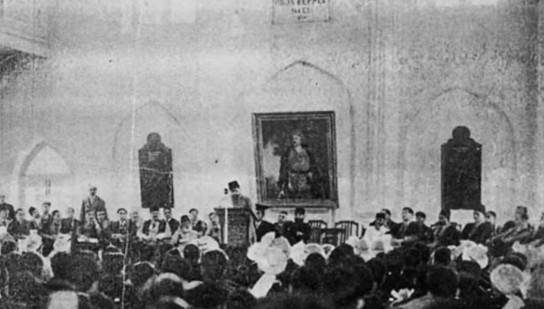
Maududi could have faced sterner repercussions for his anti-Jinnah and anti-Pakistan tirades. Pashtun, Bengali, and Sindhi nationalist leaders were dealt with in a much harsher manner. In fact, the party headed by the Pashtun nationalist Ghaffar Khan was banned by the state of Pakistan. JI wasn’t. Maududi had competed with Jinnah to be the one who should lead the Muslims of India because supposedly he was armed with a more cohesive political philosophy and plan. His bitterness towards Jinnah and the AIML was deeply rooted in this. However, Maududi had managed to find support among certain influential segments in the civil services, economic elites, and in urban middle-income groups. These came in handy after the creation of Pakistan. They were the ones who dissuaded the state from taking harsher measures against him. What’s more, just months after coming into being, the state of Pakistan had actually ‘invited’ Maududi to deliver a series of lectures on Islam on Radio Pakistan.
My maternal grandfather was a Mohajir. As a young man, he was a member of AIML’s student wing and then a passionate supporter of Jinnah’s ‘Pakistan Movement.’ From his hometown in Delhi, he moved to Calcutta to start a business in which he was very successful. In 1947, he migrated with his family (that included my then four-year-old mother) to Karachi. And yet, he was also a great admirer of Abul A'la Maududi. There were a number of Maududi supporters in the country’s early business communities and the bureaucracy. To their delight, in 1951, three years after Jinnah’s demise, and two years after the passage of the Objectives Resolution by the Constituent Assembly, Maududi allowed his party to start playing an active role in turning Pakistan into an Islamic state.
Hukumat-e-Ilahi
So, what exactly was Maududi’s hukumat-e-ilahi? There is no mention of an Islamic state in classical Islamic literature. In the Quran, there is a concept of society/community, but not a state. The Quran lays more emphasis on values, ethics, and morality than on any political doctrines. It is deen (religion) which matters more than governance. Thus, what the Quran talks about is a deen, not a political system. The political system in the Muslim world had to evolve over a period of time and in keeping with one's contemporary needs and requirements.
But advocates of the Islamic state have always insisted that the Quran is packed with references alluding to the creation of a state. They point to Islam’s ‘first state’ in the 7th century as an example. They explain this state as an all-encompassing entity with established state structures. But states of this nature did not fully begin to form till the 18th and 19th centuries. Various scholars and political scientists have argued that less than one percent of humanity’s history has been lived out under even the most primitive of state forms.
The earliest modern states emerged not more than 300 years ago. Traditional (i.e., premodern) states took a variety of forms: city-states, feudal systems, patrimonial empires, nomad or conquest empires, and centralised historical bureaucratic empires. Premodern states ruled over a particular territory, but generally, they lacked the administrative or military capacity to govern (i.e., to exercise day-to-day control and surveillance over their populations). They generally lacked conceptions of sovereignty, monopolistic authority, nationality, constitutionality, and so on. They also lacked self-consciousness of themselves as states.
Yet, Islamists have sketched a memory of a 7th-century Islamic state in Arabia that operated like a modern state and/or a state that was conscious of being a state, with the infrastructure and capacity to surveil its populations and interfere in and regulate the day-to-day affairs of its subjects. This was never the case. As mentioned, there is nothing in the Quran about an Islamic state, nor are there any prominent examples of such a state ever existing till the 20th century. The concept of the Islamic state was formulated in the 20th century when the idea of the modern state came to full fruition and Islamists began to conceptually mould it as a theoretic model. The so-called Islamic states that did appear in the 20th century, in regions such as Saudi Arabia, Iran, and Sudan, were nothing like the ‘Islamic states’ that the Islamist theorists had visualised. They were modern bureaucratic states that adopted Islam as a state creed, and ‘Islamism’ (itself a 20th-century construct), as a political ideology.
Although Maududi positioned himself as a realistic theorist formulating an objective political idea, the initial architecture of his hukumat-e-ilahi relied upon a romantic methodology similar to that of Allama Iqbal, drawing conceptual inspiration from Friedrich Nietzsche's critique of the Enlightenment. Nietzsche had vehemently resisted modernist paradigms, famously asserting that modernity had effectively engineered the "death of God". Friedrich Nietzsche warned that a secularised world would inevitably succumb to nihilism. However, equally dismissive of institutional Christianity, Nietzsche did not seek a return to an authentic premodern faith as such. Instead, he advocated for the emergence of the Übermensch (Overman), an individual who, through an act of supreme will, would transcend conventional religious morality, the constraints of rationalism, and nihilism to forge an entirely new value system. For Nietzsche, such exceptional figures and societies had existed before the birth of Christianity. Indeed, but they existed in a romanticised and mythologised premodern past, a premise grounded more in European mythological folklore rather than in substantiated historical analysis.
Iqbal too developed an aversion to Western modernity and Enlightenment thought. Rather than dismissing his faith, he argued that these forces had diluted the spiritual conviction of the faith’s adherents. To counter this ‘decay’, Iqbal proposed the cultivation of a ‘New Muslim Man,’ frequently conceptualised as the Mard-e-Momin. Driven by an intense self-consciousness and self-awareness (khudi), this individual's understanding of the divine would be forged through ishq (spiritual passion) rather than aql (intellect). Metaphorically represented as the shaheen (falcon), this figure would act dynamically to galvanise khudi and ishq within the broader Muslim community, ultimately positioning its members as divine vicegerents on earth. Iqbal marginalised aql, maintaining that pure rationalism inevitably blunted the transformative power of ishq. This framework remained inherently romantic and a symbolic and imaginative construct tethering to an idealised historical past that empirical historiography cannot readily validate.
While Maududi’s authorial tone lacked the poetic animation of Nietzsche or Iqbal, opting instead for a deliberate, journalistic clarity, his theoretical critique of a ‘corrupted’ society similarly commenced with an indictment of modernity. Maududi characterised the contemporary era as a period of jahiliyya wherein European ideas had intellectually subjugated the Muslim world. Viewing modernity as the product of absolute materialism, he argued that all existing socio-political systems, specifically secularism, liberal democracy, communism, and nationalism, were inherently unstable and deeply flawed. Sometimes his critique mirrored early 20th-century European Romantic intellectuals who blamed Enlightenment rationalism for the unprecedented violence of the First World War. Secularism, a direct derivative of the Enlightenment, had become constitutionally institutionalised across most Western nation-states by the early 20th century.
This framework increasingly attracted Muslim nationalists and intellectuals who adopted an Islamic modernist approach, interpreting sacred texts as ethical frameworks rather than rigid codes of civil law. They argued that these texts required rational, contextual interpretation to prevent them from becoming fossilised in a premodern past, emphasising that the absence of a formal ecclesiastical hierarchy rendered Islam inherently compatible with secular governance. By the 1920s and 1940s, secularisation was aggressively pursued by state elites in Muslim-majority countries such as Turkey, Afghanistan, Iran, Albania, and Tunisia. Because the dominant strains of contemporary Muslim nationalism were predominantly secular, Maududi viewed both secularism and nationalism as destructive forces.
To Maududi, these concepts represented existential evils. He posited that secularism inherently demanded the total repudiation of religion by relegating faith entirely to the private sphere, thereby granting humans the autonomy to dictate societal objectives. This characterisation, however, was fundamentally adversarial. Historically, secularism does not inherently seek the eradication of religion. Rather, it functions as a religion-neutral framework, obliging the state to maintain institutional neutrality toward matters of faith provided they do not destabilise public order. Maududi’s critique linked state neutrality with active state-sponsored atheism. To him, secularism aimed to depoliticise religion by restricting it to private conscience. He maintained that political governance was an intrinsic, non-negotiable component of Islamic theology and concluded that secularism was irreconcilable with Islam.
Despite having studied John Locke, one of the foundational theorists of secularism, Maududi’s critique overlooked the historical reality that secularism did not emerge from an ideological vacuum driven by atheistic intent. Initially, the concept developed as a pragmatic resolution to internecine Christian sectarian conflicts. In the 16th century, the German theologian Martin Luther instigated the Protestant Reformation, rebelling against the perceived corruption and temporal hegemony of the Papacy and the Catholic Church. While remaining a devout theologian, Luther accused the ecclesiastical hierarchy of exploiting its spiritual monopoly for material enrichment. To dismantle this priestly mediation between humanity and the divine, Luther translated the Bible from Latin into vernacular German, enabling direct scriptural access for the common folk. Recognising that the institutional power of the Catholic Church was deeply embedded within the medieval social fabric, Luther concluded that only the temporal authority, the "sword of the prince", possessed the requisite power to dismantle Catholic hegemony, thereby inadvertently laying the groundwork for the separation of church and state.
According to Luther, temporal power required consolidation within the institution of the monarchy. While acknowledging that princes were frequently vain and arrogant, he posited that they alone possessed the coercive authority necessary to eradicate Church corruption and restore the integrity of Christianity. Luther was effectively proposing an alternative authoritarian framework designed to curtail the pervasive power of the Papacy, thereby establishing a pristine Christian realm governed by royal authority. But John Locke rejected the notion of employing temporal autocracy to enforce religious uniformity, advocating instead for a rational and tolerant reading of Christian scripture. Locke maintained that institutional tolerance constituted the defining characteristic of the true Church, arguing that any aspiration to construct a geopolitical Christian kingdom ran counter to the foundational tenets of the faith.
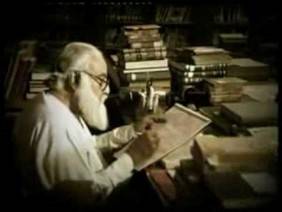
Locke asserted that any government claiming to rule in the name of Christianity undermined the ministry of Jesus, who remained consciously detached from temporal power and material wealth. For Locke, governing under the banner of divine right was an inherently un-Christian act. Maududi's aversion to secularism stemmed from its insistence on bifurcating religion and politics into mutually exclusive spheres, relegating the former to private metaphysical devotion while assigning the latter to the regulation of public, temporal spaces. Maududi observed that Indian Muslim nationalism strategically utilised Islam as a cultural signifier to forge a cohesive political identity, deliberately eschewing the deeper theological and theocratic obligations of the faith. To Maududi, these theocratic dimensions were not only mandatory but inherently political. While the nationalist leadership did not consult the Quran to construct their political discourse, Maududi did, asserting that his conceptualisation of hukumat-e-ilahi was derived directly from scriptural exegesis.
This thesis faced immediate contestation from both Muslim nationalists and prominent traditionalist ulema, who argued that the Quran did not mandate a specific state model. Notably, the Deobandi clerical leadership within the Jamiat Ulema-e-Hind (JUH) expressed a willingness to operate within a secular constitutional framework, provided it guaranteed religious liberty and the freedom to practise Islamic law. Seeking to distinguish his ideology from both secular nationalism and Islamic orthodoxy, Maududi formulated his comprehensive doctrine of the state. He was deeply intrigued by the expansive regulatory capacity of the modern bureaucratic state, which had assumed an all-encompassing role in structuring daily human life. Yet, he lamented that these institutions were guided by human legislation. He argued that Muslims were religiously obligated to establish an all-encompassing state navigated exclusively by divine law inspired by the perceived governance model of the 7th-century caliphate.
It is highly probable that Maududi’s structural vision was informed by Friedrich Hegel’s philosophy of the ethical state. Hegel posited the existence of an "Absolute" (conceptualised as God) which governs historical progression, with the state functioning as the terrestrial manifestation of this plan. Within the Hegelian framework, the immediate, material interests of the individual occupy a lower moral order than the universal interests of the state. To Hegel, true freedom is achieved only through absolute submission to state legislation, which reflects the will of the Absolute. Hegel argued that the majority of individuals remained ignorant of this higher form of freedom, a conceptual paradigm that closely parallels Maududi's view of societal ignorance (jahiliyya).
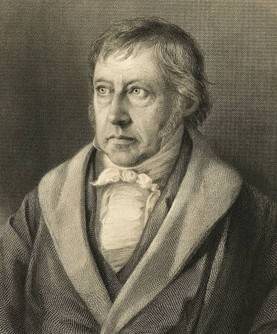
Maududi maintained that only a marginal vanguard of Muslims possessed a true understanding of asli Islam. He extended the concept of divine sovereignty beyond the metaphysical realm into the political sphere, asserting that God must be recognised as the supreme legislator and political sovereign. In this context, he posited that God also functioned as a political entity, arguing that scriptural injunctions to worship God and reject idolatry (shirk) implicitly commanded the establishment of a Sharia-based state. Within Maududi's framework, obedience to the state became functionally synonymous with divine worship. Mirroring Iqbal's efforts to synthesise the metaphysical with the material, Maududi argued that physical governance must be subordinated to divine legislation to serve transcendental ends. He concluded that compliance with the legal codes of a Sharia state was as spiritually obligatory as the performance of canonical rituals, which he viewed as preparatory exercises designed to equip believers to construct and sustain the divine state. Thus, state-building was elevated to an act of worship (ibadat).
Searching for the ‘Great Man’
Where Iqbal had deployed the poetic allegory of the falcon (shaheen) to symbolise khudi or the cultivation of an elevated self-awareness that transforms the believer into an Islamic variant of the Übermensch, Maududi addressed these leadership dynamics through a theory of the "great man". When outlining the leadership structure of the proposed hukumat-e-ilahi, Maududi posited that the state would be headed by a pious ruler selected by an equally pious electorate. The primary legitimacy of this executive leader would derive from an unyielding commitment to Islamic orthodoxy and the defence of the ideological state. His core institutional function would involve the enforcement of a strictly regulated system of social justice and the systematic promotion of public virtue.
In Maududi’s paradigm, the character of a social order was determined entirely by a top-down mechanism. He posited that the moral and theological rectitude of a leader superseded all socio-economic variables in ensuring the successful realisation of societal objectives. This rather authoritarian framework drew sharp criticism from the former Chief Justice of Pakistan and legal intellectual, Justice Muhammad Munir, who characterised Maududi’s proposal as an "Islamic Leviathan" or essentially a totalitarian theocracy established by a self-appointed vanguard after usurping power from existing state institutions to impose a dogmatic governance model.
Maududi’s political theories were largely detached from the complex multi-ethnic, economic, and sectarian realities confronting Pakistan after its independence in 1947. The newly formed state comprised a highly pluralistic polity with competing regional identities and deeply entrenched internal divisions within the Muslim majority itself. Maududi's framework was intrinsically self-referential because he had established the JI specifically as a disciplined vanguard to bring about this divine state. It was understood by Maududi that the ‘great man’ would inevitably emerge from within his own organisation. Although Maududi advocated for an ‘Islamic revolution’ to establish the hukumat-e-ilahi, he envisioned this transformation not as a violent insurrection, but as a gradual process driven by education and ideological persuasion. He maintained that the JI targeted the core principles of its opponents rather than their physical security. However, this non-violent posture was contradicted in 1953 when JI activists participated in violent agitations targeting the lives and property of the Ahmadiyya community in Punjab. Maududi was subsequently arrested for instigating the unrest and was sentenced to death by a military court.
The death sentence was commuted after Maududi served a year in prison, largely due to the intervention of influential domestic networks and foreign allies. Notably, Maududi had cultivated robust relations with the Saudi Arabian monarchy and its religious establishment, prompting Riyadh to successfully pressure the Pakistani government to nullify the judicial verdict. In 1956, when the Constituent Assembly promulgated Pakistan's first constitution, Maududi expressed his approval. Although the document retained a fundamentally secular bureaucratic and legal architecture, he was satisfied with its symbolic designation of the state as an ‘Islamic Republic’ and its formal recognition of divine sovereignty, viewing it as an incremental step toward a fully realised Islamic state. However, this constitutional framework was dismantled just two years later in 1958, when President Iskandar Mirza and General Ayub Khan orchestrated the country’s first military coup d'état, with Ayub eventually consolidating absolute power as ‘president.’
Challenging Modernity
Ayub Khan operated as a committed modernist who viewed communists, ethno-nationalists, and Islamists alike as vectors of political instability. The Ayub regime utilised a secular, developmentalist rhetoric, partially justifying the coup as a necessary intervention to insulate the state from an Islamist takeover. While the administration aggressively suppressed left-wing and regional nationalist movements, it sought to bureaucratically regulate and contain the religious right. By the mid-1960s, the regime had implemented a series of legislative reforms designed to align state institutions with its modernisation agenda. This modernist trajectory placed Maududi in direct conflict with the state. When a JI member accused the regime in 1962 of subverting the "Pakistan ideology", a term left largely undefined but implicitly linked to the Islamic republicanism of the 1956 Constitution, Maududi began to systematically codify the concept. In 1964, the Ayub administration banned the JI on charges of anti-state activity, a decree subsequently overturned by the Supreme Court.
The intellectual polarisation intensified between Maududi and the modernist scholars advising the state, most notably Dr Fazlur Rahman Malik. Recruited by Ayub from McGill University to head the Central Institute of Islamic Research, Rahman identified as a “neo-Muʿtazilite" and represented a revival of the rationalist tradition pioneered by Sir Syed Ahmad Khan. Rahman routinely dismissed Maududi's scholarly credentials, characterising him as a journalist rather than a trained theologian. Rahman argued for a radical reformation of Islamic jurisprudence through a rationalist epistemology, utilising historical-critical analysis to align religious principles with modern societal needs. Drawing on the theological rationalism of the medieval Muʿtazilites, he advocated for a modernist theological system that could accommodate scientific progress. Maududi viewed Rahman's state-sponsored project as a dangerous resurgence of 19th-century assimilationist thought, which he believed his own work had successfully countered. Unlike contemporary Pakistani modernists such as Khalifa Abdul Hakim and Ghulam Ahmad Parvez, who relied primarily on the poetic philosophy of Iqbal to justify state-led reforms, Rahman anchored his arguments in classical rationalist theology.
In 1967, as public opposition weakened the Ayub regime, Maududi launched a concerted campaign against Rahman, accusing him of heresy and undermining the authority of the Hadith as a foundational source of law. Lacking secure protection from a declining administration against mounting public agitation, Rahman subsequently left Pakistan.

It was during this period of political transition that Maududi formulated his thesis on the "Pakistan Ideology" (Nazriah-e-Pakistan). He argued that because the state had been mobilised in the name of Muslim identity, its foundational ideology must be entirely Islamic. This was an intellectual position that stood in sharp contrast to his pre-partition opposition to the state's creation. This was answered by the JI in newspapers sympathetic to the party. According to various articles published in these broadsheets, Maududi wasn’t against the creation of Pakistan as such, but simply wanted the country to be ruled by Sharia laws. An article also claimed that Maududi had actually met Jinnah for this purpose. There is no credible evidence to back this. They never met. Maududi explained Pakistan’s ideology as a dynamic and evolving process, which would gradually help enact an Islamic republicanism whose purpose would be to ‘Islamise’ state and government institutions, the economy and the polity, and shape an Islamic state headed by pious rulers.
The Patriot
In pre-partition India, Maududi’s ideas had failed to gain traction among most Muslims of the region, and in 1970, they failed again at that year’s general elections, held a year after Ayub’s fall. Interestingly, though, after Ayub resigned in March 1969, and handed over power to General Yahya Khan, Maududi was keen to establish good relations with the new dictator. Newspaper reports of JI members meeting Yahya and announcing that the general had assured that he would work with them to ‘save Islam,’ were rather surreal because the general had a reputation of being an alcoholic and a ‘womaniser.’ Yahya was sure that JI was in a position to win enough seats to give him the hung parliament that he was looking for so he could play the role of kingmaker. But this was not to be.
JI was routed at the 1970 polls in both wings of the country. It won just four National Assembly seats (out of 300) and 6.03 percent of the total vote. The elections were swept by the Bengali nationalist party the Awami League (AL) in East Pakistan, and by ZA Bhutto’s PPP in West Pakistan. Maududi and JI fell into despondency. But in 1971, when civil war broke out in East Pakistan, Maududi saw this as an opportunity to get closer to the state’s most powerful institution, the military. JI sent ‘volunteers’ to aid the military in its war against armed Bengali separatists who were being backed by India. Millions were killed in the commotion which ended badly for the armed forces. They were decisively defeated, and East Pakistan broke away to become Bangladesh.
Although ZA Bhutto and his ‘socialist’ PPP formed the new government after removing Yahya, Maududi had successfully managed to repair his reputation from being anti-Jinnah and anti-Pakistan, to becoming a ‘patriot’ working to serve Islam.
Fruitless Search for the ‘Great Man’
The ‘leftist’ energy that had galvanised thousands of people in 1968 against the Ayub regime and also propelled the birth of Bhutto’s PPP, began to burn out by the time Bhutto became president and then (in 1973), prime minister. Due to an international oil crisis, Pakistan’s economy began to contract, and it became quite a task for the government to keep its ‘socialist’ policies afloat. Bhutto began to lose support among the country’s urban-middle and lower-middle classes. More than discussing the economic failings of the regime, the Islamists in the National Assembly made Islam a prominent talking point. Echoing a rhetorical statement of the newly reenacted Muslim Brotherhood in Egypt, Maududi too claimed that “Islam was the solution.”
This statement resonated the most among the urban middle-income groups as the economy struggled to find space for the expanding middle and lower-middle classes. The slogan did not go away even when the Islamists cornered the Bhutto regime to concede quite a few ‘Islamic’ provisions in the 1973 Constitution: rechristening the country as an ‘Islamic republic,’ and agreeing that all laws would be ‘Islamised’ by 1980. The slogan did not go away even after Maududi led an onslaught against the Ahmadiyya community and forced the regime (through street violence in Punjab) to allow the passage of a bill in the assembly to oust the community from the fold of Islam. And when time for the next election approached, an opposition alliance headed by the country’s three largest Islamist parties, including the JI, turned ‘Islam is the solution’ into the promise of ‘Nizam-e-Mustafa.’ This was a clear allusion to the system of governance that Maududi had claimed was implemented in the ‘first Islamic state’ in 7th-century Arabia.
Maududi and his JI had explained the loss of East Pakistan as a consequence of a lack of Islamic laws and the promotion of secular politics and ‘liberal’ lifestyles in the country. Pakistan’s armed forces had plunged into depression. As a response to this, Lieutenant General Zia-ul-Haq began to organise Islamic lectures for the officers and soldiers, and in 1974, the availability of alcoholic drinks was banned in military mess halls. Then, Zia started to hand out books written by Maududi to the officers. PM Bhutto encouraged this because he believed this would neutralise the military’s ‘Bonapartist’ tendencies. This shows how naïve even informed leaders such as Bhutto were, at least in the context of Political Islam and Islamism. To Bhutto, Maududi was just another ‘reactionary mullah’ who could be neutralised with the tossing in of some ‘Islamic’ legislation. There is every likelihood that Bhutto had little or no idea that the books Zia was handing out to officers had in them a roadmap to capturing state power and turning Pakistan into a theocracy. The ‘Islamic leviathan’ as Justice Munir had called it in 1954.
In July 1977, when Zia toppled PM Bhutto, he immediately began to usurp the ‘Islam is the solution’ narrative. And it wasn’t surprising that Maududi instructed his party to join the new military dictator’s first cabinet. Yet, Zia was never seen by JI as the ‘great man’ that Maududi was trying to mould. Maududi saw the military takeover as a launching pad for his party to arrive at the ‘great man’ who would form a hukumat-e-ilahi.
Meanwhile, Maududi also turned his attention to Iran, especially when Ayatollah Khomeini rose to establish an Islamic republic in early 1979. Khomeini was seen by JI as a possible example of the ‘great man’ who was readying himself to form a hukumat-e-ilahi. A senior leader of the JI, Mian Tufail, travelled to Iran after an ailing Maududi declared his support for Khomeini. Mian Tufail wrote that Khomeini’s revolution had unfolded on the lines of Maududi’s theories. Maududi passed away in September 1979. But JI continued to engage with Iran’s revolutionary regime. However, by the early 1980s, most JI intellectuals had begun to exhibit their disillusionment by stating that the Iranian Islamic republicanism had taken an overtly sectarian (Shia) turn and couldn't be emulated as a non-sectarian example of Maududi’s Islamic state.
JI was of the view that Khomeini’s policies had increasingly pushed Iran’s trajectory out of the orbit of a non-sectarian Islamic realm and towards a sectarian one. Zia, on the other hand, exercised the ‘Islamic’ option to actually avoid an uprising like the one that had overthrown the Iranian establishment. Zia began to construct the state as an ‘Islamic’ actor who could ride the tiger of Islamism and harness its energies in the service of the dictatorship. Zia had looked to Maududi as an intellectual force that could serve the same function in his regime as the modernists had done in the Ayub dictatorship, and the left had done in the early period of the PPP regime.
Legacy
Maududi’s ideology tended to support authoritarianism and contained a powerful critique of the left and of Western democracy. Even though Maududi passed away during the second year of Zia’s dictatorship, his legacy is quite apparent in Zia’s ‘Islamisation’ project. Zia greatly depended on Maududi’s ideas regarding the Islamisation of the country’s economics, judiciary, and cultural spaces.
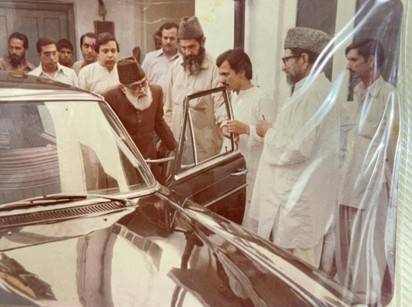
This fact gets diluted because many other Islamist actors too poured in from the opening that was provided by Zia. But the truth is, despite the JI still being an insignificant electoral entity, Maududi’s ideas continue to shape and populate discourses on Islam in Pakistan. He is not taught in schools and there are no portraits of him inside government and state buildings.
But he is often present (sometimes even without being mentioned at all) when a political leader or judge speaks about Islam. In 2023, when the Finance Minister Ishaq Dar stated that he planned to completely Islamise the country’s banking system by 2028, he was speaking Maududi’s language. As a young man, Dar had been a member of the IJT before joining PML-N. But the question is, is the state still looking to construct an Islamic leviathan? No. On the contrary, there is now a feeling within major state institutions, at least within the military, that the Islamisation project has reached its limits. Officers are no longer handed books authored by Maududi. Instead, they are being encouraged to adopt ‘moderate’ and non-political variations of Islam because since 2007, one of the military’s most prominent enemies alongside ‘Hindu India’ are militant Islamists who have killed over 80,000 Pakistanis in the last ten years or so.
There is also an emerging perception in certain left and liberal segments of the intelligentsia that Maududi’s ideas fuelled Islamic militancy. Perhaps this is why his books have been banned in a changing Saudi Arabia, once his strongest ally and facilitator. Political philosophies evolve into becoming political ideologies that are no longer in control of their originators (especially, of course, after they have passed away). These philosophies/ideologies often mutate. And, when they are applied, they can trigger confusion, polarisation, and even ruin. This is what happened to the works of Maududi, especially after they became part of the ideological arsenal of Islamists and when Islamism began to be romanticised by the politicians, the state, and eventually by the postmodernist critics of modernity. Maududi was reduced to being a moral policeman.