

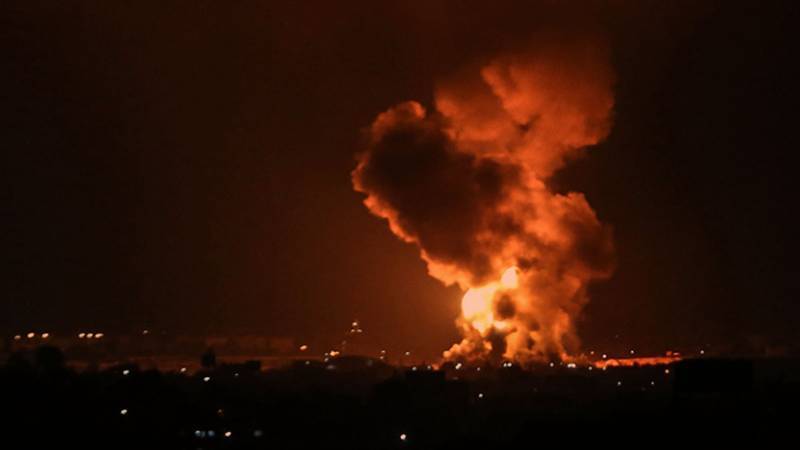
As Israel’s unprovoked attacks and Iran’s legitimate response continue to unfold, the world stands at a critical juncture, with regional allies emerging and nations declaring their support. The shifting landscape of the Middle East has led to a clear divide: countries such as Pakistan, Turkey, Saudi Arabia, China, and Russia are aligning with Iran, while the United States, United Kingdom, France, and Germany are backing Israel. The situation remains precarious and volatile, with new developments emerging by the minute.
Benjamin Netanyahu’s actions have provoked intense criticism and debate even within the Western world. He is widely viewed as a polarising figure, accused of grave offences, unlawful killings, and gross human rights violations. The international community’s response to his barbaric measures has been mixed, reflecting diverging geopolitical interests and priorities.
Many consider Netanyahu to be one of the most dangerous living political figures today—a flagitious character whose growing hostility towards Muslims renders him a major existential threat to the Muslim world. His obsession with domination or obliteration appears increasingly evident. Following Iran’s robust missile attacks on Israel—resulting in Israeli casualties and significant infrastructural damage—Israeli citizens have been forced to seek shelter from skies that once promised rain but now deliver hypersonic and ballistic missiles.
In an interview with ABC News, Netanyahu discussed the possibility of targeting Ayatollah Khamenei, stating that killing him “is not going to escalate the conflict—it’s going to end the conflict.” However, he refrained from explicitly confirming such a plan, stating vaguely, “We’re doing what we need to do.” Notably, former U.S. President Donald Trump reportedly opposed this plan and advised Netanyahu against executing such a reckless and destabilising move.
Iran has become a waking nightmare for Israelis, who now live in fear of missile attacks and pray for survival. The destruction in Israel is being compared to the devastation historically inflicted by Israeli missiles in Gaza. As a result, some Israeli citizens have taken to the streets, protesting against their government's policies and demanding an immediate ceasefire. Israel and the United States have historically embroiled themselves in conflicts across Afghanistan, Iraq, Syria, Palestine, and now Iran—sparking varied and growing dissent even within their own populations.
With the U.S. already embroiled in the Ukraine conflict and Israel expanding its battles in Gaza and possibly Iran, the involvement of other countries will depend on shifting alliances—particularly in South Asia
Iran’s retaliatory strikes have triggered jubilation across the Muslim world, emboldening support for Tehran and fostering unprecedented unity. As Iranian missiles rained down on Israeli targets, images of resistance and triumph ignited sentiments of pride and resilience across much of the Muslim world.
As the sirens wail across Jerusalem, and civilians grieve the loss of loved ones before their eyes, many are blaming Netanyahu’s criminal policies for the devastation now endured by Israeli society. The lives lost are, to many, the direct consequence of his flagrant transgressions and escalation of aggression.
Israelis are known for their love of life, luxury, and modern lifestyles. A viral video circulating on X (formerly Twitter) shows a young Jewish girl crying beside her now-destroyed home. While deeply tragic, some commentators have pointed out that she ought to be thankful the missile did not cost her life. In another video, a girl pleads with former U.S. Vice President Kamala Harris, expressing her fear of dying. It is well known that many Americans and Israelis cherish peace and tend to recoil at the thought of active warfare.
When Israel declared independence on 14 May 1948, Prime Minister David Ben-Gurion reportedly sent a secret message to Muhammad Ali Jinnah, the founding father of Pakistan, seeking diplomatic recognition. Jinnah did not respond—instead, he informed the United States that Pakistan had no intention of establishing ties with Israel.
In the early 1980s, Israel—allegedly in collusion with India—formulated a plan to strike Pakistan’s nuclear facilities at Kahuta. The plan included utilising F-15s and F-16s, refuelling en route via Indian airspace, with Indian Jaguar aircraft also scheduled to assist. However, Pakistan’s intelligence agencies detected and thwarted the plan before it could be executed.
In a 2011 interview, Netanyahu expressed concerns about the potential fallout of extremist regimes gaining nuclear weapons, mentioning both Iran and Pakistan in the context of a possible Taliban takeover. Upon verifying the original source of the video circulating online, it became clear that Netanyahu did not categorically label Pakistan as a threat to Israel. The video shared on X presents a misleading, truncated version of his statement. His full remarks can be viewed at the end of the interview here.
Pakistan’s nuclear programme—spearheaded by Dr Abdul Qadeer Khan—has long served as a key strategic deterrent and made Pakistan a crucial player in Middle Eastern and South Asian security dynamics.
Following recent escalations and what is being seen by many in Pakistan as a ‘glorious’ defence against Indian and Israeli designs, attention now turns to Iran. Tehran, with its demonstrated missile capabilities, is widely believed to have shattered Israel’s miscalculations. Unlike Palestine or Iraq, Iran is capable of launching proportionate and effective retaliation. The death toll on both sides continues to rise, as tensions deepen into what may soon become a full-blown war.
Netanyahu’s long-standing anxiety about Iran's nuclear ambitions stems from his belief that a nuclear Iran would pose a direct threat to Israel’s dominance in the region.
Pakistan’s Defence Minister, Khawaja Muhammad Asif, recently reaffirmed Pakistan’s solidarity with Iran, stating: “If the situation worsens between Iran and Israel, Pakistan will respond and play its part to de-escalate tensions that threaten global stability.” He further noted that Israel, which is not a signatory to the Nuclear Non-Proliferation Treaty (NPT), has acted with complete impunity, committing genocide and violating international law with alarming frequency—making it a growing threat to global peace.
During the Second World War, Adolf Hitler orchestrated the murder of approximately 4 to 6 million Jews. His genocidal policies were rooted in antisemitic ideology and prejudice. While it is essential to study and remember the atrocities of the Holocaust, it is equally important to distinguish between historical horrors and present-day geopolitics. Today’s actions by the Israeli state must be judged by contemporary international law and human rights standards—not excused or justified through historical trauma.
Living through such conflicts is traumatic and scarring. As a Muslim, it deeply wounds me to see innocent lives lost—on any side. However, the Israeli people themselves are being deceived by a media ecosystem that conceals the brutal realities of this war, shielding them from the truth about the conflict’s origins and conduct.
On 13 June, Pakistan’s Deputy Prime Minister and Foreign Minister, Senator Ishaq Dar, introduced a resolution in the Senate condemning Israel’s attacks on Palestine and Iran. The motion, which was unanimously passed, denounced Israel’s actions as unjustifiable and in violation of international law and the United Nations Charter. It also highlighted the humanitarian consequences of Israeli military operations, particularly for women and children, and reaffirmed Pakistan’s commitment to Middle East peace and justice.
As the world becomes increasingly polarised, countries are taking clear sides. Pakistan, Turkey, China, Russia, and Saudi Arabia have rallied behind Iran, while the United States, United Kingdom, and France continue to support Israel. With the U.S. already embroiled in the Ukraine conflict and Israel expanding its battles in Gaza and possibly Iran, the involvement of other countries will depend on shifting alliances—particularly in South Asia, where Pakistan and India remain at odds and China and Russia stand with Islamabad.
The overt alliance between Israel, India, and the United States is increasingly being exposed and criticised across the globe. Their policies and double standards, especially toward Muslims, are drawing growing scrutiny. Resistance to their geopolitical designs is mounting—not just from outside, but from within their own societies.
A war fought in the name of justice, self-defence, and the protection of oppressed people can be morally justified. Iran, in the eyes of many, is now waging a legitimate war against an aggressor. As the smoke of war darkens the skies over the Middle East, people across the world—watching through their screens—must demand their governments push for a ceasefire. The conflict’s potential to engulf surrounding countries and spiral out of control is real. The time to act is now—before it’s too late.