

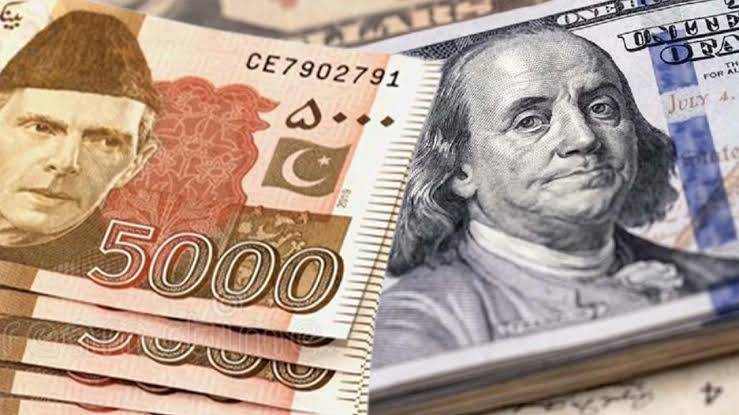
Pakistan’s official foreign exchange reserves have risen to nearly $20 billion — their highest level in over three years. On the surface, this suggests stability: more dollars in the State Bank’s vaults mean stronger import cover, a steadier currency, and more room to negotiate with the IMF and other lenders. Adding to this positive news is the $2.1 billion current account surplus — Pakistan’s first in 14 years and largest in 22 years.
A current account surplus means exports, remittances, and other inflows exceeded imports and external payments, temporarily strengthening the balance of payments. But beneath this headline lies a harder truth: much of these reserves are borrowed, rolled over, or already committed to debt repayments and profit repatriation.
While the current government deserves credit for this short-term cushion — and questions about past governments’ performance are fair — the reality is these reserves and the surplus depend heavily on fresh borrowing, rollovers, and the hard-earned remittances sent home by overseas Pakistanis.
Borrowed Strength — Not Real Growth
In FY 2025–26, Pakistan faces over $23 billion in external debt service: about $11 billion in repayments on Eurobonds, multilateral and bilateral loans, and commercial debt, plus roughly $12 billion in deposits from “friendly” countries — expected to be rolled over if the government needs them again to plug the gap.
Additionally, about $4.6–5 billion in fresh inflows arrived in June — mainly commercial loans and a Sukuk bond at steep rates amid a tough global credit environment. These temporarily boost reserves but increase future repayment burdens.
The so-called friendly deposits are deferred bills recurring yearly. Their rollover merely postpones repayment and does not generate fresh foreign exchange. If any friendly country refuses to roll over, Pakistan must repay immediately, putting severe pressure on reserves.
The Quiet Drain: Interest Payments and Profit Repatriation
The cost of this borrowed “stability” is high:
- Interest on external debt alone will cost about $2.3–2.7 billion this year, covering IMF loans, multilateral repayments, commercial loans, Sukuk, Eurobonds, and friendly deposits.
- Profit repatriation by foreign companies adds ~$2 billion, with dollars flowing out steadily as Pakistan clears blocked dividends from telecom, oil & gas, and consumer sectors.
Together, these drains consume about $4.5 billion — funds that could otherwise support development or energy imports.
The Trade Gap — and the Cushion That Keeps Pakistan Afloat
Pakistan’s trade deficit for FY 2024–25 widened to $26.3 billion as imports rose over 6% to $58.4 billion, while exports grew only 4.7% to $32.1 billion. Normally, this gap would sink the external account — but record remittances of $38.3 billion (up 27%) keep the balance afloat. Without remittances, Pakistan would face an immediate external financing crisis.
Exports plus remittances generate about $70.4 billion, while imports alone consume $58.4 billion. This surplus covers the gap temporarily but does not fix the deeper structural deficit.
True economic health isn’t shown by short-term reserve highs but by how sustainably those reserves are built and maintained, as reserves built on borrowed money and postponed bills only signal survival on borrowed time
Foreign Direct Investment (FDI) of $1.8–2.0 billion this year supports reserves but sits in the financial account and does not contribute to the current account surplus.
Who Earns, Who Sacrifices — and Who Benefits
The $70 billion stabilising Pakistan’s external account comes from millions of Pakistanis — factory workers and overseas wage earners. Direct and indirect taxes total roughly Rs. 14 trillion, largely paid by civilians and private businesses who carry the revenue burden.
But where does this money go?
| Category | Item | Amount (Rs. billion) |
| Revenue | Direct taxes | 6,902 |
| Indirect taxes | 7,229 | |
| Non-tax revenue | 5,147 | |
| Expenditure | Debt servicing | 8,207 |
| Defence | 2,550 | |
| Public Sector Development Programme (PSDP) | 1,000 | |
| Net lending | 287 |
Pensions: Where Priorities Lie
Total pensions amount to Rs. 1.06 trillion (5.5% of revenue), split between military (Rs. 742 billion) and civilian (Rs. 243 billion). The military pension bill is three times larger than that of all civilian pensioners combined — despite far fewer retired soldiers than civilian retirees.
Meanwhile, civil servants have received a 10% salary increase and a 7% pension rise, while the armed forces secured a 25% salary hike plus a special relief allowance — officers receiving 50% of their basic salary, and junior commissioned officers and soldiers getting 20%. All this comes in a budget that already devotes over Rs. 8 trillion to debt servicing.
On top of expanded defence pensions and allowances, parliamentarians awarded themselves a massive wage hike in early 2025 — from around Rs. 180,000–188,000 to Rs. 519,000 per month, a jump of 138% to 200%. This significant raise further squeezes fiscal space and sharpens the contrast between institutional privilege and neglected public investment. It also raises a fundamental question: What tangible contribution do these privileged institutions make toward closing the trade deficit or building the current account surplus that ordinary citizens and overseas workers shoulder alone?
Combined, defence spending and military pensions alone consume about 17% of total revenue — more than three times the entire Public Sector Development Programme (PSDP) share of 5.2%, which funds roads, schools, hospitals, and other basic services.
A Shrinking Space for the People
While the people work at home and abroad to earn dollars that keep Pakistan afloat, most tax and non-tax revenue goes to debt servicing and the security establishment. Only Rs. 1,000 billion remains for the entire PSDP.
Despite limited allocations for public welfare, utilisation of these funds remains a challenge. In FY 2024–25, roughly 20–25% of the PSDP budget, and a similar or higher percentage of provincial Annual Development Plans (ADPs), remained unspent — worsening hardships for ordinary citizens already bearing economic pressures.
What Happens Next?
The trade gap, hidden debt costs, and pension imbalances prove Pakistan cannot refinance its way to real stability indefinitely. Structural trade deficits, stagnant exports, weak FDI, governance failures, and underinvestment in people will force repeated borrowing — until even that option dries up.
True economic health isn’t shown by short-term reserve highs but by how sustainably those reserves are built and maintained, as reserves built on borrowed money and postponed bills only signal survival on borrowed time.
The Real Test
No nation can indefinitely depend on the labour of its people and the sacrifices of its overseas workers while diverting these hard-earned gains to debt servicing and narrow institutional privileges.
Pakistan’s real test is to transform the $70 billion earned by its people into lasting investments at home — in schools, hospitals, industries, and genuine economic opportunities — instead of using it to plug holes in an endless cycle of debt and dependency.
The challenge for the government now is to reduce borrowing and costly commercial loans. Just as it turned the current account into a surplus, it must now aim to transform this borrowed stability into real, homegrown economic resilience.