

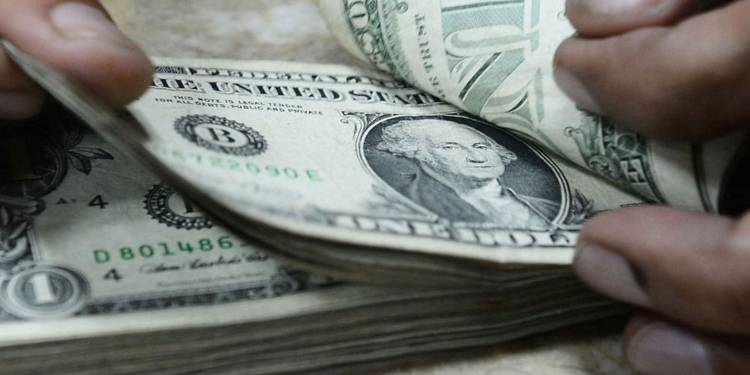
In 2022 and 2023, after a period of monetary stability, there were renewed demands for a viable alternative to the dollar. This began in 2022 when the United States imposed comprehensive sanctions against Russia in response to that nation's invasion of Ukraine. Other world leaders reacted negatively to the notion that the United States could block their funds in the event of a diplomatic or military dispute. The United States and its Western allies have imposed multiple rounds of sanctions against Moscow and the country's oligarchs. This compelled Russia to transition to other trading currencies and increase its gold reserves. The end of March saw the second-largest quarterly increase in the use of the Chinese yuan in foreign exchange transactions, as more countries transacted in the currency. However, China is not the only country advocating for an alternative to the U.S. dollar.
In April, Brazilian President Lula made a state visit to Beijing, where he reportedly called for a reduction in global trade's reliance on the U.S. dollar. According to S&P Global Market Intelligence, trade between Brazil and China will reach $150 billion in 2022, a 10% increase from the prior year. Malaysian Prime Minister Anwar Ibrahim has proposed the establishment of an "Asian Monetary Fund" during a recent visit to China to reduce reliance on the U.S. currency. In an interview with CNBC on April 6, Malaysia's trade minister acknowledged Malaysia's concerns regarding Asia's dollar dependence. At the March meeting of ASEAN finance ministers and central banks in Indonesia, policymakers discussed the possibility of reducing their reliance on the U.S. dollar, the Japanese yen, and the euro and "moving to settlements in local currencies" instead.
Through international diplomacy, Putin hopes to expand this alternative financial infrastructure. In 2019, Iran and Russia linked their financial messaging systems, allowing banks in both countries to communicate cross-border transaction messages without the use of SWIFT. Russia and Turkey have talked about using the ruble and lira in cross-border trade. Russia introduced its SWIFT equivalent to banks in the Eurasian Economic Union (a collaboration of five post-Soviet governments) and stated interest in expanding the system to Arab and European nations. Russia has sought more support for de-dollarisation through international organisations such as the BRICS (Brazil, Russia, India, China, and South Africa) and the Shanghai Cooperation Organisation (SCO). To "escape the tyranny of hard currencies," the BRICS New Development Bank has raised capital in local currency. Members of the Shanghai Cooperation Organisation (SCO) stressed the importance of using national currencies in trade and discussed plans to establish a development bank and fund in 2020.
Pakistan can acquire access to critical items and services without relying on the US dollar by engaging in barter trade with Iran and Russia
The BRICS countries have undertaken several steps to reduce their dependency on the currency. Over the last year, Russia, China, and Brazil have increased their usage of non-dollar currencies in cross-border commerce. Iraq, Saudi Arabia, and the UAE are looking at alternatives to the dollar. Furthermore, central banks have attempted to shift a larger proportion of their currency reserves away from the dollar and towards gold. For various reasons, the BRICS nations have criticised the dollar's supremacy. To mitigate the effects of sanctions, Russian officials have campaigned for de-dollarisation. Due to sanctions, Russian institutions have been unable to use SWIFT, the worldwide messaging system that facilitates bank transactions. The West froze Russia's $330 billion in reserves last year. Luiz Inácio Lula da Silva was re-elected president of Brazil in 2022. Lula is a long-time BRICS advocate who has previously pushed to lessen Brazil's reliance on and vulnerability to the currency. He restated the group's commitment to de-dollarisation and urged the introduction of a new currency akin to the euro.
Saudi Arabia, a significant oil exporter in the Middle East, has reportedly signaled its willingness to trade in currencies other than the U.S. dollar. Even if Saudi Arabia sold oil to China in yuan, the majority of its consumers would still have to pay in US dollars. Furthermore, the unequaled scale and depth of the US dollar's capital markets, as well as the liberal order's economic institutions, are what sustain dollar dominance. Some analysts believe that the Iran-Saudi rapprochement may open the way for greater usage of the yuan, with oil transactions handled in yuan rather than the US dollar, which has long been the standard currency used in energy transactions. In light of US sanctions against Russia, China recently negotiated such an arrangement with Iraq, and other countries are examining similar alternatives.
India and Bangladesh have agreed to settle a portion of their bilateral trade transactions in their currencies, the Indian rupee and the Bangladeshi taka. According to the Hindustan Times, before Bangladesh, 18 countries, including Russia, Germany, the United Kingdom, Singapore, Sri Lanka, Malaysia, Oman, and New Zealand, began settling international trade with India in Indian rupees. In 2022, India implemented its own rupee trade settlement process, allowing countries that do not have enough dollars or are unable to trade in dollars to do so in rupees. It suggests that de-dollarisation is a result of more than only risk aversion, but also of the growing role of developing countries, particularly emerging economies, in global trade.
To stabilise its economy and reduce its reliance on dollar trade, Pakistan has permitted barter commerce with Iran, Afghanistan, and Russia. Pakistan can acquire access to critical items and services without relying on the US dollar by engaging in barter trade with Iran and Russia. The barter system will benefit Pakistan's economy by increasing exports and decreasing dependency on the currency. Pakistan paid for the first government-to-government import of discounted Russian petroleum oil in Chinese currency, a notable shift from its prior dollar-dominated export payments strategy. Over the years, Pakistani business organisations and barter trade operators have emphasised the need to transact in friendly currency and reduce dependency on the US dollar. Reduced reliance on the dollar could help Pakistan decrease its budget deficit and international import-induced external debt.