

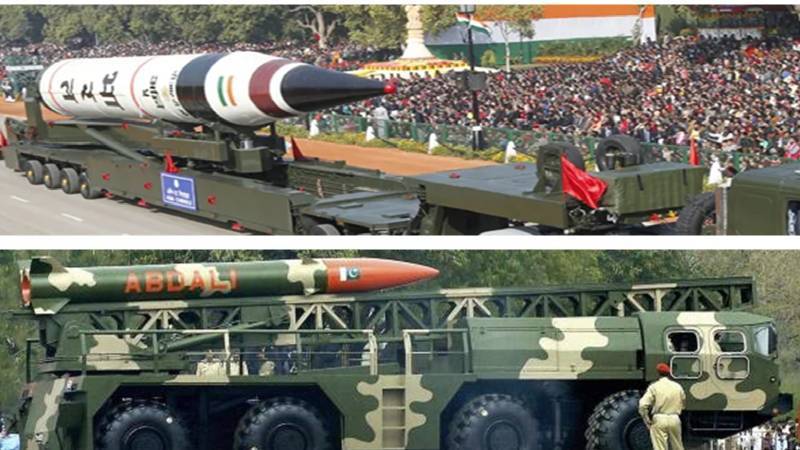
The latest Indian military adventurism saw a humiliating blow as international media confirms Indian aerial assets’ loss. The Modi-led BJP government thought that, given Pakistan’s crippled economy, the military’s degraded image, and the political polarisation of the nation, it would not be able to respond to the mighty Indian military attacks. New Delhi’s earnestly acquired Rafale jets, S-400 defence system, and similar technology gave them the confidence to launch BrahMos missiles and drones inside Pakistani territory — the most warmongering attack since both countries became nuclear powers.
Despite several vulnerabilities, Pakistan responded in a two-pronged way. Pakistan ensured the international community that India failed to produce any substantial evidence of Pakistan’s involvement in the Pahalgam attack. Pakistan also offered India the opportunity to collectively investigate the incident, but the relentless mantra of the Indian government and media — that Pakistan was behind the attack — didn’t pave the way for collective action on terrorism. Rather, the Modi government sought to revive the relevancy of the BJP in politics by aggressively engaging with Pakistan.
Modi’s aggression towards a nuclear country received no support from the international community as the BJP had expected. Pakistan’s diplomatic manoeuvres assured the world that, according to the UN Charter, Pakistan has the right to retaliate. This retaliation reportedly entailed the destruction of five Indian jets, including the most important Rafale, the S-400 defence system, and the neutralisation of airfields and bases. Despite the exchange of fire accusations at the LoC, Trump’s brokered truce has so far prevented any major attack between the neighbouring countries.
It is also a testing point for the United States and China to mediate and resolve the disputes between India and Pakistan, including the long-standing Kashmir dispute, as doing so will enhance the credibility of these countries in global governance and conflict resolution
The latest four-day war was one of the most lethal aggressions between these two countries in the last two decades, literally pushing the parties to the brink of nuclear war. The Modi-led BJP party survives on the Hindutva ideology and does not tolerate Pakistan as a reality in the subcontinent. The bloodiest wars in history are fought over ideas, and the fate of the Indian subcontinent lies in the question of who prioritises humanity over ideology. A slight misperception of the other country could have resulted in a full-scale nuclear war, as rumours circulated that Pakistan was considering the nuclear option. Any miscalculation could have led to irrevocable damage between the two parties.
The Indian Defence Minister calling the strikes a “tailor” is an epitome of insanity. Technological innovations, non-violence statistics, and human development indexes might suggest that humans have evolved into developed and peace-loving beings, but the stupidity of humans is on the same scale — and any nuclear blunder can result in collective suicide. The Doomsday Clock, a symbol of human-made catastrophes managed by the Bulletin of the Atomic Scientists, is one second away from our planet’s total apocalypse. This is how close we are to our own near extinction.
Indian aggressive actions towards Pakistan mark a lingering catastrophe in the subcontinent and will not spare the rest of the world from its consequences. Both countries have long been an obstacle to the effective functioning of regional organisations necessary for peace and development in the region. For the BJP-led government, it is a harsh reality to digest that Narendra Modi’s aggression has thrice instigated a war between two nuclear states. Such false manoeuvrings also tarnish New Delhi’s reputation in the international community. Türkiye is under severe criticism in India for throwing its support behind Pakistan, whereas Trump was supposed to be supplying lethal weaponry to India. This factor likely moved Modi to attack places other than Kashmir in Pakistan — but to no avail.
India sought to strengthen its strategic foothold in Afghanistan for over a decade by pouring 3 billion dollars into Afghanistan’s infrastructure, dams, energy lines, health, and other sectors. It trained Afghan security personnel and granted scholarships to Afghan students. However, in the aftermath of the U.S. forces’ withdrawal in 2021, the newly formed Taliban-led government was a blow to New Delhi’s strategic interests. Immediately after the fall of Kabul, India hosted the Delhi Regional Security Dialogue on Afghanistan. The meeting was attended by many neighbouring countries, including Central Asian states; however, no representative from Afghanistan was invited. This showed New Delhi’s fears of losing its long-sought ally and the entry of a theocratic state into regional power dynamics. Pakistan and China declined to attend the talks due to the absence of Afghan representatives.
In January 2025, for the first time, New Delhi’s foreign secretary met the Afghan interim government’s foreign minister Amir Khan Muttaqi in Dubai and discussed bilateral relations, trade transit, and other mutual matters. Muttaqi assured Indian foreign secretary Vikram Misri that there is no danger to anyone from Afghanistan. Both countries pledged to enhance relations in political and economic areas, particularly to promote trade via the Chabahar port in Iran. Pakistan’s latest claims that Indian missiles fell in Afghanistan perhaps triggered New Delhi to sustain long-cherished relations by calling the Taliban-led Afghan government representative. Speaking on the latest round, the External Affairs Minister S. Jaishankar said that India is willing to do “whatever is necessary” to build relations with Afghanistan.
New Delhi is again seeking space to counter Pakistan and its strategic interests by leveraging Afghan soil, as efforts have been geared up to build relations with Kabul. Afghanistan has also signalled a willingness to cooperate, since it deems India a “significant economic and regional power”. However, Kabul cannot downplay Islamabad as a key regional player while shaking hands with New Delhi — and that’s why India is hesitant to materialise its Chabahar project. Additionally, the Chabahar project is not cost-effective for Indian trade ambitions compared to Pakistani routes.
Pakistan on its own cannot go to war as it is struggling with economic and political issues. However, bringing it into war is not in the larger interest of any regional country. It is also a testing point for the United States and China to mediate and resolve the disputes between India and Pakistan, including the long-standing Kashmir dispute, as doing so will enhance the credibility of these countries in global governance and conflict resolution.