

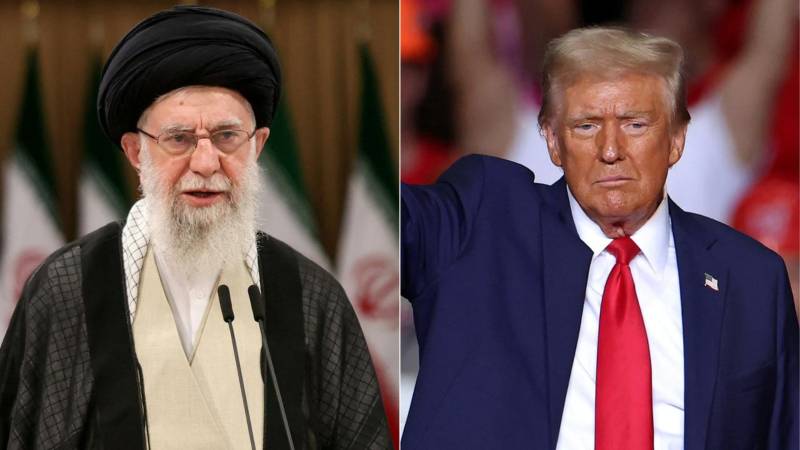
When Donald Trump demanded “unconditional surrender” in response to Iranian defiance, it wasn’t just another erratic outburst. It was the distilled essence of a deeper, bipartisan illusion that has long haunted the corridors of American foreign policy: the belief that the United States still sits alone atop a unipolar world—undisputed, unquestioned, and unchallenged.
Trump’s style may be blunt, often reckless, but his message reflects a mindset that predates him. His words—raw, unfiltered, and broadcast without strategic nuance—signal more than personal bravado. They are the sound of a superpower refusing to admit the world has changed.
For decades, U.S. presidents—regardless of party—have operated under the assumption that American might carries an inherent moral authority. That defiance invites punishment. That resistance to U.S. interests is a threat to the so-called “global order”. But this is no longer the Cold War, and Washington no longer commands global obedience with the same weight it once did.
If history teaches anything, it is this: military supremacy cannot engineer legitimacy.
In Vietnam, 58,000 American lives were lost and $1 trillion spent—only for the country to unify under the very communist regime the U.S. sought to crush.
Trump’s words may make headlines, but they will neither bring peace nor secure a favourable place in America’s history
In Iraq, a war based on fabricated evidence cost over $2.2 trillion and gave birth to ISIS. The promised “liberation” turned into occupation, then insurgency, then chaos.
In Afghanistan, after twenty years of warfare, over 2,000 American soldiers killed, and a staggering $2.3 trillion spent, the Taliban returned—stronger and more structured—within days of the U.S. withdrawal.
And Pakistan—an unwilling frontline ally—paid the heaviest price: over 85,000 lives lost in a war it neither chose nor controlled.
All these campaigns began with grand slogans: freedom, justice, democracy. They ended with broken nations, buried soldiers, and a diminished American image.
Now, with Iran, the same mistake looms.
American policymakers seem to believe that Iran can be coerced into submission. But Iran is not a fragile client state—it is a deeply rooted, fiercely sovereign civilisation that has withstood isolation, war, and economic siege for over four decades. If pressure were going to break it, it would have by now.
The recent precision and scale of Iran’s retaliation caught Washington off guard—not because it was unprovoked, but because the American establishment failed, once again, to imagine a world where others push back.
This is not just a failure of policy—it’s a failure of imagination.
The U.S. still speaks the language of power as if it’s 1991, as if the rise of China, the resilience of Russia, and the reawakening of the Global South haven’t shifted the tectonics of global order. But we no longer live in a world of “unconditional surrenders”. We live in a world of contested sovereignties, where force invites resistance, not reverence.
Trump’s words may make headlines, but they will neither bring peace nor secure a favourable place in America’s history.
What they do expose, however, is the quiet panic of a superpower watching its influence wane—and choosing bluster over introspection.
The world is not waiting to be saved. It is demanding to be heard. And no doctrine of dominance can drown out that truth for much longer.