

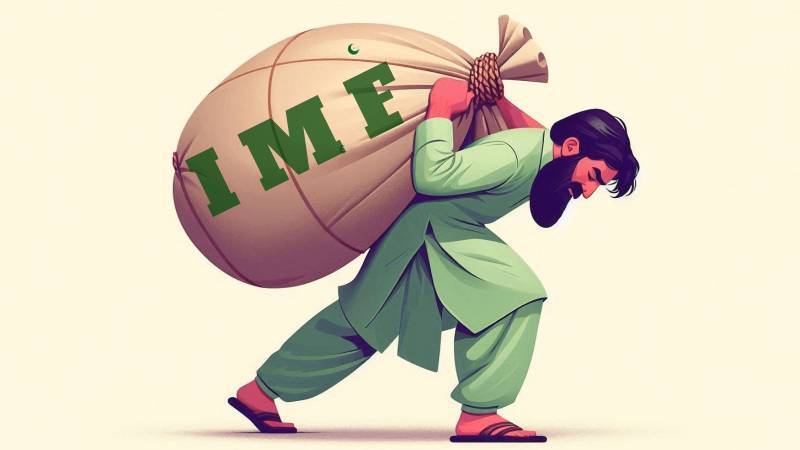
When a national budget is presented before Parliament already pre-negotiated with the IMF, one must question whether this is truly governance or merely the ceremonial affirmation of external dictates. Pakistan’s federal budget for FY 2025–26, though passed in Islamabad with all the solemnity of legislative tradition, is not a sovereign economic plan. It is a contractual addendum to the IMF’s May 2025 review—an audit-compliant document rather than a vision for national transformation.
By the time Pakistan’s finance minister stood at the podium to present the budget, the essential contours had already been finalised. Islamabad had committed to achieving a primary surplus of 2.1% of GDP, to continuing subsidy withdrawals and punitive energy pricing, to dismantling incentives for Special Technology Zones, and to eliminating import restrictions on used vehicles. Most notably, it pledged to pass the budget without deviation from the macro-fiscal targets ratified by the Fund. These weren’t mere guidelines—they were binding prior actions, inked in Washington and rubber-stamped in Islamabad.
The passage of the budget, therefore, was not a democratic moment. It was administrative theatre. In substance, this was not budgeting—it was spreadsheet sanitisation. The numbers were not sculpted through national dialogue or economic introspection, but were instead designed to demonstrate compliance. In doing so, the process side-stepped the foundational questions that continue to plague Pakistan’s economic architecture: how to build state capacity, how to raise productivity, and how to restore the legitimacy of governance.
Pakistan is caught in a technocratic trap where compliance is conflated with progress. It boasts rising reserves, falling inflation, and declining interest rates. But these macro indicators, impressive on PowerPoint, conceal a collapsing reality: our industries remain hollowed out, our exports stagnant, our elite under-taxed, and our institutions over-burdened yet underperforming. Behind every dashboard of “recovery” lies a state eroded by fragility and a people deprived of confidence.
Strategic privatisation must be pursued—not as a fire-sale, but as a three-year plan to sunset chronically loss-making state enterprises
This compliance-driven model comes at a grave cost. Though the IMF’s support has prevented financial collapse, it has not produced structural reform. Rather, it has eroded public trust, diminished political agency, and replaced national ambition with external assurance. The Parliament debates numbers, but decisions are made elsewhere—in quarterly review missions, where reforms are not designed, but imposed. The result is a cycle of borrowed reform, where each bailout merely postpones crisis, deepening both fiscal dependency and the democratic deficit.
Ask a citizen whether their energy bills are lower, whether exports are growing, whether government services are improving. The answers remain a resounding no. This is not stability; it is stagnation under supervision.
The path forward requires a fundamental reframing of Pakistan’s economic philosophy. We must shift from reactive fiscal firefighting to a long-term, home-grown development strategy. IMF support may be necessary in times of crisis, but it cannot be the foundation of our planning. We must build resilience, not dependency.
This calls for a Charter of Economic Resilience—an ambitious but necessary blueprint for national revival over the next two decades. It must begin with a legal cap on debt and fiscal deficits, ensuring Pakistan cannot continue living beyond its means. It must institutionalise a review mechanism to reduce non-productive federal expenditures and tie public sector salaries to measurable performance indicators. Provinces must be empowered to generate revenues independently, under a revised fiscal compact that incentivises local governance.
Strategic privatisation must be pursued—not as a fire-sale, but as a three-year plan to sunset chronically loss-making state enterprises. Predictability in tax policy must be guaranteed through legislation, providing long-term confidence to domestic and foreign investors. A national effort must be launched to transition 10 million youth into exportable digital and service skills, transforming our demographic bulge into an economic dividend. And above all, the bureaucracy must evolve—streamlined into outcome-based governance units that serve citizens, not red tape.
But no plan can succeed unless Parliament reclaims its central role. The IMF is not the villain—but neither is it the vision. No country has ever leapt into prosperity by perfecting external compliance. Budgets must cease to be debtor’s ledgers and must become instruments of transformation. We must stop writing them for creditors, and start crafting them for our citizens.
Pakistan does not lack potential—it lacks political will and institutional courage. The time has come to move from the illusion of stability to the substance of sovereignty. From balancing books to building capacity. From ceremonial budgeting to citizen-centric reform.
This nation can no longer afford to outsource its destiny—fiscal, political, or moral. Only when we replace ritual with reform, and compliance with capacity, will Pakistan begin its long-overdue journey from survival to strength.