

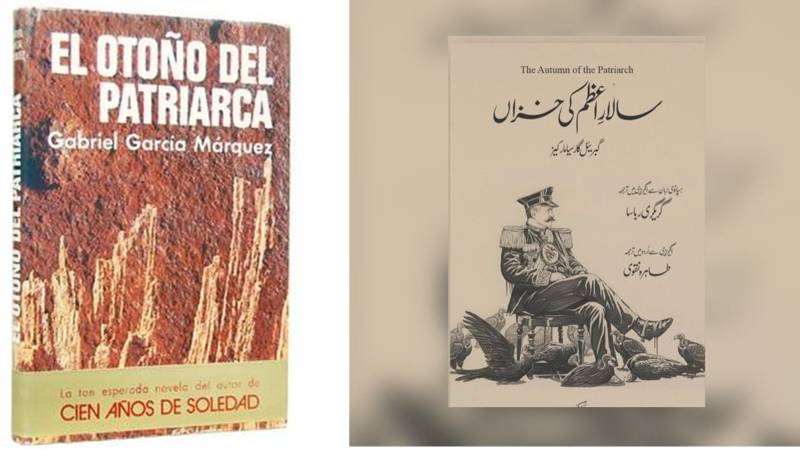
Gabriel García Márquez (1927-2014) is counted among those distinguished writers who gave extraordinary latitude and depth to world literature. He was a high-ranking novelist, perceptive journalist and a Nobel Literature Prize-winning great artist. Born on 6 March 1927, in the small town of Aracataca, García Márquez influenced not only Latin American but world literature through his creative power. He died in Mexico City on 17 April 2014, twelve years ago this week. But his literary capital is still alive and shining.
In the early period of his youth, he studied law at the National University of Colombia, but soon he felt that literature was his true calling. Therefore he stepped into the field of journalism and remained affiliated with various newspapers and journals. This experience of journalism granted him a deep consciousness of the social and political circumstances of Latin America, which later revealed itself with full meaning in his books.
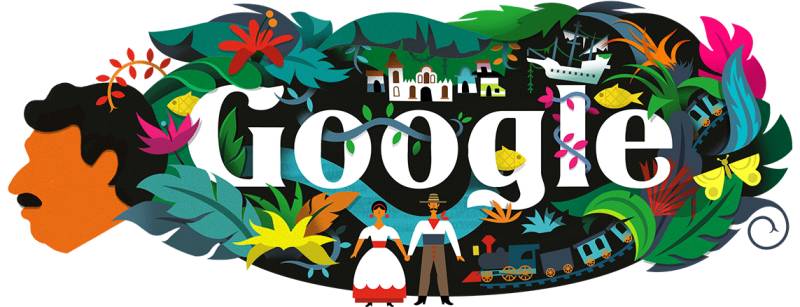
His renowned novel One Hundred Years of Solitude published in 1967 is regarded as a milestone in world literature. In this novel reality and imagination mix beautifully to create a literary milieu which later became famous as magic realism. Among his other important novels are Love in the Time of Cholera, Chronicle of a Death Foretold and The Autumn of the Patriarch. García Márquez was awarded the Nobel Prize for Literature in 1982. His art presents the culture, history and human experience of Latin America with a deep literary foresight. Even today his name is remembered in world literature with respect and awe.
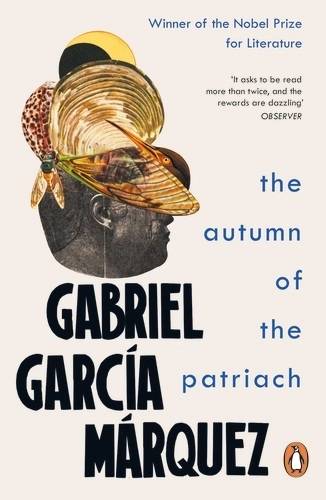
Through a relentless stream-of-consciousness narrative, Márquez masterfully captures the gruesome, dream-like madness and isolation of absolute power
The Autumn of the Patriarch is García Márquez’s fourth novel and it took him 17 years to complete it. When he was asked that which is his most important novel, he named The Autumn of the Patriarch and said that this is the novel which will save his name from becoming extinct. And this has to be acknowledged. This is Márquez’s sole experimental novel and the first written on the subject of dictatorship. It does not have any plot: every chapter picks up the same theme in a distinct way, so much so that the whole narrative assumes the shape of a spiral. The last chapter, which is just a single line, carries us forth like a flowing river.
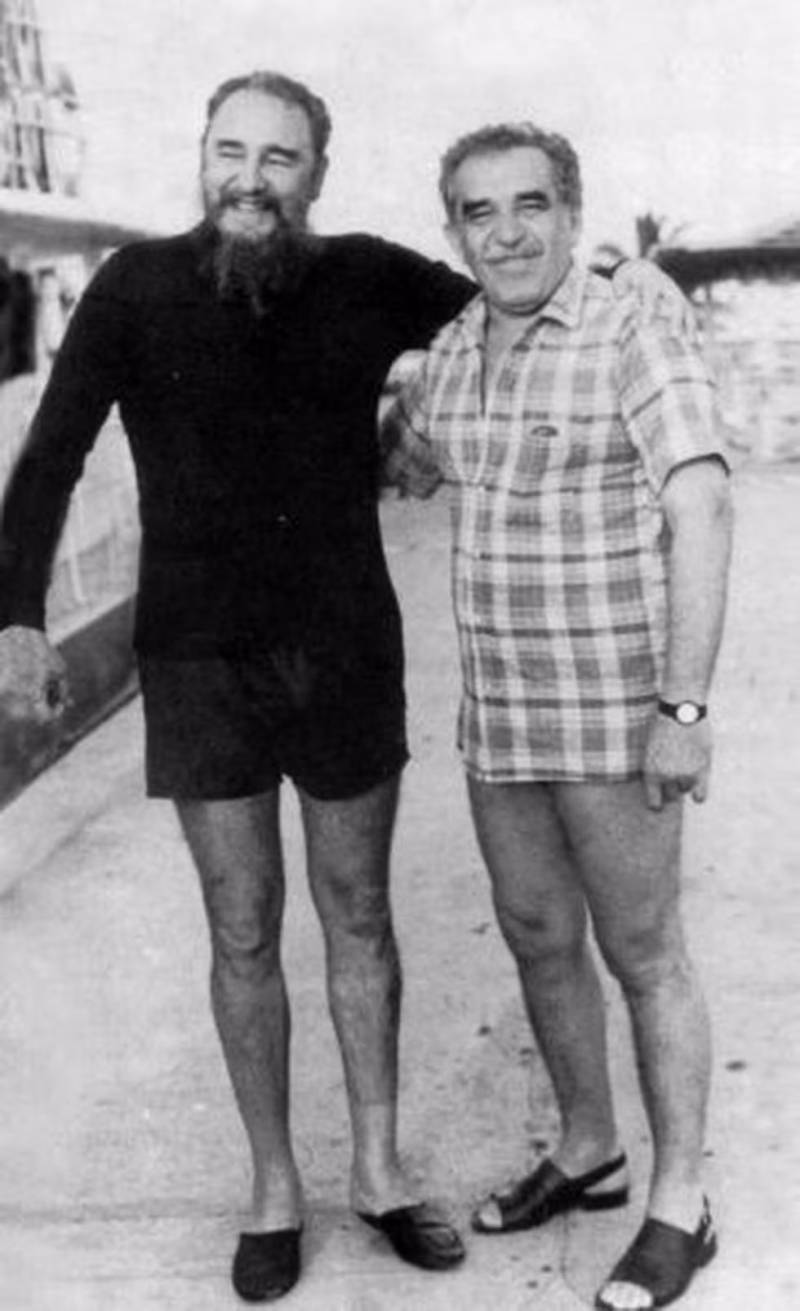
Márquez said that The Autumn of the Patriarch is a poem based on the theme of solitude, and the narrative of this book actually flows like a musical tune. We are further prepared to accept this observation as a truth when we find out that while writing this novel García Márquez constantly listened to the third piano concerto of Béla Bartók, a famous musician. And he told that two Catalan critics, who did not know this, acknowledged after reading the book that they found the concerto and The Autumn of the Patriarch analogous. Besides, the Swedish Academy played this same concerto by Bartók in the background while giving García Márquez the Nobel Prize.
Title: Salar-e-Azam Ki Khizaan
Author: Gabriel García Márquez (translated from English by Tahira Naqvi)
Publisher: Aks Publications, Lahore, 2026
Pages: 429
The novel is divided into six parts. Every part or chapter, which constitutes approximately 30 to 40 pages, is actually a long paragraph. The sentences run to many pages, there is an excess of commas, and sometimes a full stop appears. The narrative style is based on stream of consciousness, in which the point of view keeps changing rapidly. The perspective goes from the third person to the personal pronoun and from there to the third person again, and sometimes the second person. Dialogues are included in paras without punctuation marks; only upon close reading one finds out who is talking at what time.
García Márquez, by depicting madness and the process of suppressing freedom as part of dictatorship, has sown within a gruesome dream-like narrative a feeling of suffocation that remains with the reader. Obviously, one also feels that perhaps a desire to at least keep adding full-stops must also have been produced within the translator’s heart. But mercifully she recognizes that she cannot do this, for while translating, any translator does not have the right to change the style of the text, especially in a novel which is importantly identified with this style.
The translations of world literature opened the doors to many worlds for the Urdu world. Where these translations established our relationship with fictionists from around the world, there new perspectives for understanding ourselves were made available. Urdu fiction writers have invented many modes for the comprehension of the world spread around them and for their own existence: the general idiomatic manner of collective wisdom, the qualitative manner of romanticism and the social and progressive style of realism. Translation has further enriched these styles. Translation is not mere transmission of meaning, it is also a most important source of the development of language. Professor Tahira Naqvi has gifted a difficult stylistic experiment of Marquez the shape of Urdu with the title of Salar-e-Azam Ki Khizaan. This Urdu form is related to the tradition within which the translator attempts to fashion the singularity of the novel together with its linguistic milieu into Urdu.
I am greatly influenced by the trait of Márquez – and the majority of the world’s big fiction writers - that they do not think their role to be limited to merely a social or political one; they also have the ability to see and show it in the shape of a human as well. In that the novel is first and foremost a narrative of human skill, then it can be some social document. Dictatorship should be shown from the eye of a dictator, who becomes a victim of confused solitude for fear of hatred at every moment at the heights of power; or from the viewpoint of the victims of dictatorship: can there be some single viewpoint of theirs, a new state whose social structure is fashioned during colonialism; what type of prose to be fashioned to bring the complexity of the personality dominant over the ruins of a system thriving with colonial blessing and his slipping control of matters into narrative creation; the complexity of Márquez’s writing is a response to it.
During her translation of the novel, in order to support this complexity, Tahira Naqvi has divided long sentences into relatively brief parts in order to present them in the form of an album of brief and scattered mental formations, such that every part is standing at the centre of some special action; and the construction of such a mixed narrative, which carries many perspectives at the same time, which the changing tones of the narrators has revealed. Thus while translating, she has fashioned such prose, in which there are no paragraphs, since the material details, milieu and the psychological conditions of the characters of the present have to come within the spectacle of the narration with all their pluralities at the same time. This experiment is important since Urdu prose-writers and readers are lovers of brief sentences, but in the meanwhile the robust tradition of translations from different languages in the last three decades has been a successful effort in acquainting this taste with new lengths. One will not be surprised if this translation motivates Urdu fiction-writers themselves to understand the complexity of their circumstances as well and fashion new styles.