

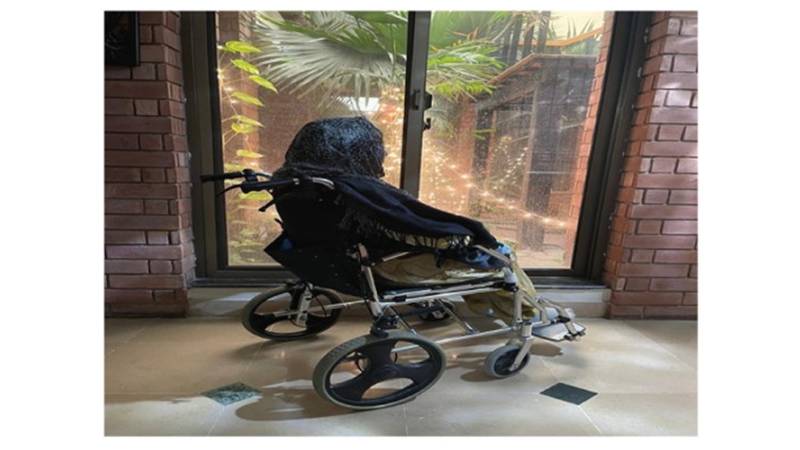
In a quiet neighbourhood of the small rural neighbourhood of Rabwah where gifted blooming rose plants whispered secrets of the past, Mussawer lived in her seventies. With a frail body and eyes that had seen decades of life, she was a woman of quiet dignity. Yet, as the years went by, Mussawer found herself facing the challenges that often accompany old age – diminished mobility, lapses in memory and growing choking spells.
In this tale of compassion and tender care, we introduce you to her husband, Dr Nuri, an extraordinary partner and carer who would come to play pivotal role in Mussawer's life.
Her husband Dr Nuri was not just a partner - he was a guiding angel with heart full of empathy. His sincerity to his expertise was equal that only to by his innate ability to connect with those in his care in the hospital – the Tahir Heart Institute. It was as if he possessed a unique gift – a genuine touch that could mend not just physical disabilities but also psychological downturns that often creeps into the hearts of the disabled.
Dr Nuri was deeply attached to Mussawer since they were married. But now, since the onset of her disability five years ago, she became his most cherished partner and patient. Her once lively home had grown quiet, and she needed greater empathy. Dr Nuri had a warm smile and an even warmer heart. Every day, he went beyond the call of his duty. He engaged full-time maids to prepare her favourite meals, her love for garden roses, filling the house with oudh aroma of nostalgia. They would sit together, sharing stories, in which he did the "talking most of the time."
In fact, Dr Nuri's care and comfort extended far beyond the confines of his medical sphere. He brought life back into Mussawer's home. He decorated his space with garden flowers in patio, memorable photograph, reminding her of the beautiful moments in her life; thus transporting her back to her youth.
Sitting on the wheel chair she chuckled and said, "Please create an ideal environment for us. I'm sure this will help many in need like me. This would offer privacy comfort and safety"
The profound impact of Dr Nuri's loving touch on Mussawer's life was immeasurable. Her body took a turn for the better, her eyes sparkled with renewed hope and her heart filled with joy. Dr Nuri's case was not just about her progressive disorder – it was about re-charging the soul.
Dr Nuri, too, found fulfilment in his new role as a care-giver. The bond between them strengthened and brought meaning in their lives. Their connection deepened, strengthened and transcended beyond husband and wife relationship.
As she grew even sicker, her clothes began to hang off her. Her PEG tube for feeding showed under her gown.
Sitting on the wheel chair she chuckled and said, "Please create an ideal environment for us. I'm sure this will help many in need like me. This would offer privacy comfort and safety."
Now the top priority in Dr Nuri's thoughts was to create an ideal environment for Mussawer in their own home. This would offer privacy, comfort, and safety.
So, Dr Nuri as a doctor, husband and carer considered and implemented the emotional and practical aspects of the journey.
1) Choosing a big enough room with open windows for natural light and fresh air. In her home, a room with natural light and fresh air was selected. This had a positive impact on physical and mental health, providing a calming and peaceful atmosphere. Natural light from windows has been scientifically proven to enhance mood and promote better sleep, while fresh air improves air quality.
2) Investing in a hospital bed, with an air mattress selected for her to offer personalized support in view of her limited mobility. It featured an adjustable height system, and raised side rails which prevented her from falling off during sleep or restlessness.
3) Providing lighting, noise and temperature control. Proper lighting can improved mood and create a serene atmosphere. Windows were sound-proofed to ensure her comfort. A comfortable temperature in the room contributed to her quality of life.
4) Keeping comfort items nearby. These items can be anything that could bring her a sense of familiarity and comfort, such as a favourite quilt, a comfortable chair and few cherished photographs.
5) Keeping the room clean and tidy. She spent significant amount of time in her room, so it was easy for the room to become cluttered and full of obstacles. Decluttering the space minimized the risk of falls, making the room safer and more accessible for carers and guests.
6) Repairing the bathroom. This entailed some considerations to ensure her safety. Sufficient lighting had been ensured, especially at night. Grab bars and hand rails had been installed, a shower chair, and a non-slip bath net was provided to ensure additional support and reduce the risk of falls.
7) Entertainment and garden lights. She had a special liking for specific Urdu dramas, which she loved watching on TV. Even during sleep she kept the TV on and her carers sat closely. Some religious programmes motivated her spiritually. In the adjoining patio, the multi-coloured garden lights twinkled during the greater part of the night. This provided an enchanting spectacle.
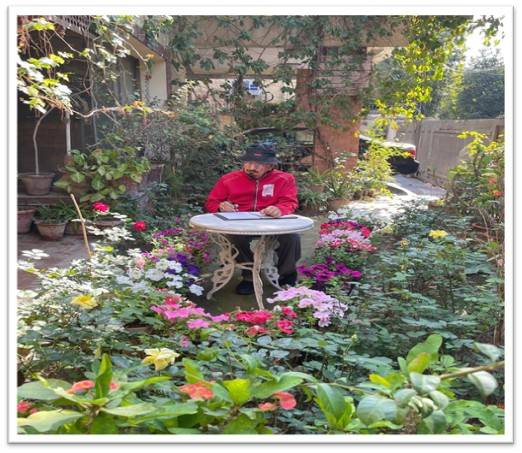
8) Wheelchair strolls. She loved going out for a wheelchair stroll every evening. She adorned her colourful dress with a chequered shawl and strolled out with her carer. This enabled her to connect with nature. Her small beautiful garden featured blooming colourful roses; red, yellow, pink and crimson. The fragrance was mesmerizing. A little outside the house, on the private road, she strolled through a cluster of overhanging trees, birds chirping and rays of evening sun peeping at dawn.
9) Pharmacy and Medical Emergency Unit. Her regular medication was stocked in the cupboard but only dispensed by the trained carer. Her feeding through a PEG tube was taken care by a separate maid trained in that skill. Periodic advice on nutrition was solicited. An oxygen cylinder, BIPAP machine and suction machine were placed in one corner – to be used when required.
***
But sadly, as Allah willed, she passed away at home in April, at around four in the afternoon. Dr Nuri felt an intense desire to write down the story of her death, to tell it over and over to friends and relatives. He jotted down stray thoughts and memories in the middle of the night. Even during her last days, he found himself squirreling away her words, all her distinctive expression: "I love you to death."
What had happened still seemed implausible. A partner was present your entire life, and then one day she disappeared and never came back. It resisted belief. She had been diagnosed with progressive supra-nuclear palsy five years earlier.
Dr Nuri had known her time was limited. Yet, with unwavering faith in Allah and sheer determination, she had outlived neurologists’ predictions. Like Orpheus, he longed to bring her back—“Aba, here she is, walking behind me.”
Mussawer had instilled in him the habit of journal-writing long ago. In earlier days, holding his notebook in puzzlement, Dr. Nuri once asked: “What do I do with it?”
“You write down things that happened to you that day, remembering the infinite blessings of God,” she replied.
Their children and grandchildren spent countless hours with her—not out of obligation, but because she adored their company. In many ways, she retained the spirit of a teenager, despite having married young.
Above all, the single most vital principle of successful home care was prayer. This was essential not only for the patient but for caregivers as well. It served as a constant reminder that Allah alone is the ultimate Healer and Sustainer of life. Thus, His remembrance played a central role in caring for the elderly.