

The British Airways launch of a direct flight from London to Islamabad five years ago combined with the Forbes rating of Pakistan as one of the top ten tourist destinations was a signal to the Pakistan government of the potential for tourism development and an opportunity to overhaul its poor international image.
I understand Pakistan to be a complex country, beset with social problems, elements of religious extremism especially in the areas near the Afghan border, and occasionally terrorism. Having visited the country before with my Pakistani husband, this was my first experience of visiting with our very young children.
Stark images of social inequality I had witnessed before, have somehow become more disturbing after having children.
Poverty juxtaposed with the wealthy elite is seen everywhere. Children and women cradling young babies are a common sight to be seen begging amongst the traffic in Islamabad, the most developed city in the country. Even my three-year-old daughter, whilst we were sitting outside one of the fashionable cafes of the city, was approached by a little boy of her age, covered in dirt and dust holding money. He had been sent by his mother to beg. Not yet inculcated with notions of class and money, the two of them started playing and it was heartbreaking to watch.
So desensitised the wealthy elite and middle class have become by the plight of these people that even our very kind and generous host explained "You can't help them unless you have an unlimited wad of cash every day to give out". The shocking inequality remains extremely off-putting to foreign visitors and tourists to the country but the government shows no signs of caring one little bit.
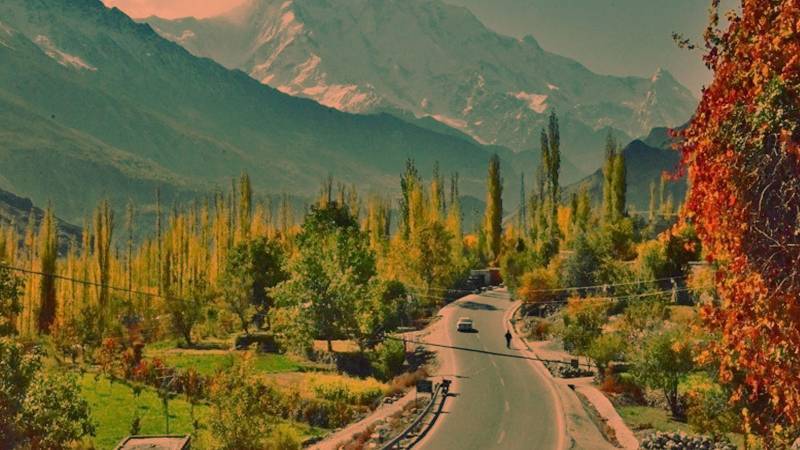
From stunning scenery and mountain ranges in the north to deserts in the south, Pakistan has a lot going for it in terms of potential tourism, which in turn would create much-needed jobs and aid development
Although ostensibly a democracy, the Pakistan army wealds a huge amount of power and influence over the government. They take a whopping one third of the annual government budget, a staggering 2 trillion rupees each year to sustain themselves. They justify this to be essential in protecting and defending their people.
But babies and children are condemned to a life of harrowing poverty due to their misfortune of being born into the lower class of this country.
Such is the disparity of wealth, the cost of labour is so low that live-in servants and nannies are very common in the elite class and for many middle-class families.
While a large proportion of the country is on the lowest rung in life, many army families want for nothing. One wife of an ex-army serviceman described to me the very comfortable lifestyle provided by the army for her family during her husband's service; large house, servants, and nannies for the children.
I was struck by the display on 23rd March, the country's “Pakistan Day". Gleaming swords, countless lavish floats, and the country's top elite and military leaders out in their finest to celebrate their pomp and power. This event was covered extensively by the TV stations in a carefully orchestrated attempt by the government to promote national pride and unity but most importantly to maintain the status quo.
From stunning scenery and mountain ranges in the north to deserts in the south, Pakistan has a lot going for it in terms of potential tourism, which in turn would create much-needed jobs and aid development. Its people are very friendly and hospitable and love children. The cuisine is amazing and although chaotic and busy, the culture is vibrant, lively, and in many ways much more relaxed and friendly than the more straight-laced Brits.
But more needs to be done by the government to address social inequality and develop tourist attractions here before it can become palatable to foreign holidaymakers.
As a parent of two very young children, I found it very difficult to venture outside the apartment on my own or without a taxi in Islamabad. It is almost impossible to use a pushchair due to the state of the pavements and we had to regularly navigate chaotic busy roads with no pedestrian crossings with the children.
A visit to the Marghazar Zoo is another example of how more could be done by the government to promote Pakistan to foreigners. When we visited the zoo, it was bustling with families dressed in their finest clothes for their weekend day out to see the animals. I was shocked and saddened to see the elephant, "Kaavan" miserably swaying, obviously having lost his mind having been couped up in a tiny concrete enclosure for an outrageous 35 years.
I witnessed a similar plight for the bears. One small bear swaying from side to side in its woefully inadequate enclosure, the terrible psychological trauma it has endured in plain view
How can the Pakistani government hope to promote tourism when such ghastly conditions exist for these poor animals in one of the top family attractions of its capital city?
I later learned that the elephant Kaavan is set to be released to an international charity after pressure was put on the zoo for its inhumane treatment of the animal. This recommendation has only just been made by a parliamentary panel after a prolonged online campaign.
Why cannot the government examine its spending? A tiny fraction of the “defence” budget would go a long way to giving this pitiful zoo a facelift, ensuring the animals have appropriate facilities, and the staff is given proper training.
More importantly, urgent improvement in social welfare is an important means by which Pakistan might improve its international image to foreigners.