

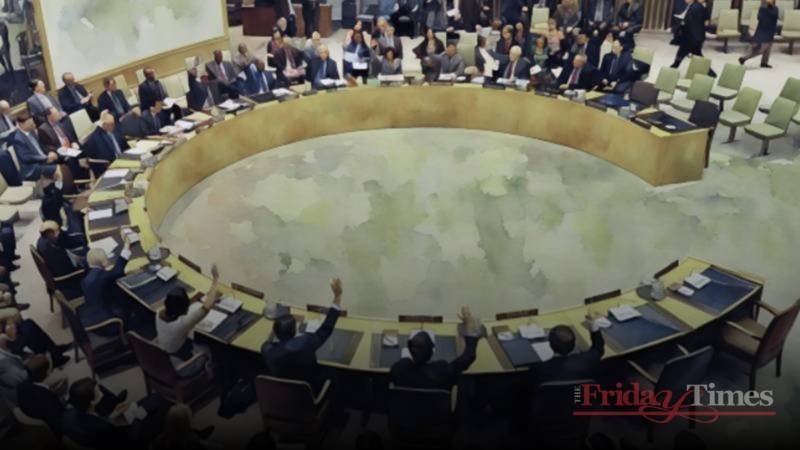
Across a world marked by American power, sanctions, debt, war, and the weakening of older forms of global dominance, “multipolarity” has become one of the dominant ways of naming the crisis of the present.
The term registers a real fracture in American authority, but it also leaves less visible the regimes of war, circulation, extraction, coercion, and pole formation through which capitalist power is being recomposed.
This partial visibility gives force to the rhetoric of campism, where rivalry with the United States can pass for anti-imperialism without examining the arrangements that compose rival poles.
In a recent Organic Filaments Network conversation with me on The Rest and the West: Capital and Power in a Multipolar World, political theorist Sandro Mezzadra returned to these questions from the vantage point of work developed with Brett Neilson, which has been central to rethinking borders, migration, capitalism, and political space.
Across their writings, Mezzadra and Neilson have refused the idea that power can be grasped by beginning and ending with the state, tracing instead how capital, mobility regimes, jurisdictions, corridors, borders, and struggles produce space across official maps.
For Mezzadra and Neilson, pole formation moves through unstable relations among states, capital, logistics, extraction, sanctions, corridors, ports, platforms, and borders, rather than through the rise of rival states alone. Their engagement with Giovanni Arrighi’s distinction between territorialism and capitalism holds together two registers that ordinary geopolitical language often separates.
The international system is composed of states, alliances, wars, treaties, and formal rivalries, while the world system is composed through capitalist operations that organise circulation, extraction, finance, logistics, and accumulation across borders. The political map and the operative spaces of capital do not always coincide.
They sit inside the regime of war, even as their effects have changed under conflictual multipolarity, where targeted states can find partial routes around older instruments of Western control
Mezzadra points, for example, to Peru, which has historically remained a close ally of the United States, while the giant container port of Chancay, north of Lima, was built through major Chinese investment and placed under the central role of COSCO, the Chinese state-owned shipping company. Chancay is not simply Chinese power replacing American power. It is an operative space of capital inside a political space, showing how a port or corridor can disturb the categories through which alliances are usually read.
Much of the multipolarity debate treats the weakening of American dominance as the weakening of imperialism itself, even though pole formation points elsewhere. The United States remains the most concentrated imperial force of the present, with its long history of invasion, occupation, coups, sanctions, military bases, financial coercion, and military coordination across the world. But imperialism cannot be folded into the United States alone without losing the logic through which it operates.
In the interview, Mezzadra described imperialism as a logic running through the capitalist world system, unevenly embodied by different powers. Rivalry with Washington does not place a state outside that logic, and a rival pole does not dissolve the extraction, coercion, border control, authoritarian sovereignty, and capitalist power through which the world system is organised.
As Mezzadra argues, war has become atmospheric because it is no longer confined to the battlefield. Regimes of war describe this wider condition in which military conflict spreads through economic life, circulation, borders, currency systems, surveillance, and the policing of movement.
Russia shows how sanctions no longer operate as clean instruments of isolation, since after 2022 they redirected trade, encouraged alternative payment systems, shifted currency arrangements, and opened new commercial routes rather than cutting Russia out of the world economy.
Iran shows the same sort of limit in relation to the blockade, where maritime pressure, sanctions, and financial restrictions disrupt oil circulation without fully ending it, forcing circulation through shadow fleets, altered routes, opaque ownership, and buyers willing to move outside Western enforcement channels. War therefore moves through the systems that make everyday life possible, not only through armies at the front.
The everyday register of war cannot be treated as secondary to the geopolitical one because the household, the market, the border, and the checkpoint are no longer outside the field of conflict. Fuel and wheat prices, transport costs, banking restrictions, closed borders, immigration controls, and the policing of suspicious bodies are not after-effects of war elsewhere.
They are ordinary ways the regime of war enters life. Its atmospheric character lies in this diffusion, in the way distant fronts are made present through the cost of movement, the uncertainty of work, the management of refugees, the interruption of trade, and the security practices that decide who can pass, wait, work, or remain.
Pakistan’s place inside this regime is registered through fuel prices, debt pressure, Afghan deportations, import restrictions, military expenditure, intelligence language, and the policing of Pashtun and Baloch mobility, as well as through the recurring conversion of social crisis into a problem of order. Pakistan does not need a formal war to organise public life, because the budget, checkpoints, police stations, market, refugee settlements, and border already register the ways war enters governance.
The meaning of peace changes under these conditions, especially in the context of Iran, where direct attack, sanctions, blockade, oil routes, maritime control, and diplomatic guarantees belong to the same field of war. Sanctions and blockades are not secondary instruments or clean alternatives to military force.
They sit inside the regime of war, even as their effects have changed under conflictual multipolarity, where targeted states can find partial routes around older instruments of Western control.
In this context, the growing rhetoric around campism can name the violence of American power while leaving the question of peace trapped inside the survival of a rival pole. This is not to deny the force of US imperialism, but rather to refuse the idea that opposition to Washington is enough to define an anti-imperialist politics.
Campism, by its very nature, carries an echo of the Stalinist logic of socialism in one country, not as a direct equivalence, but as a narrowing of internationalism into the defence of a state formation. Peace has to be more than the victory of one alignment over another. It has to involve the undoing of the arrangements through which war continues after the bombs stop.