


Gaza: The Story of a Genocide is edited by Fatima Bhutto and Sonia Faleiro and is an urgent anthology of personal testimonies, poetry, photos, and reportage by Palestinians bearing witness to the ongoing destruction in Gaza.
Fatima Bhutto is a prominent Pakistani author, journalist, and activist known for her writing and social commentary. The granddaughter of former Prime Minister Zulfikar Ali Bhutto and niece of former Prime Minister Benazir Bhutto, she has opted for a career in writing and activism rather than directly following her family into electoral politics. Bhutto has been a vocal supporter of Palestinian rights on social media and other platforms. Sonia Faleiro is an Indian journalist and award-winning writer known for her narrative nonfiction and focus on social issues in South Asia. She is based in London and her work has been featured in publications such as The New York Times, Harper's, and Granta. She is the founder of the literary mentorship program South Asia Speaks.
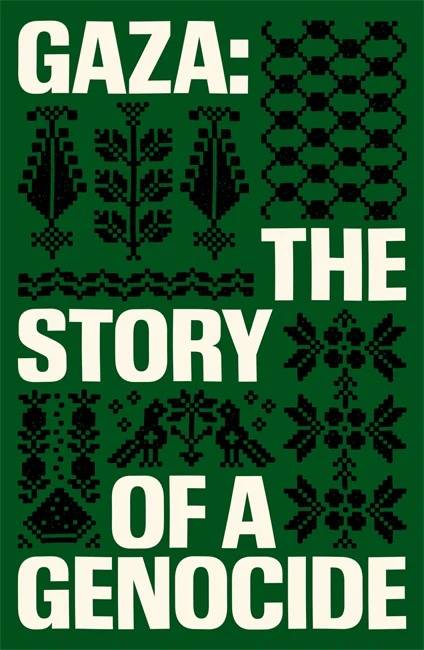
Title: Gaza: The Story of a Genocide
Edited by: Fatima Bhutto and Sonia Faleiro
Publisher: Verso, 2025
The anthology wishes to contest official narratives and bring to the fore the human impact of the conflict through multiple Palestinian voices. Bhutto and Faleiro initiated “Books for Gaza” and compiled the works to document the human toll of the genocide. The book offers a multidimensional view on life in Palestine, including history, essays, poetry, and reporting. Through the stories we are told of the importance of sharing accounts and bearing witness to life in a genocide while so much misreporting is taking place on the conflict in Gaza. The collection also pays tribute to the poet Hiba Abu Nada, who died in an airstrike in October 2023. All proceeds from the book will be donated to the United Nations Relief and Works Agency (UNRWA).
The book comes at a time where many think that there are no words left to describe the second Nakba taking place. Yet the writers of each essay use words which seem stronger than weapons and hurt the reader deeply to read
The book features contributions from various Palestinian and Arab individuals, including doctors, academics, writers and artists, a few of whom are Pulitzer Prize and National Book Award winners. Among the contributors, notable ones include Ahmed Alnaouq, Noor Alyacoubi, Mariam Barghouti, Eman Bashir, Mosab Abu Toha (who has written the introduction), Susan Abulhawa, and Omar Barghouti, who Bhutto has interviewed.
Ahmed Alnaouq writes captivatingly of losing twenty-one family members which broke my heart to read, Noor Alyacoubi describes the weaponization of starvation which brought me to tears, and Mariam Barghouti writes about settler violence which was just unsettling to read about. Throughout reading the book, I was extremely emotional and very aware of the privileged position I am in by not to be in a war zone. The book comes at a time where many think that there are no words left to describe the second Nakba taking place in Gaza. Yet the writers of each essay use words which seem stronger than weapons and hurt the reader deeply to read, to describe how they are mishandled, the grotesque manner in which the Israelis treat their Palestinian captives, how they rape, loot and plunder when taking over Palestinian land, and how Palestinians have to ration food, live on wild plants and starve even their children because Israel sometimes doesn’t allow food in for months. All this and more are described in the essays.
The Boycott, Divestment and Sanctions (BDS) movement is also described in one of the near final essays, and I learnt a great deal about the intricacies of it. Barghouti states in the essay: “BDS targets complicity not identity. It targets institutions, not individuals. It encompasses, inter alia, economic, financial, academic, cultural, and sports boycotts; military security embargos; divestment from – and excluding from contracts – corporations and banks that are complicit in Israel’s war crimes, crimes against humanity, and now genocide; as well as targeted and lawful sanctions, including pressuring governments, local governments, regional bodies etc., to fulfil their obligations under international law to end all complicity with Israel’s regime of oppression.” He ends the essay by saying to Bhutto: “Complicity after all is absolutely incompatible with any notion of “neutrality” that some university rectors and academics fallaciously claim. The student-led uprising in solidarity with Palestine on campuses worldwide particularly in US and Europe, must be understood in this context. It is a bright, inspiring sign of Palestine’s South African moment, as the solidarity movement is reaching a tipping point in the struggle for Palestinian liberation.”
They say the pen is mightier than the sword, this book is evidence of that fact since by reading all the essays, poems, looking at the photos I felt I was transported to Palestine and I experienced their pain through the detailed descriptions, which is actually the whole world’s pain. We are all in this together. Until the genocide ends, no one with a good moral compass can sleep peacefully at night. Gaza’s children are the world’s children and Gaza’s mothers, fathers, grandmothers and grandfathers are the world’s family. Each essay in this anthology reminds us not to forgot that. In the famous words of John Donne, “Ask not for whom the bell tolls; it tolls for thee.”