

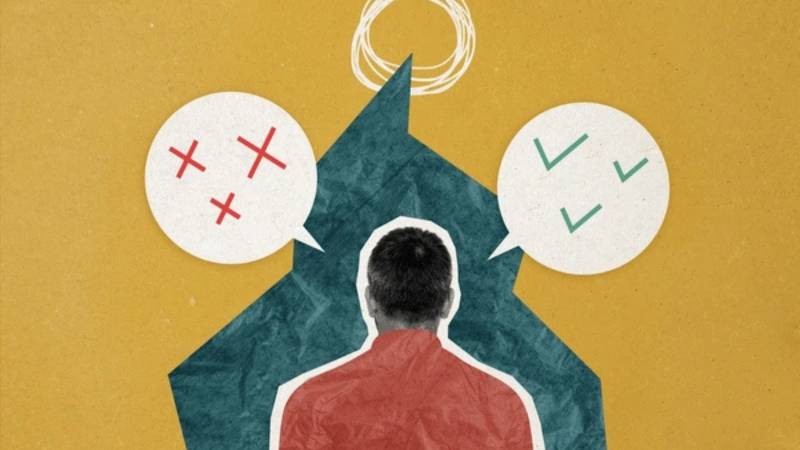
“Although I do not suppose that either of us knows anything really beautiful and good, I am better off than he is—for he knows nothing, and thinks that he knows. I neither know nor think that I know.” Socrates.
In every society, progress relies not just on education, but also on humility—the humility to listen, to ask questions, and to recognise that our truth may not be the sole truth. However, we are seeing a troubling trend, particularly in our cultural and intellectual circles: a blatant rejection of different viewpoints. Whether it is a political disagreement, a policy discussion, or even an academic conversation, when someone presents a counterpoint, it is often met with confrontation instead of curiosity.
It took me some time to really contemplate this through, because I actually experienced something that made this issue hit home. It is after a year of solid moments of soul-searching to fully digest what I had witnessed and experienced. Picture this: a cosy little gathering, full of wisdom, wrinkles, and wildly strong opinions. Two senior citizens, the kind who’ve seen more governments come and go than I’ve had birthdays were deep in discussion. And by 'discussion,' I mean one of them was passionately grilling an academic institution like it had personally stolen his pension. As fate would have it, I happen to be an adjunct faculty at the said institution. So, there I sat, trying to disappear into my teacup, as this gentleman who once held a very high position in the government went on a full-blown rant. He wasn’t just critical; he was on a verbal demolition mission, naming and shaming institutions like he was announcing Oscar winners for 'Worst Educational Practices.'
What made it worse was the way he kept turning to me mid-rant with his eyes wide, eyebrows dancing, clearly fishing for my nod of approval. It felt less like a conversation and more like a courtroom drama, where I’d somehow been cast as the silent co-prosecutor. But then… came my breaking point. I just couldn’t take the nonsense anymore. I thought, 'Alright, time to sprinkle a little wisdom into this chaos!' So I gathered my courage, adjusted my glasses, and decided to speak up—partly to defend the institution (you know, loyalty and all that), and partly to offer a more balanced view based on actual first-hand experience.
Big mistake. Before I could even complete my noble sentence, I was hit with a verbal brick wall: 'I’m not talking to you!' Oof. That shut-down was so direct, I actually looked around to see if anyone else heard it—hoping maybe it was meant for the guy behind me. Nope. All me. At that point, I had two options: engage in an intellectual duel of rebuttals or sit quietly and pretend I didn’t just get publicly benched. I chose the second—mostly because I value my blood pressure and dignity. But let’s be honest, inside I was boiling, my brain? Completely jammed. My face? Probably doing that awkward frozen smile people make when their soul is quietly exiting the chat.
True intellectual maturity lies not in how much we know, but in how open we are to re-evaluating what we think we know
But the incident didn’t end there. It stayed with me, lingering in the background of my thoughts for days—perhaps even weeks—while the usual routines of life slowly dulled the immediate sting. Yet, the scar remained. I found myself repeatedly returning to the same questions: Why is there so little space for alternate perspectives? Why is a differing view so quickly dismissed as invalid, or even unwelcome? What gives finality to a judgment, and who gets to decide that? These thoughts occupied my mind for months, quietly evolving. And now, after nearly a year of reflection, I finally feel compelled to put these thoughts into words—not to argue, but to understand, and perhaps to invite others to reflect as well.
A far more troubling and intellectually dishonest phenomenon is that this growing intolerance towards alternative viewpoints is not confined to the uneducated or inexperienced. In fact, it is most conspicuously observed among individuals who have occupied high-ranking offices, acquired prestigious academic credentials, or spent decades shaping public discourse, policies, and institutional ideologies.
These are individuals who command authority, who are entrusted with decision-making powers, and who are often revered as thought leaders. One would reasonably expect such figures to exemplify the highest standards of intellectual maturity: to welcome scrutiny, to engage in thoughtful discourse, and to exercise the patience necessary for genuine dialogue. And yet, paradoxically, it is often they who are the first to dismiss any dissenting perspective—reflexively, even disdainfully—as if the mere presence of disagreement were an affront to their status, their expertise, or their intellect. In doing so, they betray not only the principles of scholarship and leadership but the very essence of reason itself.
This isn’t something new—it has been around for ages—but today, the way we communicate has made it much worse. Social media, in particular, has turned into a breeding ground for echo chambers. It rewards people for agreeing, not for thinking. It encourages black-and-white thinking, fuels division, and leaves no room for subtlety or complexity. In this kind of environment, hearing a different opinion doesn’t come across as a chance to grow or reflect—it feels like a personal attack. So instead of leaning in and listening, people shut down or push back harder.
A far graver concern arises when this mindset extends beyond digital discourse and infiltrates into real-world spaces like boardrooms, academic institutions, legislative outfits, and public forums. In these arenas, where dialogue should be principled and deliberative, a dangerous subtext begins to dominate: “I possess greater experience, superior education, and broader exposure—therefore, my position is beyond question.” Dissenting voices are not merely challenged; they are routinely dismissed as uninformed, irrelevant, or intellectually inferior. What emerges is not reasoned leadership, but a form of intellectual authoritarianism—an unyielding belief in one’s own infallibility, thinly veiled as confidence. Such a posture not only degrades the quality of discourse but erodes the very foundations of collective reasoning and democratic exchange.
Let’s hit pause for a second and ask the big question: what really makes someone "intellectually superior"? Is it the number of degrees hanging on their wall? The fancy title before their name? Or how many years they’ve spent in meetings nodding seriously at pie charts? Or just, maybe, is it their ability to actually think for themselves, question their own assumptions, and have a civilised conversation with someone they disagree with... without turning it into a courtroom drama? You know, the kind of person who can say, “Hmm, I see your point,” instead of exploding like it’s a personal insult. True intellectual maturity lies not in how much we know, but in how open we are to re-evaluating what we think we know.
“Although I do not suppose that either of us knows anything really beautiful and good, I am better off than he is—for he knows nothing, and thinks that he knows. I neither know nor think that I know.” This famous sentence by Socrates is worth our reflection. History is replete with examples of brilliant minds who were initially wrong—and became great precisely because they had the courage to admit it and grow. From scientists who challenged their own theories to leaders who changed policies after hearing new evidence, progress was only possible because someone was willing to listen before rejecting.
“It is the mark of an educated mind to be able to entertain a thought without accepting it,” a statement often attributed to Aristotle, captures a crucial but frequently misunderstood principle. One of the most persistent misconceptions that fuels intellectual rigidity is the belief that listening to an opposing viewpoint implies agreement or endorsement. This is not only false—it is deeply damaging to meaningful discourse. Listening is not an act of surrender; it is an exercise in understanding. In a truly enlightened mind, the ability to engage with differing perspectives—calmly, critically, and without prejudice—is not a sign of weakness, but of intellectual maturity. We do not have to accept every idea we hear, but we must, at the very least, be willing to hear it.
The alternate perspective is not a threat to be silenced—it is a mirror, a teacher, and often, a key to greater insight
Unfortunately, many of us have not been educated in the art of listening. Our education system often emphasises debate, rebuttal, and the defence of a position, but rarely fosters the habit of patient inquiry. Consequently, when a question is raised or a contradiction introduced, it is too often perceived not as an opportunity for deeper understanding or further inquiry, but as a challenge to be dismissed or neutralised. The impulse is to defend, not to explore; to refute, not to reflect. In this climate, genuine dialogue is replaced by intellectual posturing, and the search for truth gives way to the need to be right.
The consequences of such intellectual rigidity are far-reaching and deeply damaging. When alternate perspectives are systematically dismissed, innovation suffers. History shows that transformative ideas often emerge from the margins—voiced by those outside the established circles. By refusing to engage with these voices, we forfeit the opportunity for breakthroughs and novel approaches.
Moreover, rigidity in thought stifles meaningful dialogue. As dominant narratives go unchallenged, dissenting voices retreat, creating an environment where silence replaces discourse. In such a society, the absence of open and respectful dialogue does not lead to peace—it breeds either apathy or unrest, both of which are corrosive to the social fabric. Resentment grows among those who feel unheard or excluded, deepening divides and eroding trust in institutions. This climate ultimately undermines governance, weakens policy-making, and stalls scientific and intellectual progress. Without the checks and insights provided by diverse perspectives, errors go uncorrected, and poor decisions are made under the illusion of certainty.
In an age saturated with absolute convictions, doubt has quietly emerged as a vital intellectual virtue—not the kind of doubt that paralyses or breeds cynicism, but the reflective kind that fosters humility. It is the doubt that keeps us grounded, that tempers our certainty with caution and curiosity. It does not deny conviction, but it acknowledges the possibility of error. It says, “I believe I am right—but I am willing to be wrong. Let me listen, and understand your view before I judge it.” Such humility is not weakness; it is the foundation of wisdom, the starting point of genuine dialogue, and the hallmark of a truly educated mind. We must begin to normalise statements like: “That’s an interesting point—I hadn’t considered it that way.” “I see where you’re coming from, though I have a different perspective.” These are not signs of weakness. They are signs of strength—of a mind secure enough in its values that it doesn’t fear being challenged.
If we are sincere in our desire to grow as a society, we must reclaim the lost art of respectful dissent. And that responsibility begins at the top. Those in positions of influence—whether academics, policymakers, journalists, or corporate leaders—must lead by example. They must not only tolerate opposing viewpoints but actively invite and engage with them, especially when those views challenge their own assumptions. Creating a culture where disagreement is not seen as hostility but as a catalyst for deeper understanding is essential to the health of any democratic and intellectually vibrant society.
In our schools and universities, we must teach students the essential skills of civil discourse—how to distinguish critique from personal attack, how to challenge ideas without undermining the dignity of those who hold them, and how to listen with both intellect and empathy. In families and communities, we must cultivate environments where children grow up understanding that disagreement is not something to fear or avoid, but a natural and necessary part of learning and coexistence. And in our professional spaces, we must move beyond rewarding volume or dominance, and begin valuing thoughtfulness, clarity, and the courage to engage respectfully with opposing views.
“The Alternate Perspective” is not merely a philosophical ideal—it is a practical imperative in a world as complex, diverse, and interconnected as ours. As we confront the uncertainties of the future—whether in science, governance, education, or everyday life—our greatest strength will lie not in how forcefully we assert our own views, but in how openly we engage with those that differ from ours. Holding a high office or an advanced degree should never be seen as a licence to dismiss others. On the contrary, it should serve as a constant reminder of the responsibility to lead with humility, curiosity, and grace.
As the old wisdom reminds us, “True knowledge is knowing that you know nothing.” Let us then meet each conversation, each disagreement, and each challenge with the understanding that the alternate perspective is not a threat to be silenced—it is a mirror, a teacher, and often, a key to greater insight. If we can learn to listen—truly listen—we may not only grow wiser, but also rebuild the empathy and trust upon which any lasting progress must stand.