

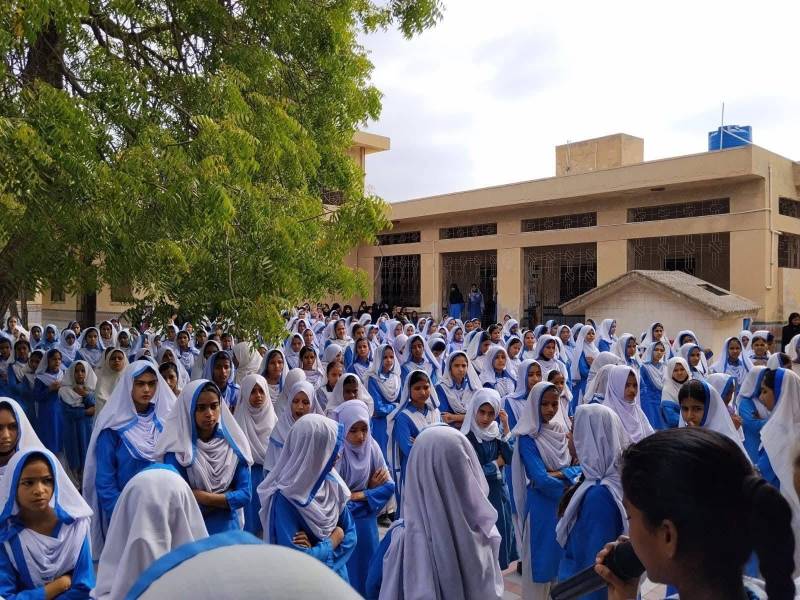
Four years have passed Since the devastating floods of 2022 left deep and painful marks on Pakistan, and Sindh was among the worst affected provinces. The disaster damaged homes, roads, crops, health facilities, public infrastructure and thousands of schools on an alarming scale.
According to official figures, around 19,808 schools across Sindh were damaged during the 2022 floods. Out of these, thousands were either completely destroyed or partially damaged. In different reconstruction and rehabilitation packages, more than 5,000 schools have been taken up for repair, reconstruction and rehabilitation. Education sector updates indicate that around 5,243 schools are being rebuilt or rehabilitated under the Build Back Better approach, with an expected benefit for nearly 1.3 million students. These figures show the scale of both the damage and the response. This is not a small repair project. It is a large education recovery mission aimed at restoring safe learning spaces for children who suffered one of the worst climate disasters in recent history.
The Government of Sindh responded to this challenge by placing school rehabilitation within a broader recovery and development framework. The focus was not only on repairing old structures but also on rebuilding better, safer and more climate-resilient facilities. The concept of Build Back Better is important because Sindh cannot afford to reconstruct weak buildings that may again become unsafe in the next climate emergency. Rehabilitation work therefore includes safer classrooms, improved school buildings, repaired roofs, stronger compound walls, better washrooms, drinking water facilities, ventilation, furniture support and solar energy where possible.
A major feature of this recovery effort is its scale. More than 5,000 flood-affected schools have been brought into reconstruction and rehabilitation plans. These include both fully damaged and partially damaged institutions. Around 2,268 schools were reported as completely damaged, while more than 3,000 schools were partially damaged in different rehabilitation streams. These numbers show that the education sector suffered a massive blow. At the same time, the decision to take up thousands of schools for rehabilitation shows that the provincial government has recognized the seriousness of the crisis and has moved the work from assessment to implementation.
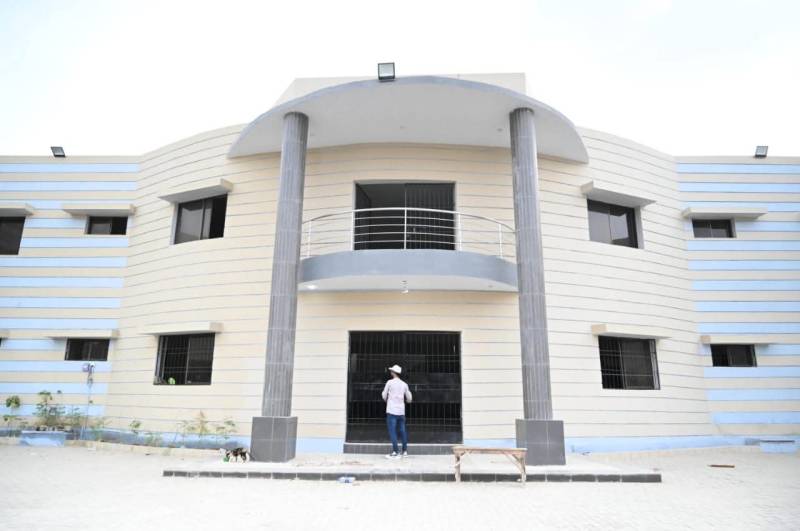
One important example comes from Badin district, where around 1,006 school buildings were damaged during the 2022 floods. The damage included collapsed roofs, cracks in walls and unsafe classrooms. Many students had to study in temporary huts or under open sky conditions. Under the current rehabilitation effort, 167 flood-affected schools in Badin are under rehabilitation and are expected to be completed. In addition, Rs. 92 crore were released under the School Specific Budget to support ongoing repair and rehabilitation works in remaining schools. These funds are meant for school repair, washroom improvement, painting, maintenance, basic facilities, stationery and other school needs. This district-level example shows how recovery is being linked not only with reconstruction but also with daily school functioning.
The Karachi division also faced damage due to heavy rains and urban flooding. Out of 1,836 government schools in Karachi, around 726 schools were affected. Among them, 301 schools were fully damaged and 425 schools were partially damaged. So far, 297 schools have been restored, while repair and maintenance work continues in the remaining institutions. District-wise rehabilitation includes schools in Central, East, Keamari, Korangi, Malir, South and West districts. This is important because flood and rain damage is often seen only as a rural issue, but Karachi’s public school infrastructure also requires climate-sensitive repair, maintenance and long-term planning.
In Sukkur district, rehabilitation work has also moved forward. Available figures show that more than 465 government school buildings were affected. Around 150 school buildings have been rehabilitated, including work on fully damaged schools. Around 180 schemes remain under progress, while more than 50 schemes are expected to be completed within the current year. These numbers are important because Sukkur is a key education region, and damaged schools in this area directly affect thousands of children in rural and semi-urban communities. Restoration of these schools means restoration of educational confidence for families who already faced serious flood-related hardship.
The situation in Larkana region and qambarShahdadkot also shows the size of the disaster. In five districts of the Larkana region, more than 3,000 schools were reported as damaged during the 2022 floods. In Kambar Shahdadkot, data shows 723 damaged schools, including 514 fully damaged schools. Out of 186 schools in one rehabilitation stream, 123 schools have been completed and handed over with solar systems. This is a positive step because energy availability remains a major issue in many rural schools. Solar-powered schools can provide better learning conditions, especially during hot weather, and can support fans, lights and basic digital facilities.
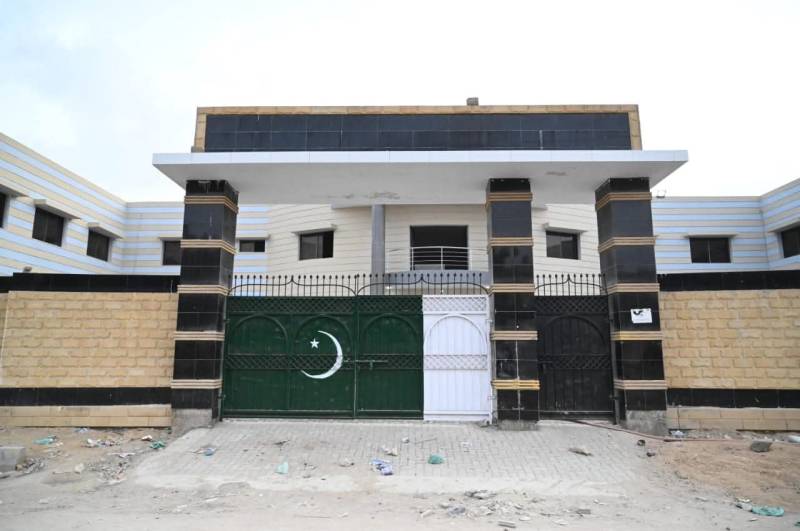
The School Specific Budget has an important role in this recovery. SSB gives school-level financial support for urgent needs such as repair and maintenance, furniture, stationery, washroom improvement and basic facilities. In flood-affected districts, this kind of decentralized financial support can help schools respond to immediate problems without waiting for every small repair to be approved at higher levels. However, transparency and documentation are essential. Every rupee spent on school rehabilitation must be recorded with bills, photographs, quotations and before-and-after evidence so that public money produces visible results and avoids audit objections.
Still, it is important to remain realistic. Thousands of schools were damaged, and many still need full restoration. The work cannot be completed overnight. Some schools are located in remote areas. Some locations face waterlogging, weak road access and construction delays. Some buildings require complete reconstruction instead of simple repair. Therefore, the government must continue to treat this as a priority until every damaged school is made safe and functional. Education recovery should not slow down after initial progress. It must continue with the same seriousness until the last child returns to a proper classroom.
Education Minister Sindh Syed Sardar Ali Shah has taken the issue of damaged schools as a major education challenge and has linked rehabilitation with continuity of education. His focus on reopening schools, improving facilities and pushing reconstruction work shows a commitment to children who suffered after the floods. At the same time, the best appreciation of any public effort is its completion on the ground. The more schools are completed, handed over and made functional, the stronger public confidence will become.
Flood rehabilitation also provides Sindh with an opportunity to rethink school infrastructure for the future. Climate change is now a real and repeated threat. Future schools must be designed with stronger structures, better drainage, raised plinth levels in flood-prone areas, safe roofs, durable materials, clean water, solar support and disaster preparedness. A school should not become unusable after every heavy rain. It should remain a safe place for learning and, during emergencies, a place that can support the community without destroying the education process.
The journey from damaged classrooms to restored schools is a journey of hope. Every repaired school means children returning to books. Every rebuilt classroom means a village regaining confidence. Every functional washroom means dignity for students, especially girls. Every solar-powered school means a better learning environment. Every restored boundary wall means safety. These are not ordinary construction achievements. They are investments in the future of Sindh.
The rehabilitation of flood-affected schools in Sindh is therefore one of the most meaningful public education efforts after the 2022 disaster. With around 19,808 damaged schools, the challenge was enormous. With more than 5,000 schools taken up for rehabilitation and reconstruction, the response has also been significant. District-level progress in Badin, Karachi, Sukkur, Larkana and Qambar- Shahdadkot shows that the work is not limited to one area. It is a province-wide recovery mission.
Sindh still has a long way to go, but the direction is important. The government must continue reconstruction with speed, quality and transparency. Communities must support school reopening and protect restored facilities. Teachers must help bring children back to classrooms. Parents must be encouraged to trust the system again. If this collective effort continues, the rehabilitation of flood-affected schools can become more than recovery. It can become a foundation for a stronger, safer and more resilient education system in Sindh.
In the end, rebuilding schools means rebuilding futures. The 2022 floods damaged buildings, but they did not destroy the desire of children to learn. The responsibility of the state is to protect that desire. Through the rehabilitation of flood-affected schools, Sindh is taking important steps to restore education, rebuild confidence and give children the safe learning spaces they deserve. The task is difficult, but every completed school is proof that recovery is possible. Every classroom rebuilt after the flood stands as a message that Sindh’s children deserve safety, dignity and uninterrupted education.
Meanwhile, as the Sindh government advances its School Specific Budget initiative, its early effects are beginning to emerge in places often left at the margins in the backward areas like Tharparkar . In the desert district of Tharparkar, Government Boys High School Malanhor Vena, which is situated at the outskirts of Mithi town, adopted by the Thar Education Alliance (TEA) is quietly translating financial autonomy into a broader ambition to evolve into a model public school shaped by both institutional support and community ownership.