

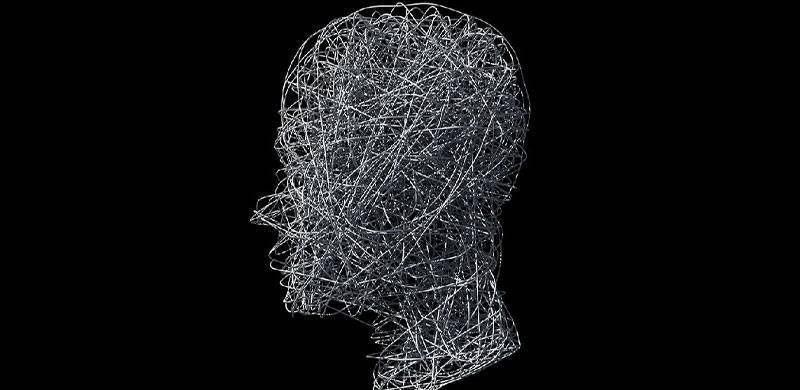
You know that small tightening in the chest that appears before a family gathering. Or the heat that rises to the face when an elder looks at you with a mixture of love, expectation and unspoken disappointment. There are moments when even a compliment produces a quiet unease. Not because praise is unwelcome, but because it can stir fear of envy or raise expectations you were never sure you could carry. These sensations live in the body long before they reach the mind. We often tell ourselves that they are small things, almost trivial, just the ordinary demands of family life. Yet they carry a message. Something in us is signalling that the ground beneath us is uneven, even though outwardly everything appears intact.
In Pakistan, we rarely give these signals the language of psychology. We fold them into familiar explanations. This is fate. This is destiny. This is simply what it means to be part of a family. The idea that these experiences might point to unhealed relational wounds sounds foreign, unnecessary or even threatening. The assumption is that healing belongs to individualistic cultures, that it risks loosening the ties that hold us together. But the opposite is true. What we call healing is simply the work of becoming more whole inside a world that is already relational. It is not a rejection of family but a rebalancing of what we bring into it.
Every family system has a way of shaping the self. We learn early what will be praised, what will be ignored and what must never be spoken. Roles form quietly. The good daughter, the responsible son, the reliable sibling, the calm spouse. None of these roles is false, and none of them needs to be discarded. The difficulty comes when they become the only shape available to us. When the internal world bends too far towards keeping the peace, the body begins to signal the cost. The shoulders tighten. The stomach knots. The breath shortens. The emotions become sharper or more distant. A simple disagreement can feel like the return of an ancient danger rather than an ordinary moment between people who care for one another.
These reactions are not signs of weakness. They are signs of history. Some of it is personal. Some of it is inherited. Much of it is shaped by the fear of disappointing those we love or of drawing the wrong kind of attention. Many of us learn early that the safest path is silence, self-restraint or exaggerated pleasantness. Over time, this becomes the internal script that guides our adult lives. We obey these scripts even when they no longer serve us, because stepping outside them feels like stepping outside the family itself.
Healing begins when we notice these inherited patterns and reclaim the parts of ourselves that were set aside to function smoothly within the collective. This is not rebellion. It is restoration. The more we understand our own inner ground, the more stable we become in the networks of relationships that matter most to us.
Healing is not the end of the journey. It is the ground that makes the journey possible
A simple example illustrates this. Imagine a person who grew up carrying the emotional weight of others. As an adult, they may appear strong, composed and endlessly available. But inside, there may be exhaustion, resentment or a quiet fear of burdening anyone with their own needs. When tension arises, the body may respond with disproportionate anxiety, even if the present situation is mild. Their reactions are shaped not by the person in front of them but by old relational templates. Without tending to these templates, every conflict becomes a repetition of something unresolved.
Healing allows the past to loosen its grip on the present. It gives language to feelings that were previously wordless. It softens the hardened places that formed in childhood as protection. And perhaps most importantly, it allows a person to meet others with greater sincerity rather than with reactive fear or automatic performance.
Some people worry that this focus on the self risks disrupting family ties. It is worth remembering that the self and the collective have never competed. The development of a more grounded interior does not replace community. It strengthens it. Carl Jung described this lifelong unfolding as individuation, not in the narrow sense of becoming separate, but in the deeper sense of becoming a coherent person who can contribute something real to the world around them. Without this process, we merely echo the collective. With it, we enrich it.
This mirrors what many non-Western traditions have always known. The soul and the community shape one another. The African philosopher John Mbiti famously wrote, “I am because we are.” But the circle completes only when we can add, “We are because I am.” A community thrives not only on shared identity but also on the presence of people who are inwardly steady, emotionally available and capable of seeing others clearly. Healing makes such a presence possible.
In practical terms, this means that the first place where healing becomes visible is not in grand transformation but in ordinary relationships. The parent who once reacted harshly out of fear or shame becomes more patient. The spouse who once withdrew becomes a little more open. The adult child who once carried resentment begins to feel the possibility of a genuine connection rather than obligation. The shift is often small but unmistakable. The emotional ground becomes more evenly held.
This is why healing should not be seen as a luxury. It is a responsibility. A form of quiet service. When we tend to the tension in our own bodies, we offer more steadiness to our families. When we learn to hold our own vulnerability, we stop projecting criticism onto our children. When we soften the internal fear of judgment, we become less invested in judging others. These changes ripple outward, often without a word spoken.
In a society as relational as ours, the smallest unit of social change is the transformed presence of a single human being. Healing is not the end of the journey. It is the ground that makes the journey possible. It is what allows duty to feel like devotion rather than compulsion, what allows faith to feel expansive rather than brittle, and what allows love to become a meeting of two people rather than an exchange of expectations.
The work begins quietly. With noticing. By listening to the signals that rise in the body. With the willingness to recognise that tending to the ground beneath one’s own feet is not an act against the collective but a gift to it. Our relationships, our families and our society stand on this ground. When it steadies, everything around it begins to shift.