

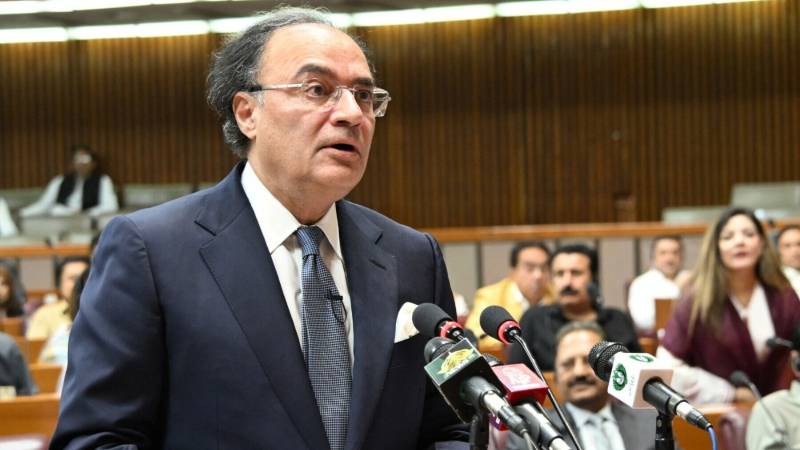
Pakistan’s Budget 2025–26 arrived in Parliament with ambitious claims: 4.2 percent GDP growth, Rs 14.3 trillion in revenue, and a fiscal deficit reduced to 3.9 percent of GDP. The finance minister heralded Rs 200 billion in tariff cuts on raw materials, a digital-transactions levy to generate Rs 64 billion, and a token sub-1 percent tax relief for salaried workers—granting middle-class households a paltry few hundred rupees monthly. Yet, these headline figures mask a budget crafted to appease powerful elites, not to drive much-needed growth by encouraging investments. While influential interest groups shape policy to favour their economic gains in developed nations and neighbouring Asian countries alike, Pakistan’s ruling elites stand out for their stark inability—or unwillingness—to prioritise the greater good. This short-termism, perhaps rooted in a lack of faith in the nation’s long-term future, fuels a relentless pursuit of quick profits over sustainable development.
The scale of legal subsidies, euphemistically termed exemptions, lays bare the budget’s skewed priorities. It squanders Rs 5.84 trillion—roughly $21 billion—through exemptions, rebates, and loopholes, dwarfing combined health and education budgets and even defence spending. These concessions enrich powerful landowners, real-estate magnates, and luxury-goods importers, who wield influence to preserve privileges. Meanwhile, small manufacturers, exporters, and service firms contend with a steep tax burden and a convoluted tax code that throttles growth. The government’s 2024 promise to digitise the FBR with McKinsey’s assistance has yielded little progress, leaving AI-driven compliance tools and plans to raise the tax-to-GDP ratio to 14% as mere rhetoric. Superficial e-filing reforms and digital-payment incentives fail to mend a system haemorrhaging nearly half its potential revenue, elevating entrenched elites over every day Pakistanis.
Agriculture, employing nearly 40 percent of Pakistan’s workforce but contributing roughly 20 percent to GDP and less than 1 percent to taxes, receives only vague promises amid procurement and trade policies distorted by powerful lobbies. The recent wheat policy failure, marked by excessive imports flooding markets and depressing prices, has devastated small farmers, who also face manipulated procurement systems. Despite increased agricultural loans to Rs 2,066 billion, these funds often fail to reach small farmers due to bureaucratic hurdles and elite capture. Cotton production plummeted over 30 percent last year, worsened by outdated practices and limited support. Small farmers, the backbone of rural economies, lack access to modern tools and markets. Meanwhile, urban elites secure import-duty waivers and tax write-offs, deepening economic inequity. A development-focused budget would prioritise agriculture with investments in high-yield seeds, mechanisation, and cold-chain logistics to boost productivity and rural livelihoods.
Energy security, critical for economic growth, is crippled by persistent policy flip-flops that undermine investor confidence and progress. Power companies face a circular debt of Rs 2.4 trillion, stalling factories with load-shedding and leaving rural households with unreliable electricity. Recent policy reversals, including cutting net-metering buyback rates from Rs 27 to Rs 10 per unit and levying an 18% sales tax on imported solar panels, have fuelled public backlash, discouraging solar adoption while sidestepping inefficiencies like high transmission losses.
A flat 20 percent corporate rate, a single-band income tax with a high exemption threshold, and the elimination of Rs 5.84 trillion in exemptions could lower compliance costs, attract small businesses and rural entrepreneurs, and boost revenue without raising rates
For villages where blackouts disrupt livelihoods and children study by candlelight, the budget’s modest renewable energy funding and Rs 140 billion in reduced power company losses ring hollow. A robust energy strategy would prioritise policy stability, modernise the grid, incentivise solar and wind projects, and resolve structural issues like circular debt to ensure reliable power nationwide.
Defence spending rises 14 percent to Rs 3.97 trillion, encompassing pensions and additional costs beyond the official defence services allocation of Rs 2.55 trillion, accounting for nearly 3 percent of GDP. This increase, alongside the slashing of 118 development projects worth Rs 1,000 billion in the Public Sector Development Programme (PSDP), diverts resources from critical investments in health, technology, and infrastructure. Pakistan’s security challenges, from porous borders to regional tensions, are real, but modern warfare favours drones, cyber capabilities, and precision systems over large infantry forces. A technology-driven defence strategy could maintain security while freeing billions for social services. Instead, the budget’s heavy military allocation and PSDP cuts leave communities underserved.
Pakistan’s trade policy remains fragmented. The Rs 200 billion tariff cut on raw materials signals liberalisation, but complex and numerous import tariffs, sluggish customs processes, high export fees, and logistics bottlenecks persist. Despite Rs 311 billion in SME financing for 95,000 businesses, these cuts and support measures primarily enrich established players, leaving small businesses sidelined. Without simpler and fewer tariffs, streamlined procedures, modernised ports, and robust export-finance facilities, Pakistan cannot become a competitive export hub. The budget falls short, trapping exporters in bureaucratic quagmires.
The digital-transactions levy—1 percent on purchases up to Rs 10,000, 2 percent up to Rs 25,000, 0.25 percent on larger transactions, and 5 percent on foreign platforms—aims to tax e-commerce but risks stifling it. Small vendors and gig workers, operating on thin margins, may face complex withholding taxes, pushing them back to cash transactions. This levy reflects the government’s reliance on new taxes rather than simplifying the system, which discourages compliance and perpetuates informality.
Pakistan’s tax code needs a complete overhaul. A flat 20 percent corporate rate, a single-band income tax with a high exemption threshold, and the elimination of Rs 5.84 trillion in exemptions could lower compliance costs, attract small businesses and rural entrepreneurs, and boost revenue without raising rates. Instead, the government makes minor tweaks, preserving a dual economy where success is penalised, and privilege is protected, stifling innovation and fairness.
Pakistan’s fiscal federalism highlights these inequities. In India, total tax revenue for FY 2023–24 was 18.5 percent of GDP, with the central government collecting 11.6 percent and states collecting 6.9 percent, allowing states fiscal autonomy to address local needs. In Pakistan, federal collections are just 10.6 percent of GDP, while provinces raise a mere 1 percent, relying heavily on federal transfers under the NFC Award. This centralised system limits provincial resources for health, education, and infrastructure, hindering local development. Empowering provinces with greater fiscal authority could enable tailored solutions, but the budget reinforces federal control.
Pakistan’s public debt, at 74.1 percent of GDP (Rs 67.8 trillion) by March 2025, consumes over 80 per cent of net federal revenue (that is, net after transfers to provinces) in interest payments. While a Rs 1,000 billion debt buyback and Rs 850 billion in refinancing savings mark progress, the budget lacks a comprehensive debt-management plan—to meaningfully reduce this burden. Without tackling this, every rupee spent on subsidies, defence, or development fuels more borrowing or inflation, trapping Pakistan in fiscal strain.
The budget’s failure to align with priorities like debt reduction, energy reliability, food security, and technology-driven progress is symptomatic of short-termism and a lack of appreciation that only long-term investments can assure sustainable and higher growth rates. Past governments’ money-printing fuelled inflation and eroded trust; this budget risks repeating those mistakes, prioritising coalition politics over transformation in the form of record tax exemptions. It serves as a survival manual for entrenched interests, not a roadmap for Pakistan’s future.
Pakistan urgently needs a bold agenda to break free from stagnation, prioritising investment incentives, a simplified tax code, and structural reforms over elite interests. A dynamic industrial policy with targeted tax credits, SME support, startup incubators, and robust export incentives could drive growth, while a streamlined tax code—eliminating Rs 5.84 trillion in exemptions—would channel resources to productive sectors, enhancing compliance and fairness. Greater devolution under the 18th Amendment, paired with a leaner federal bureaucracy, would empower local governance.
Energy reforms to end Rs 2.4 trillion in circular debt, stabilise policies, and ensure reliable power are vital, as are agricultural investments in high-yield seeds, efficient irrigation, and logistics. The rice sector’s success, thriving without heavy state controls, shows the way to reverse wheat and cotton failures through market-driven policies. Simplified trade tariffs and modernised ports could make Pakistan an export hub. The IT sector, with exports surging 32% to $3.5 billion, holds promise if backed by reliable infrastructure and simplified taxes. Without these priorities, budgets remain hollow. In towns lacking clean water, villages cut off from markets and credit, and classrooms where girls face underfunded schools and cultural barriers, entrenched societal failures persist. Only by championing Pakistan’s core needs over powerful lobbies can the nation achieve sustainable progress.