

“If liberty means anything at all, it means the right to tell people what they do not want to hear.” — George Orwell
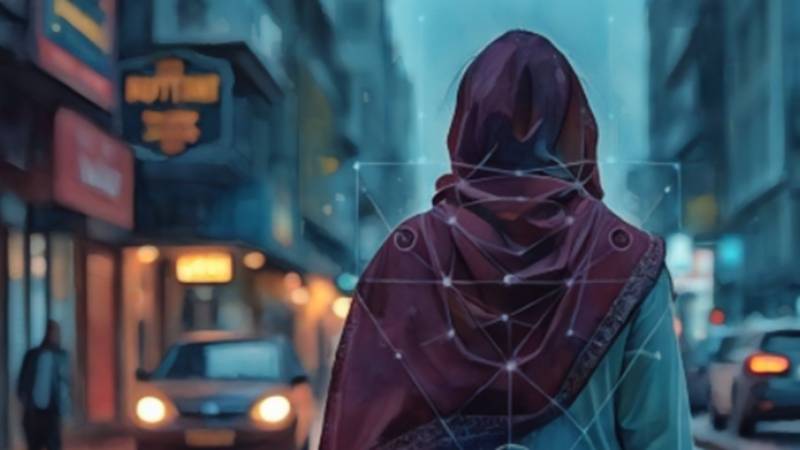
The internet in Pakistan is soaring at a high rate. Millions now use social media to communicate, express their views, protest injustice, and connect with the world beyond borders. Yet beneath this seemingly open digital environment lies an uncomfortable truth: free speech in Pakistan is not genuinely free. It is being strangled, surveilled, harassed, and penalised—often under the guise of laws that were initially intended to protect it.
Every day, citizens in Pakistan tweet, post videos, write blogs, and express dissent—often at the risk of being watched or forced into silence. A few words on Twitter may bring a knock on the door. A Facebook update could result in arrest. A critical YouTube video may disappear, or worse, the person behind it may face threats, harassment, or even enforced disappearance. While the state claims these actions are meant to safeguard national interest or religious sentiments, the reality is that censorship has become a tool to enforce political conformity and suppress disagreement.
The pattern is disturbingly consistent: those who speak against power are punished. Consider the case of journalist Asad Toor, who was beaten in his own residence over allegations of anti-state reporting. Or Imran Riaz Khan, an anchor who dared to criticise powerful institutions—only to mysteriously disappear in 2023. Their voices are among many others that have been silenced—some permanently. Even a woman like Mehwish Ali, a TikToker advocating for women’s rights, was harassed and censored simply for demanding dignity and safety online. The cost of speaking truth to power in Pakistan is increasingly steep.
At the heart of this digital suppression lies a set of poorly defined and dangerously open-ended laws. The Prevention of Electronic Crimes Act (PECA) 2016 was introduced to address cybercrime. In practice, it has become a powerful instrument for silencing dissent. Under PECA, the Federal Investigation Agency (FIA) has the authority to arrest individuals on vague grounds such as offending religious sentiments or spreading false information. These terms remain undefined, and in their vagueness lies their danger. Time and again, they have been used to suppress criticism of politicians, the military, and state institutions. Section 20 of PECA, which criminalises offenses against the dignity of a person, is one of the most misused provisions, frequently invoked against journalists, activists, and ordinary citizens who dare to voice discontent or expose corruption.
Even the Islamabad High Court has denounced the misuse and ambiguity of PECA. Yet, meaningful reform remains elusive. Meanwhile, the Pakistan Telecommunication Authority (PTA) continues to block websites, news portals, and social media platforms without due process. YouTube remained inaccessible for years. TikTok has faced multiple bans. VPNs, tools used to safeguard privacy and evade censorship, are increasingly restricted, curbing digital anonymity and reinforcing a culture where the state decides what people may see, share, or think.
Civil society organisations such as Digital Rights Foundation and Media Matters for Democracy are at the forefront of resisting this censorship
This is not about preserving morality or protecting society. It is about fear—fear of criticism, fear of exposure, fear of losing control over the national narrative. The institutions that benefit most from censorship are those already wielding immense power. Criticism of the military’s role in politics or inquiries into enforced disappearances are swiftly stifled. Digital suppression is not a partisan issue; it is enforced both by ruling parties and opposition figures, who weaponise these laws against activists and opponents. Religious extremists, meanwhile, operate online with relative impunity—spreading hate, issuing threats—while those advocating for minority rights or speaking against injustice face arrests and FIRs.
The psychological impact of this environment is devastating. Women who speak out face not just harassment but the leaking of their private information, endangering them and their families. Journalists go missing. Self-censorship becomes routine, a defensive response to threats so pervasive that some are driven to exile. Even students who mobilise for better education or campus freedoms are monitored, intimidated, and punished. For religious minorities, the stakes are even higher. A single digital message, misunderstood or maliciously interpreted, can spiral into a blasphemy allegation—a de facto death sentence, often executed without trial.
Article 19 of the Constitution of Pakistan guarantees the right to free speech. However, it also permits “reasonable restrictions”—a term so broad and pliable that it grants state authorities near-unchecked power to decide what speech is permissible. In principle, the judiciary is entrusted with defending these freedoms. In practice, its decisions are routinely ignored, and even when enforced, the legal process is too cumbersome and costly for the average citizen to access.
Civil society organisations such as Digital Rights Foundation and Media Matters for Democracy are at the forefront of resisting this censorship. They educate the public, provide free legal assistance, and challenge overreach in court. Yet, when they push too far, they too are targeted—accused of foreign funding, harassed by authorities, and discredited in public discourse. Pakistan still lacks an independent digital rights commission or oversight body to hold authorities accountable. Agencies like the FIA, PTA, and intelligence outfits function with opacity and impunity, deepening the culture of fear rather than fostering a culture of justice.
This is not merely a digital issue, it is a fundamental human issue. When one voice is silenced online, a warning is issued to every other voice: stay in line, or you’re next. Each blocked website, each imprisoned journalist, each banned app chips away at our collective freedom. And when democracy is gagged, freedom of expression dies with it.
There must be immediate reform of PECA to clearly delineate what constitutes unlawful behavior and what qualifies as legitimate protest. Whistleblowers, journalists, women, and minorities must be protected. We need laws that target actual cybercrimes—harassment, stalking, and hate speech—not those that criminalise the act of telling the truth. Above all, we must stop pretending that censorship is saving lives. It is not. It is merely shielding the power.
Pakistanis must be allowed to speak freely—not just in theory, but in practice. The internet remains the final frontier of unfiltered truth, and we are dangerously close to losing it. If this trend continues, a day may come when even thoughts that pass through our minds will be criminalised.
Freedom of speech is the freedom to live fully and honestly. No nation can claim to be democratic while silencing its own people. If Pakistan seeks to move forward—economically, socially, and politically—it must defend digital freedom, not dismantle it.
Freedom of speech is not about saying what is easy. It is about the right to say what is difficult, inconvenient, and uncomfortable. Until that right is secured, censorship in Pakistan will continue to thrive—administered not by visible tyrants, but by the invisible hand of fear. And no enforced silence has ever saved a nation.