

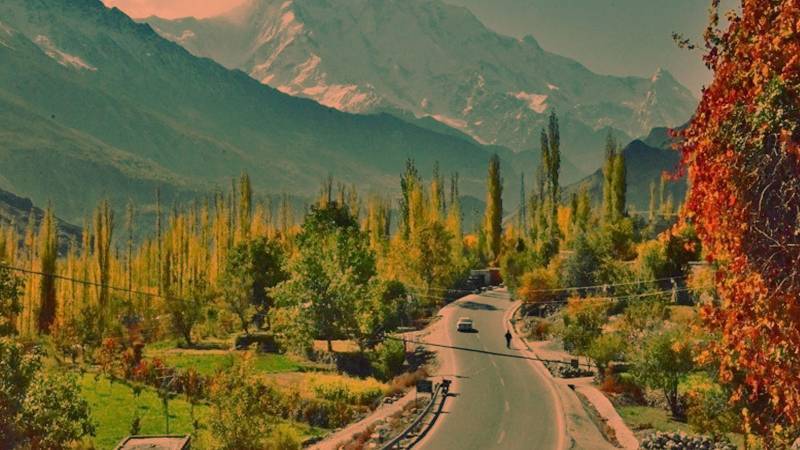
I recently did a road trip of around 4,000 kms all over Pakistan. I started in Karachi where I live and drove north towards the mountains. I stopped in Multan overnight (at the excellent Avari Express – highly recommended) and then drove to Galyat and further north.
The trip from Karachi to Galyat can be done in two days easily – with an overnight stop. From Multan, if you drive to Galyat, you can completely bypass Islamabad if you wish. Google Maps will take you through to the Hazara Expressway, which is fantastic as well, and from there you get off at Abbottabad, and then it’s around an hour to Galyat.
I drove myself at all times.
Here are some observations from my road trip. It’s not at all my first road trip across Pakistan, but certainly the first where I am jotting down my observations in the form of a column.
By and large, Pakistan has some of the best highways/motorways I have driven on – I have driven all over the US and the UK and a couple of other European countries as well.
The N5 section between Sukkur/Rohri and Qazi Ahmed is a complete shitshow – it’s a travesty that this road is being used by all traffic moving to and from Karachi to upcountry. It’s around 208 kms and takes you around three hours to traverse – on a motorway with a 120 km/h speed limit you can cover 208 kms in around an hour and forty minutes. This is in large part because this stretch of highway is two lanes each way, and you see trucks and other heavy vehicles continuously overtaking each other, and in the process slowing down traffic behind them.
A significant proportion of car, van and public transport drivers in mountain areas and on roads see nothing wrong with overtaking a vehicle on a blind turn
Furthermore, this stretch of road – and even the Indus Highway, though to a lesser extent – goes through towns where you have to slow down. Also, in various places it has cuts from where locals riding motorcycles, cycles, donkey carts, rickshaws and Qingqis often pop up without warning. This means that on this stretch, you have to be extra careful, and usually the average speed is far lower than the maximum speed limit.
Drivers on motorways by and large follow traffic laws; they use the slow and travelling lanes and use indicators. There are some others, however, who insist on using the overtaking lane at all times and don’t move away from it, even if you’re right behind them and flickering your lights, indicating to them to move to the travelling lane to the left – but they don’t budge. And in many instances, they are driving below the speed limit! Such drivers are generally referred to as morons.
In Punjab, there are local small vans which cause issues since their drivers usually want to overtake the trucks. The drivers of these small vans are usually using their phones while driving (based on what I saw during this road trip). The same is the case with drivers of intercity coaches – driving can be monotonous and boring, especially if you do it for a living, and the tendency to use your phone will always be there. That said, in my view this is probably the leading cause of accidents on the highways and motorways – that is, the driver became distracted while using the mobile phone.
I saw roadkill several times, including a large monitor lizard along the Multan–Pindi Bhattian motorway stretch. Also, a couple of foxes, and several wild dogs.
The tolls are well managed in KP and Punjab, with proper warnings and markings. However, the toll plaza at the motorway end in Karachi, which probably sees large amounts of traffic, was a complete disaster. It had no signs warning motorists that it’s coming up, and the ‘cash only’ lane wasn’t marked. Many cars went to other lanes and had to reverse and turn back to the one that was accepting cash – a sure recipe for disaster.
Several petrol stations now have clean bathrooms: you have to pay a nominal fee of Rs 50–100 to use them. Some even have a shower area (Rs 250 for an ‘executive shower’).
A significant proportion of car, van and public transport drivers in mountain areas and roads see nothing wrong in overtaking a vehicle on a blind turn (where they can’t see oncoming traffic). This is not uniquely a bus or truck phenomenon – car drivers also indulge in this suicidal and imbecilic behaviour.
The motorways are manned vigorously by the motorway police. I saw more patrol cars on this road trip than I did in several road trips undertaken in the US over the course of a number of years.
All that said, the country’s motorways and highways are a massive public good – as in their benefits go far beyond the obvious, such as better road connectivity leading to increased economic and commercial activity and improved communication links. They have enabled a massive growth in domestic tourism, where people are able to go all across the country in either their own vehicles or through public and commercial bus services, and even rentals.