

New York: The United Nations has confirmed that 140 Member States have now paid their regular budget dues in full, according to the Secretary-General’s spokesperson at the October 10 noon briefing. While that represents four additional payments since the end of September, senior UN officials say the Organization’s overall financial situation remains “worryingly fragile” and may force further emergency borrowing before year’s end.
At the start of October, the UN was still owed $1.87 billion in mandatory contributions from 57 countries, based on figures presented to the Fifth Committee on September 30. The United States alone accounts for $1.5 billion of the outstanding amount, with China owing $192 million, the Russian Federation $72 million, Venezuela $38 million, Mexico $20 million and Argentina $16 million. The remaining 51 Member States collectively owe just over $37 million. Those numbers haven’t shifted, only the count of countries that have paid in full has moved from 136 to 140.

Under-Secretary-General Catherine Pollard, who oversees management strategy, policy and compliance, laid out the scale of the liquidity problem in her briefing to the General Assembly’s budget committee. She said the UN has already drained the entire Working Capital Fund and expects to borrow from the Special Account this month. “After that, we are left only with cash from the closed tribunals, which the General Assembly authorized strictly as a last-resort liquidity buffer,” she told delegates.
The latest payments haven’t changed that trajectory. Officials say the new contributions came too late, and were too small relative to the shortfall, to ease borrowing plans. “Collections continue to fluctuate unpredictably,” Pollard said. She noted that intake was down by $67 million in the first quarter of the year and $160 million by mid-year, before a sudden spike in September. Even with that uptick, she warned, “collections in the last quarter remain uncertain.”

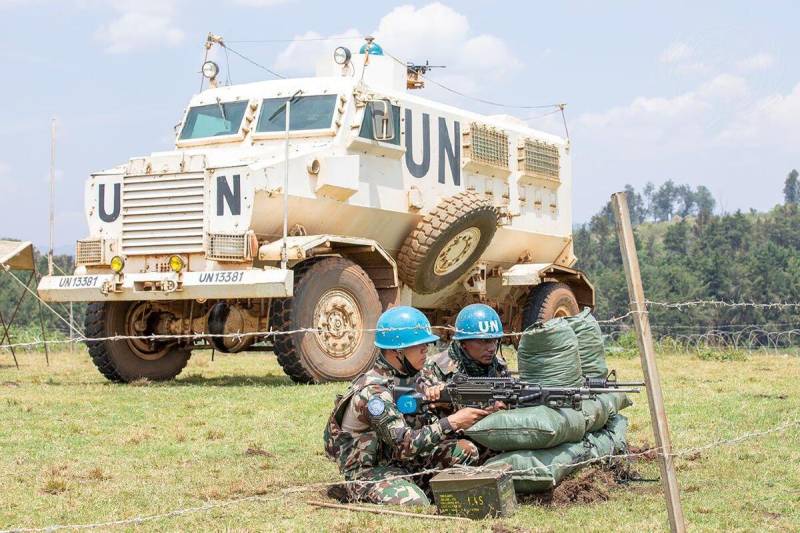
The peacekeeping budget is facing similar strain. As of September 30, only 54 Member States had paid their peacekeeping assessments in full, compared to 59 at the same point last year. That number has now inched up by one to 55. The biggest arrears remain unchanged: the U.S. owes $2.36 billion for peace operations, followed by China at $685 million, Russia at $199 million, Venezuela at $94 million and Ukraine at $79 million. Another $318 million is outstanding from nearly 50 other countries.
Unpaid dues to the international tribunals, totaling $65 million at the end of September, have not materially changed since then. The U.S. owes about $32 million of that amount, Russia $28 million and Venezuela just over $2 million.

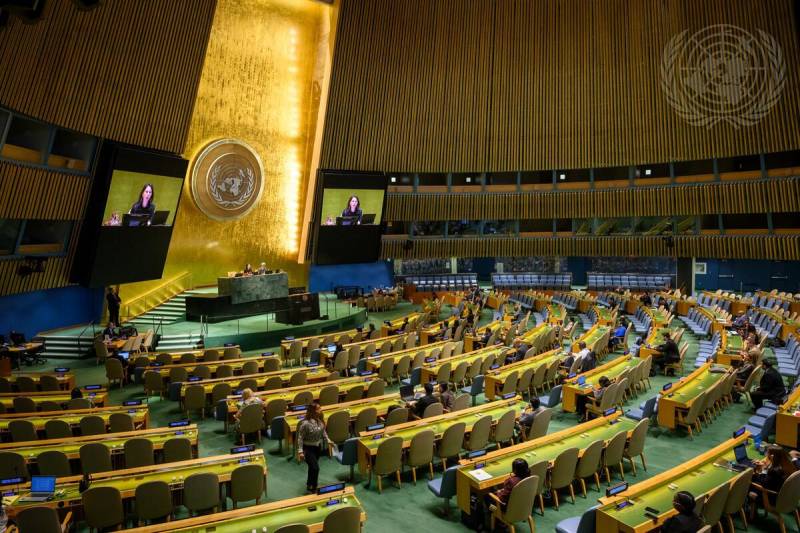
General Assembly President Annalena Baerbock used her October intervention at the Fifth Committee to underscore how the cumulative effect of late and withheld funding is eroding the UN’s ability to function. “We are literally at a crossroad. a make-or-break moment, politically and financially,” she said. She warned that treating the budget process as a recycling of old mandates without confronting the financial reality would risk hollowing out the Organization’s work. “When contributions are delayed or withheld, the United Nations is weakened and risks paralysis,” she said, adding that cuts to the World Food Programme “mean people, literally, go hungry.”
Officials in the Secretariat have also reopened debate on whether the UN should suspend the automatic return of unspent funds to Member States, a rule that has complicated liquidity planning. Chandru Ramanathan, the UN Controller, said at the Fifth Committee that nearly $860 million in unpaid contributions at the end of 2023 left just $67 million in usable cash heading into 2024. The Secretariat was forced to borrow repeatedly: $250 million from the Working Capital Fund to cover September payroll, $226.9 million from the Special Account in October, and $130 million from closed tribunals in November. Without a late surge of payments in December, the UN “almost ran out of cash,” he said.

This year, Ramanathan and Pollard are urging Member States to allow the Secretariat to withhold $298.9 million in credits, money that would normally be returned to governments after budget reconciliation, and place it into a reserve that can cushion against non-payment in 2026. The Advisory Committee on Administrative and Budgetary Questions has stressed that only the General Assembly can authorize such a move.
Developing countries, represented through the Group of 77 and China, have argued that the fundamental problem is not financial rules but non-compliance by major contributors. “Mandate delivery must be the driver of budget implementation,” the group’s delegate said, warning that the burden of shortfalls was falling on missions and programmes serving vulnerable populations. Nearly half of the total arrears on the regular budget remain tied to the United States, which pays the maximum assessment rate but has historically used delayed payments as leverage over policy.
Diplomats familiar with internal discussions say the infusion from the four countries that paid after September 30 barely registers within the broader deficit. Peacekeeping reimbursements to troop- and police-contributing countries are at risk of further delay, and hiring freezes are already in place across several departments. Some development and human rights activities have been slowed or postponed, with senior officials privately warning of “silent attrition.”
The Secretary-General has not issued a separate public statement since the October 10 update, but his position has been consistent throughout the autumn. He has emphasized that the Organization cannot carry out mandates agreed by Member States if those same governments fail to fund them. In earlier comments this month, he said that predictable, unconditional financing was “the minimum requirement for credibility.”
With year-end payroll, reimbursements and procurement deadlines approaching, UN budget officials say they are monitoring cash balances daily. None are suggesting collapse is imminent, but no one is promising stability either. The move from 136 to 140 fully paid-up states offered a small statistical boost, not a fiscal turnaround. The real test, several delegates said, will be whether the largest debtors honor their commitments before December or leave the UN to once again bridge the gap with loans, freezes and deferred obligations