

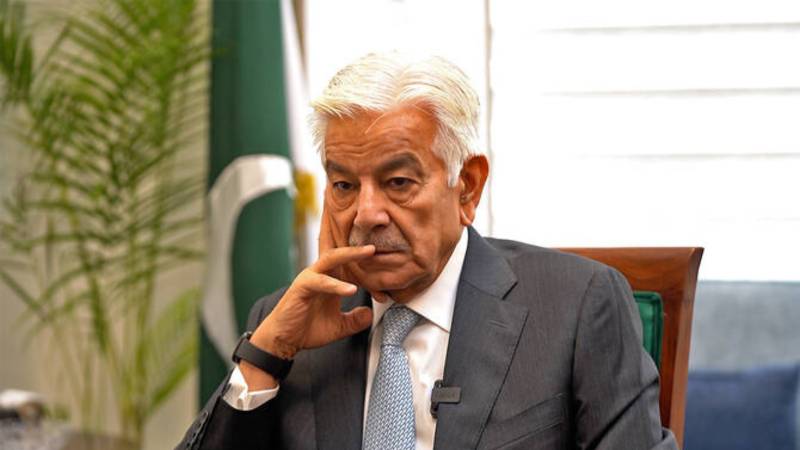
Recent remarks by Pakistan’s Defence Minister Khawaja Asif lauding the country’s “hybrid model of governance” seem to carry more weight than mere admiration. Beneath the surface lies a strategic endorsement of a framework in which civil and military institutions operate not in isolation, but in harmony, complementing one another to enhance decision-making and execution. With this, Pakistan may be on the verge of introducing a new paradigm to the global political lexicon: a hybrid model that isn’t easily classified as inherently good or bad, but is certainly distinctive in character.
This novel approach has the potential to reshape Pakistan’s political landscape. By fusing civilian oversight with military efficiency, the country may well set a precedent for nations facing similar governance complexities. If successful, the model could inspire global discourse on political innovation, drawing attention from analysts and policymakers eager to study its implications for states grappling with institutional fragmentation.
Pakistan’s history of constitutional adjustments demonstrates an ongoing quest for balance between authority and accountability. The Eighth Amendment of 1985, which empowered the President under General Zia-ul-Haq’s influence to dissolve Parliament, was later overturned by the Thirteenth Amendment in 1997, restoring parliamentary independence. The Eighteenth Amendment in 2010 marked a transformative moment, significantly curbing presidential powers while strengthening Parliament and provincial autonomy. This shift moved Pakistan decisively from a semi-presidential system to a robust parliamentary democracy.
The judiciary, executive, and legislature have frequently found themselves at odds, contributing to a climate of institutional instability where governance was driven more by competing agendas than by collective vision
Amid this evolving political architecture, one of the most constructive steps Pakistan can take today is the introduction of a constitutional amendment aimed at comprehensive electoral reforms. These reforms are crucial for restoring public trust, ensuring transparency, and preventing the manipulation challenges that have historically plagued electoral processes. Measures such as biometric verification, independent oversight, and real-time result transmission could usher in a new era of credible and inclusive democracy.
And perhaps no moment is more opportune than now. The hybrid model’s unique composition may offer the consensus needed to implement these changes—with both civil and military stakeholders aligned on the necessity of electoral integrity. If harnessed wisely, this governance style could become the cornerstone not only of reform but of reinvention.
Yet, before embracing this hybrid promise, it’s essential to acknowledge the prolonged tug of war that has plagued Pakistan’s institutions. The nation’s political trajectory has often been shaped not by collaborative governance, but by confrontational power struggles—civilian governments undermined by military interference, and vice versa.
These rifts have eroded public trust and stalled policy progress, leaving key democratic institutions vulnerable and reactive rather than proactive. The judiciary, executive, and legislature have frequently found themselves at odds, contributing to a climate of institutional instability where governance was driven more by competing agendas than by collective vision. This legacy makes the hybrid model’s emphasis on cooperation all the more compelling—not as a shortcut to authority, but as a long-overdue framework for mutual reinforcement and shared responsibility.