

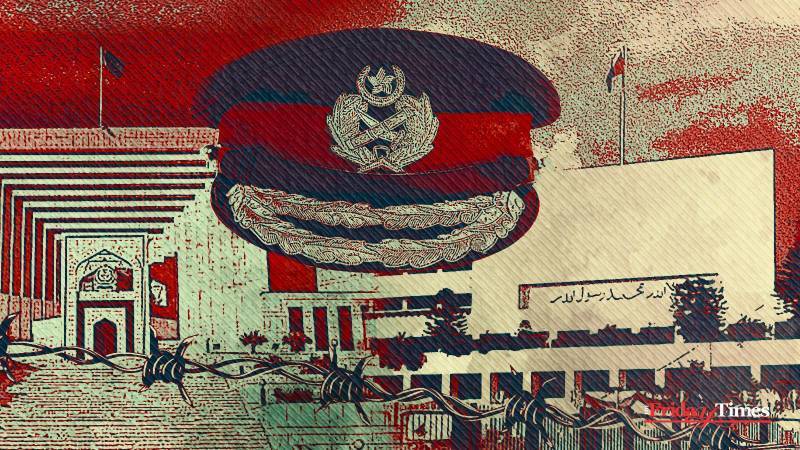
A ‘hot potato’ is a problem that no institution wants to own. A ‘burning aloo’ is a threat that is quickly passed by the military to the civilians and vice versa. The military has informed the nation that the burning aloo is a classic case of civilian governance failure. The civilians, not to be outdone, have returned the favour by declaring that the burning aloo is, in fact, a textbook military containment failure. The burning aloo, in the meanwhile, stays physically confined, but its political heat still zips back and forth through Rawalpindi–Islamabad airspace, occasionally stopping to roast a bureaucrat. Question: In this blame loop, who is really getting cooked? The State itself?
The military fling the burning aloo at the civilians, and the civilians lob it back to the military. Round and round the hot potato goes, getting hotter each time. Under the emerging ‘Burning Aloo Doctrine’, the burning aloo must immediately be tossed to the other side before responsibility burns their fingers, making sure someone else gets burned. The burning aloo tweets while the state drafts another inter-departmental memo. The burning aloo internationalises the heat while the state conducts another coordination meeting. The burning aloo knows something the state does not: when the state is busy tossing potatoes, it cannot build firewalls.
The civilians get the blame for incompetence. The military gets the blame for interference. And the public gets the bill. It is a ballet performed by people who refuse to dance
Under the Burning Aloo Doctrine, we have invented a sport that no one wants to sponsor, but everyone must live with. The civilians get the blame for incompetence. The military gets the blame for interference. And the public gets the bill. It is a ballet performed by people who refuse to dance. Everyone is trying so hard not to get burned that they forget the kitchen is already on fire. When responsibility is deflected rather than exercised, the hot potato wins not because of its heat but by default, and the state becomes vulnerable not through weakness but through hesitation.
One day, I am told, the hot potato will fall. Will it fall in the lap of the judiciary? Maybe in the lap of a committee that will hold five meetings and produce seven recommendations, each contradicting the other. In the lap of a caretaker administration? In the middle of this culinary ping-pong sits the Pakistani state, undefended, unshielded, unguarded. Nobody wants burnt fingertips. Everybody wants clean hands. Responsibility returned to sender. Caution: Too Hot to Handle. Toss Immediately.