

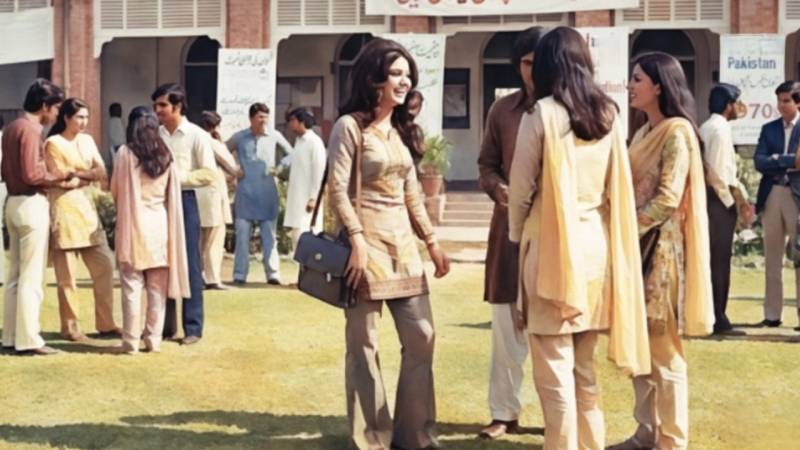
It was in the quiet corners of my university that I learned what politics truly means—not from grand speeches and classroom lectures, but from the whispered conversations of my fellows. I was part of a small, progressive student group that existed in the spaces between. We held study circles behind closed doors and within the back walls of the campus, pasting protest call posters in the dark of night. We even exchanged poster campaigns with students from other universities to evade authority, sharing campaign ideas in careful, coded exchanges.
All this happened because in Pakistan, students cannot simply gather on a campus and call themselves a union. That basic right was taken away forty-two years ago today, in 1984, by a military dictator. It was an act of fear—a fear of the energy, the ideals, and the collective voice of the young. And in the decades since, that fear has been inherited and upheld, a silent agreement among the powerful to keep a generation’s voice from finding its chorus.
The cost of that silence isn’t just felt in empty student union buildings; it’s etched into the future of the nation itself. When you tell an entire generation their collective voice is dangerous, you don’t just quiet a campus. You cripple the very dialogue a country needs to grow.
Student unions once gave working- and middle-class youth a route into politics; now, dynasties and elites dominate, leaving a chronic leadership vacuum
Although the ruler justified the student union ban as a path to “campus peace,” the ban has instead sparked crises in education, politics, and society. It dismantled the primary nursery for grassroots ideological leadership. Student unions once gave working- and middle-class youth a route into politics; now, dynasties and elites dominate, leaving a chronic leadership vacuum. Millions of young Pakistanis grow up without democratic practice—experiencing no elections and no collective advocacy—which fosters apathy or radicalization.
This ideological void has infected political parties too. As democracy has eroded, the youth have lost faith in politics. Now and then, celebrities enter the political arena: cricketers, media stars, filmmakers, tribal chiefs, clerics, industrialists, and TV moguls launch fan-based parties, accountable to admirers rather than ideology. The result? A hollowed-out democracy.
On campuses, unchecked administrators hike fees arbitrarily, let facilities decay, and ignore grievances. Far from curbing violence, the ban created a vacuum for extremists and intolerance—trends that are now rising even among the educated.
Major parties promise reform but deliver little. Sindh’s 2022 law sparked hope, yet it faces resistance. Even today, if students from different backgrounds and provinces could engage in campus politics through student unions, it would unite them on a single cause to empower democracy within the state and demolish extremism and ethnic lines within the country. Pakistan is paying a heavy price for their absence at the moment. Students from Balochistan and Gilgit could gather to identify problems and provide solutions, too. Unions possess the power to unite diverse students on shared causes, demolishing extremism and crafting solutions.
Reviving student unions will nurture leaders, secure campuses, and revive democracy.