

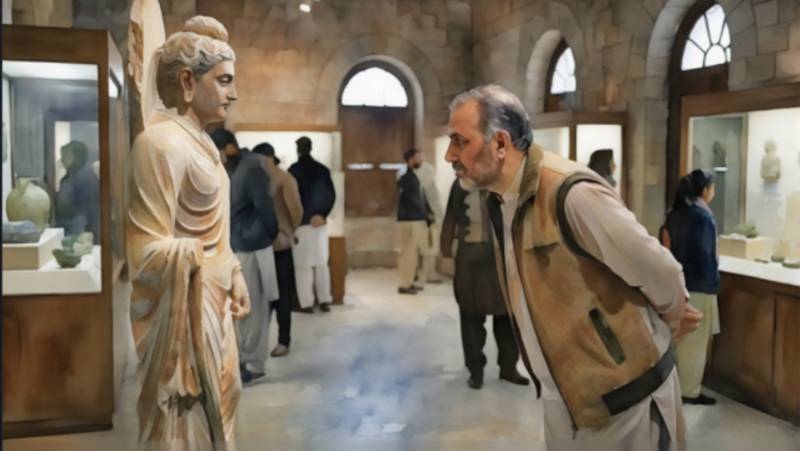
Much has been written about Taxila as a jewel of Pakistan’s ancient past—a centre of Buddhist learning, Greco-Indian art, and cosmopolitan exchange between South Asia, Central Asia, and the Mediterranean world. Yet what is less frequently acknowledged in scholarly and policy circles is the extent to which the communities who live in and around these sites are not just neighbours to antiquity, but its stewards, interpreters, and co-creators.
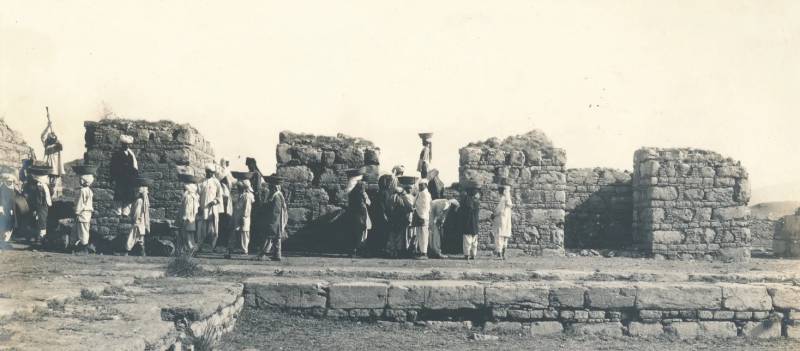
Since the early 20th-century discovery of ancient Takshashila by Sir John Marshall—made possible through the extensive support of local labour—residents of Taxila, including farmers, artisans, teachers, and traders, have enjoyed unique and sustained access to the ancient ruins that surround their communities. Long before UNESCO added Taxila to its World Heritage List in 1980, people from nearby villages like Mohra Maradu, Dheri Shahan, and Bhir were traversing and interacting with the area’s Buddhist monasteries, stupas, and ancient cities. These weren’t just archaeological remnants to them; they were landmarks in a lived landscape—markers of memory and cultural continuity.
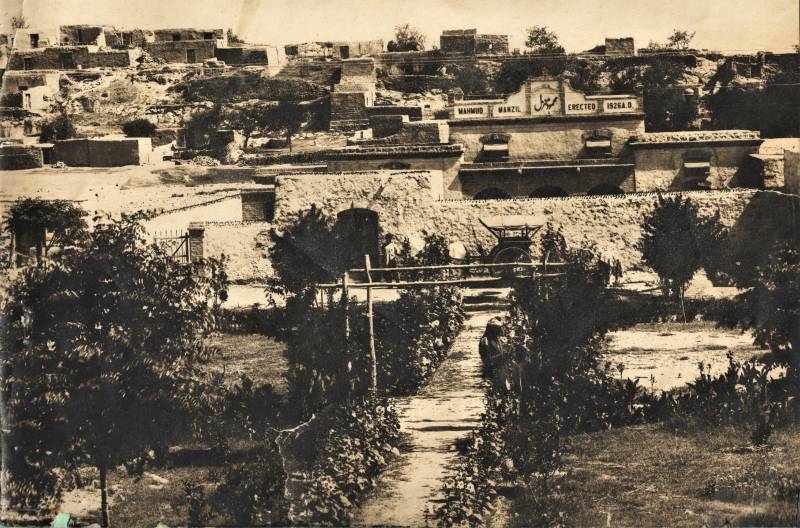
For much of the colonial and early postcolonial period, the name “Taxila” was confined largely to institutional or infrastructural markers—the railway station, the post office, and the museum. These were colonial-era constructions that imposed a historical name onto select buildings, without extending it to the surrounding rural settlements, which retained older place-names such as Dheri Shahan. The result was a fragmented historical geography in which the legacy of ancient Taxila was officially recognised, yet disconnected from the lived identities of those who inhabited its landscape.
For local visitors, the museum objects on display are not alien or abstract; they are eerily familiar. Tools resemble those used in today’s agriculture, hairpins and ornaments look like those worn by grandmothers
The Taxila Museum, established in 1918, has served as a key institution in this relationship. Housing a rich collection of Gandharan sculptures, ceramics, coins, and tools, the museum not only provides insights into ancient Taxilan life but often evokes parallels with contemporary material culture. For local visitors, the objects on display are not alien or abstract; they are eerily familiar. Tools resemble those used in today’s agriculture, hairpins and ornaments look like those worn by grandmothers, and stone carvings of Buddhist jataka tales carry narrative rhythms that resonate with local oral traditions.
This deep cultural entanglement was publicly affirmed in 1962 during Pakistan’s experiment with “Basic Democracies,” a four-tiered local government system initiated by President Ayub Khan. Sheikh Karam Elahi, a businessman turned politician, was elected chairman of the local Union Council which encompassed the area around the Taxila archaeological zone. Recognising the historical weight of the region, he led a successful campaign to rename the Union Council from “Dheri Shahan” to “Union Council, Taxila.” This seemingly minor administrative action held profound symbolic significance. It reinserted the name “Taxila” into the civic and political vocabulary of the region, creating a direct link between the ancient city and its modern-day inheritors.
More importantly, the renaming did not stop at the council level. Over time, the name “Taxila” was gradually adopted as the designation for the entire city, including adjacent villages and neighbourhoods. What began as a symbolic gesture by a local leader ultimately reshaped the geographical and cultural identity of the region as a whole, unifying historical memory with contemporary place-making.
Importantly, this was not merely a nostalgic gesture—it was an act of local empowerment and cultural ownership. It recognised that the people who live among these ruins are not simply bystanders to heritage; they are embedded within it. Their names, stories, livelihoods, and rituals continue to be shaped by the archaeological presence in their environment.
A remarkable example of this was witnessed in 1970, when residents of Taxila organised a reenactment of Macedonian King Alexander’s arrival at the city, said to have taken place in 326 BC. The performance was the brainchild of Master Abdur Rehman, a local schoolteacher from Mohra Maradu, who saw in the ruins not just fragments of a distant past but a stage for living history. Students from nearby government schools took on roles as Alexander’s entourage and Raja Ambhi’s court, performing a scripted narrative before hundreds of residents who gathered at the archaeological site of Bhir mound. The event, spanning several hours, was more than pageantry—it was a powerful expression of collective memory and cultural identity. In reanimating the past, the community also reasserted their place within it.
And yet, despite this deep-rooted connection between people and place, Pakistani heritage policy has often treated these communities as marginal to the stewardship of antiquity. If we are to meaningfully preserve and promote Pakistan’s cultural heritage, we must expand the framework beyond antiquities and exhibitions. Heritage lives not just in museums or international catalogues but in the memories, performances, and everyday practices of people. Taxila is not merely an archaeological site; it is a living, breathing historical landscape sustained by those who continue to inhabit it.
It is time for policymakers, scholars, and heritage professionals to recognise this reality. Instead of imposing top-down conservation frameworks, financed by World Bank loans, we should consult and collaborate with the communities who have, for decades, preserved the soul of Taxila in ways that no legal statute or security fence can replicate. True heritage protection must begin with those who have never left.
In that spirit, the contribution of Sheikh Karam Elahi deserves special recognition. His efforts did more than rename a council—they restored a sense of historical continuity to a region once fragmented by colonial nomenclature and administrative boundaries. By aligning modern political geography with ancient identity, he enabled Taxila to become not just a site of archaeological interest, but a place of civic pride and cultural resurgence. In honouring him, we also honour the principle that heritage is strongest when it is reclaimed by those who live within it.