

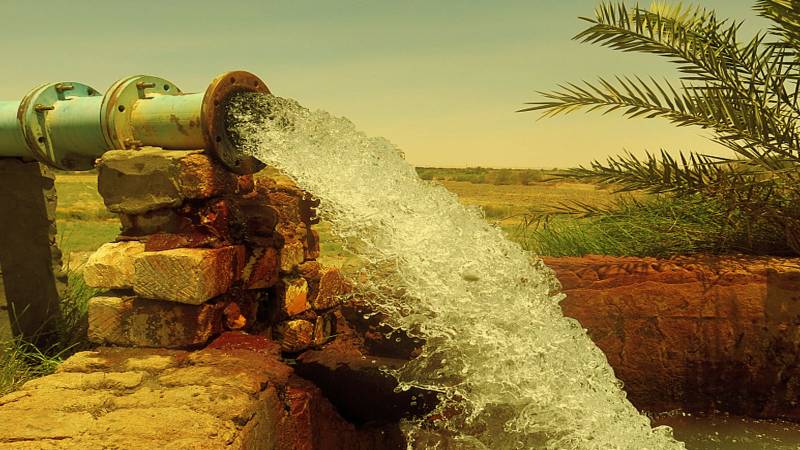
Groundwater is crucial for Pakistan’s water security, catering to more than 50% of agricultural irrigation and 90% of drinking water needs. Punjab uses around 90% of the country’s total extracted groundwater, making it the nation’s food basket. In Punjab, the reliance on groundwater has intensified due to the demands of agriculture, rapid urbanisation, and industrial expansion, as shown in Figure 1.
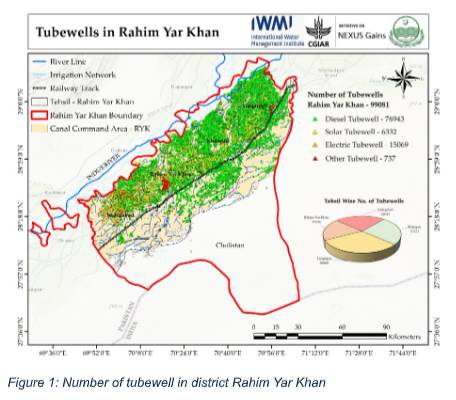
However, over-extraction, unregulated pumping, pollution, and weak governance mechanisms have led to alarming declines in water tables and deteriorating water quality, with marginalised groups being the most vulnerable. This crisis is especially acute in districts like Rahim Yar Khan, where unchecked tube-well drilling and water-intensive cropping patterns have strained the aquifer. Groundwater governance becomes even more challenging as it is an invisible yet widely shared resource among diverse interest groups. Recognising the need to address this unique challenge, IWMI Pakistan, under the CGIAR Initiative on NEXUSGains, launched a Multi-Stakeholder Platform (MSP) for Groundwater Governance in the Indus Basin. The MSP was piloted in Rahim Yar Khan, bringing together multiple actors to rethink groundwater management.
From the outset, the platform aimed to address critical gaps in groundwater governance by fostering collaboration among stakeholders and aligning local actions with provincial policies, particularly the Punjab Water Act 2019. This Act prioritises groundwater use for domestic needs, followed by agriculture, industry, and environmental requirements. Yet, as one participant from the Punjab Agriculture Department noted, “The challenge lies not just in implementing the Act, but in ensuring its benefits reach the communities it seeks to protect.” Farmers, industrial representatives, municipal authorities, and civil society actors convened under this initiative to discuss these implementation gaps, ensuring that policy frameworks translate into tangible outcomes on the ground, particularly for underrepresented groups. To this end, small land-holding farmers, women, and youth were invited through social and personal networks.
What has the MSP achieved so far?
The platform’s first meeting identified Rahim Yar Khan’s groundwater challenges, including depletion, pollution, and a lack of awareness regarding sustainable groundwater management among users. A public health engineering department official highlighted the widespread water quality and contamination issues, stating, “Groundwater in urban areas like Rahim Yar Khan city is brackish in 80% of locations. Our outdated sewerage systems exacerbate the issue by contaminating drinking water, leading to waterborne diseases.” Farmers echoed these concerns, emphasising how declining water tables force them to dig deeper wells, often at unsustainable costs. “We depend on groundwater because we have no choice,” remarked one farmer during the discussions. These insights underpinned the need for coordinated efforts, particularly in raising awareness and introducing regulatory frameworks that encourage sustainable practices.
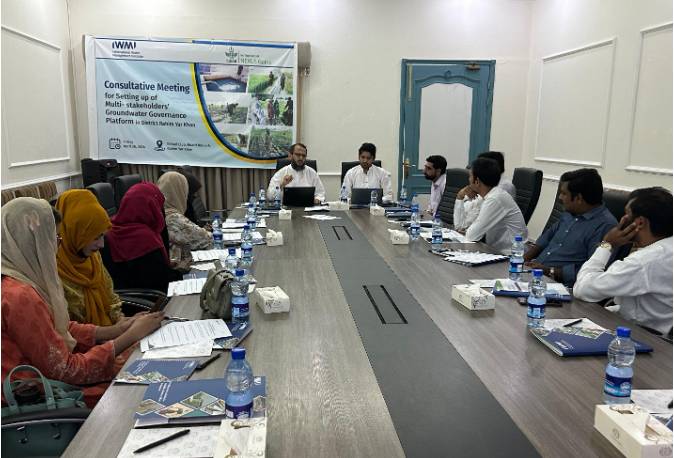
Subsequent meetings moved beyond diagnostics to action planning, with notable progress in data collection and stakeholder engagement. The IWMI team reported that the geo-referencing of over 80,000 tubewells by the Punjab Irrigation Department provided granular insights into extraction patterns and water quality across the district. This data is now being integrated into the Groundwater Management Information System (GMIS), a digital tool designed and developed by IWMI to support evidence-based decision-making. However, as an irrigation expert pointed out, “Mapping is only the first step. What matters is how this data informs real-time interventions, like regulating solar-powered tubewells to prevent over-extraction.”
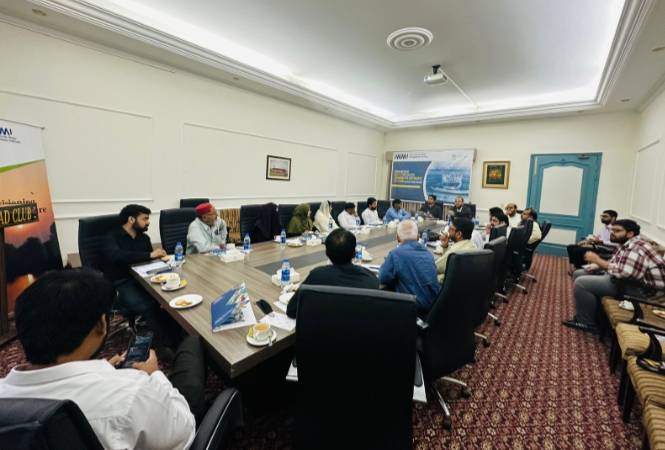
One of the most notable achievements of the MSP has been its ability to bring together diverse groups—farmers, civil society, academia, the private sector, and government representatives—fostering dialogue and a bit of accountability among stakeholders who rarely interact this closely in traditional settings. For example, during one meeting, a farmer raised serious concerns about industrial pollution in Rahim Yar Khan, pointing to its harmful impacts on groundwater quality and public health. In response, a representative from the Environmental Protection Agency (EPA) acknowledged the issue and pledged action.
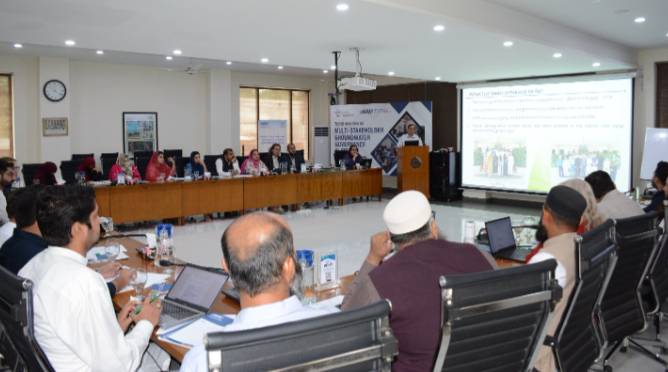
Despite these successes, the platform has faced significant challenges. Shifting entrenched behaviors remains a daunting task. Farmers, for example, remain hesitant to transition from water-intensive crops like sugarcane and rice to alternatives. “Market dynamics dictate our decisions. Without financial incentives or assured markets, we cannot take risks,” explained one farmer who has resisted adopting low-delta crops. Similarly, industrial representatives highlighted the financial burden of transitioning to sustainable practices, such as wastewater treatment systems. “While industries want to comply, the lack of clear guidelines and financial support makes it difficult,” noted a private-sector participant during the second meeting.
Institutional coordination also emerged as a recurring challenge. Departments responsible for agriculture, irrigation, and public health often operate in silos, leading to overlaps and inefficiencies. One municipal official lamented, “There’s a constant turf war between local government bodies and public health engineering, delaying critical infrastructure upgrades.” Participants called for a unified governance framework that promotes accountability and collaboration, a proposal that aligns with the platform’s objective of fostering trust and coherence among stakeholders.
The platform’s third meeting in September 2024 marked a turning point by shifting focus toward actionable solutions. Participants emphasised the need for both short-term interventions, like groundwater recharge wells and filtration systems, and long-term strategies, such as crop zoning and licensing mechanisms. The idea of water quotas resonated strongly, with a policy expert noting, “A quota system could ensure fair distribution while curbing overuse, but its success depends on transparent enforcement.” Financial incentives, such as tax breaks and low-interest loans, were also highlighted as tools to encourage sustainable practices among farmers and industries.
Gender inclusion also featured prominently in the discussions. Women, who play a central role in water management within households, often remain excluded from decision-making processes. “Our voices are rarely heard, yet we bear the brunt of water shortages,” remarked a female participant from a local research institution.
Looking ahead, the platform aims to scale its successes while addressing persistent challenges. Expanding data-driven tools like GMIS, piloting community-based monitoring programs, and leveraging digital platforms for awareness campaigns are key priorities. “The insights we’ve gained here can serve as a model for other districts,” observed a senior agriculture official. However, achieving this vision requires sustained political will, financial investment, and a commitment to inclusivity.