

Which segment requires the reshaping of gender dynamics to empower the women at priority?
WASH plays a vital role in reshaping gender dynamics and empowering women and girls to drive positive changes for healthier lives. Without safe water, sanitation, and hygiene (WASH) services, women and girls seem to be more vulnerable to abuse, attack, and illness, limiting their ability to study, work, and live in dignity. Women and girls must play a central role in developing and implementing solutions that address their specific needs.
Water sanitation in rural areas is a challenge
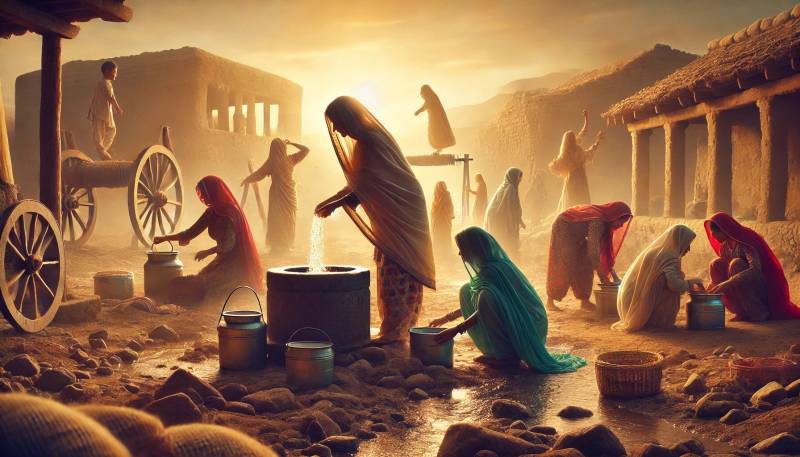
Women and girls are usually responsible for fetching water. This can be a hazardous, time-consuming, and physically exhausting task. Long walks, often multiple times per day, can expose women and girls to attack and prevent them from attending school or earning a living. Personal safety is paramount for women and girls when it comes to sanitation. Having to use the restroom outside or sharing facilities with men and boys puts women and girls at greater risk of abuse and assault.
The lack of safe drinking water and sanitation is an equality issue. Women and girls are disproportionately affected by inadequate water, sanitation, and hygiene facilities. However, their voices and needs are frequently ignored in the design and implementation of improvements, ensuring their ongoing marginalisation.
By failing women and girls, we jeopardise the 2030 Agenda. Access to water and sanitation are fundamental human rights. When women are denied those rights, their health suffers significantly, limiting their educational and economic opportunities and denying them their full participation in the society.
Future climate policies and relief efforts should prioritise women
Due to traditions of patriarchy and gender inequality, women in developing countries such as Pakistan are especially vulnerable to climatic calamities. The grave consequences of climate change are becoming undeniable and more concerning within the past decade. It is crucial to highlight the predicament of the most vulnerable and marginalised community members—women and little children—and include them in crucial decision-making discussions when a nation or community is struck by a natural disaster of such epic proportions.
When apocalyptic floods destroy crops and fields, women's employment is severely impacted, and unlike their male counterparts, women lack the resources or receive adequate assistance to find alternative means of livelihood
According to reports, Women made up 70% of the 230,000 fatalities from the 2004 Indian Ocean Tsunami. Due to ingrained gender disparities that shape the moral and social fabric of their communities, women in developing countries such as Pakistan are more susceptible to the effects of climate disasters. In terms of gender parity, Pakistan came in second place globally, according to the 2022 World Economic Forum's Global Gender Gap Index report.
These disappointing findings are indicative of the regrettable conditions that women in Pakistan continue to face, whether it be in the form of a lack of economic empowerment or significant leadership positions in the community. In light of this, natural disasters such as floods will exacerbate already-existing gender disparities by compounding the suffering of millions of women and young girls who are continuously fighting for their rights to proper economic, health, and educational opportunities in a society that is dominated by men.
Given the general limitations on women's mobility and education, particularly in Pakistan's rural areas, evacuation can be difficult because women lack basic life-saving skills such as swimming, navigation, and self-defense techniques. Furthermore, due to the conservative and patriarchal nature of most rural households in Pakistan, women are frequently prohibited from leaving their homes without a male companion or permission from tribal elders, resulting in limited outside exposure. They are also primary caregivers at home, which may further limit their ability to evacuate.
Furthermore, women's roles and contributions to the informal sector and agriculture are not given enough policy-level attention or economic importance in the country, so when apocalyptic floods destroy crops and fields, women's employment is severely impacted, and unlike their male counterparts, women lack the resources or receive adequate assistance to find alternative means of livelihood.
Women face challenges long after a disaster, as many women and young girls are vulnerable to gender-based violence even in flood relief camps and shelter homes. There is also great concern about women's hygiene and sanitation needs, as these shelter homes are frequently unsanitary and lack proper lavatories, clean water, and food supplies.
Similar adversities are already visible in the 2022 flood situation. At least 650,000 pregnant women require care, and just a few days ago, a flood survivor gave birth to a baby boy next to the rubble of her house in the small district of Shahdadkot, Sindh, with no amenities or medical assistance. This emphasises the overall need for a more gender-sensitive approach to rescue and relief operations, including adequate provisions for pregnant women, new mothers, and infants.
The extremely consequential levels of humanitarian, infrastructure, and economic destruction experienced are colossal, making it nearly impossible to accurately quantify the losses at this point. As the Pakistani government and international agencies work to assist flood victims and build greater climate resilience in the future, they must consider women's roles and needs. Women are critical to the development of better climate adaptation mechanisms and disaster risk resilience efforts because they bring distinct perspectives, insights, and challenges to the table that must be recognised and incorporated into future policymaking.
Government-led disaster management entities and civil society organisations (CSOs) should place a greater emphasis on gender-specific disaster communication methods, climate education, and training opportunities, particularly in underserved areas, to ensure that women are aware of and fully equipped with climate knowledge.
WASH is essential for eliminating violence against women and girls. Female safety and dignity must take precedence in WASH service design. Lastly, addressing gender imbalances in WASH governance and management at all levels will ensure service suitability and elevate the status of women in society.