

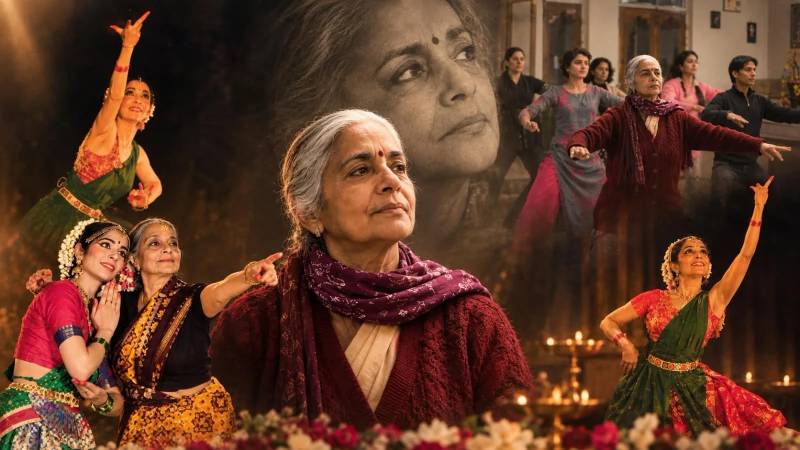
This morning shahgirds of all levels, family, and friends were simply stunned to learn that Indu Mitha had passed away, after briefly being hospitalised, in Dublin where she had been visiting her daughter Yameema.
She was during and after our sessions together the proverbial beacon of light; an inspiration of how life ought to be lived: on her own terms, yet interacting with and inspiring everyone she came across.
Indu was born into a Bengali Brahmin family converted to Christianity. She was brought up amidst the intellectuals and academics of Lahore. She married Abu Bakr Osman Mitha, an army officer from a likewise enlightened and affluent Muslim family from Gujrat (India), a graduate of the elite Indian Miltary Academy in Dehra Dun. He joined the Pakistan Army after Partition and went on to become renowned in his own right as a general.
Though hardly into socialising for its sake, they were indeed an impressive couple whenever seen in public together: either at home amidst family or occasionally gracing functions held by friends, inadvertently lending each such event a starry quality.
Amongst Indu’s first tutors in the Bharatanatyam school that she espoused and then excelled in, in Pakistan exclusively, Kathak being, however discouraged. It kept alive by Maharaj Ghulam Husain and his shahgirds Naheed Siddiqui and Nighat Chaudhary; and Odissi by Sheema Kirmani - was Rukmini Devi from South India, the home of South Asian classical dance, arguably including Kathak.
Throughout her husband’s long and distinguished career in the military, Indu taught the daughters of interested families from all sectors of society on a gratis basis, as often did Baba Maharaj, wherever in Pakistan they were stationed. Her pupils included girls from ‘the most prominent Shia families’ of Lahore. She trained likewise both boys and girls desirous of learning dance from katchi abadis in Islamabad, Rawalpindi, and elsewhere.
Her most brilliant pupil is decidedly her daughter Tehreema, who has performed both in Pakistan and on the international stage in multiple locations on numerous occasions, including in venues such as the Royal Albert Hall in London, with great success.
About a decade ago Indu Mitha officially retired from actively teaching - had earlier given up performing - classical dance. Her farewell appearance at the fully packed PNCA auditorium in central Islamabad literally brought the house down, with not an empty seat in sight, nor a whisper from the audience to be heard, when she stepped onto the stage, a subtly shining and petite figure, with her silver hair and gold/bordered black sari, to thank those attending for being there for her always. She spoke briefly but resoundingly.
Since then, she has devoted herself to her family, her beloved trio of daughters (Yameema, Tehreema, Raheela), sons in law, and grandchildren, enjoying her visits to them and theirs to her. She has likewise always kept in touch with her students, wishing them all well, enquiring about their families, and whenever possible making their day (or evening) by joining them for tea - including at her home in Bani Gala - or at venues such as art exhibitions in town.
It will take a lot of getting used to to realise she’s no longer with us. I think we all, Rizwana, Iffat, Sheeba, Lucia and myself inter alia, assumed that like the figures and elements she portrayed so enchantingly in her beloved Bharatanatyam, she was immortal.