

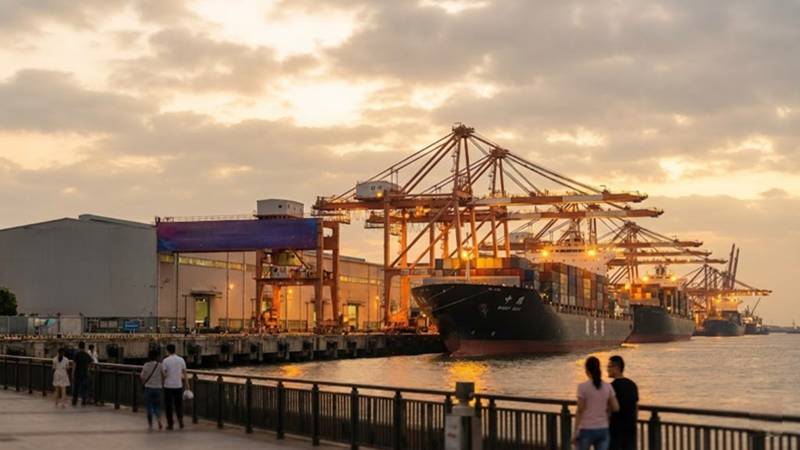
In the grand theatre of 21st‑century geopolitics, the Indian Ocean has become the primary stage for a silent naval ballet known as the “String of Pearls.” First coined in the early 2000s, this strategic concept has by 2026 evolved from a theoretical maritime map into a tangible reality of concrete, cranes, and deep‑water berths. To the casual observer, it appears to be a series of commercial ports; to the strategic mind, it is a maritime noose designed to project power from the South China Sea to the Horn of Africa.
The String of Pearls refers to a network of Chinese‑funded or operated maritime facilities positioned along the sea lines of communication. These pearls are strategically placed to safeguard China’s energy security while simultaneously creating the capability for rapid military mobilisation. Gwadar in Pakistan, often described as the crown jewel, sits at the mouth of the Persian Gulf and serves as the terminal point of the China‑Pakistan Economic Corridor. It allows Beijing to bypass the Malacca Trap, the narrow strait through which the majority of its oil imports pass. Hambantota in Sri Lanka, frequently cited as a cautionary tale of debt‑trap diplomacy, provides a critical foothold in the heart of the Indian Ocean. Djibouti, China’s first overseas military base, lies at the Bab‑el‑Mandeb strait, a chokepoint for global trade entering the Red Sea. Kyaukpyu in Myanmar offers a direct pipeline route into inland China, diversifying its energy entry points.
Responses from New Delhi and Washington reflect a paranoid‑schizoid position, where every commercial crane in Gwadar is imagined as a potential missile silo
Viewed through a psychoanalytic lens, this geopolitical manoeuvre reveals a classic case of castration anxiety on a national scale. The Malacca Trap represents a psychological vulnerability, a fear that rival powers such as the United States or India could sever China’s lifeline. The construction of the String of Pearls is an attempt by the Chinese ego to fortify its defences and achieve a sense of invulnerability.
In contrast, the responses from New Delhi and Washington reflect a paranoid‑schizoid position, where every commercial crane in Gwadar is imagined as a potential missile silo. This perception has fuelled the counter‑strategy known as the Necklace of Diamonds, in which India and its allies seek to encircle the pearls with their own naval bases in places like Oman, Indonesia, Vietnam and Iran.
The brilliance and danger of the String of Pearls lies in its dual‑use nature. Publicly, these ports are presented as commercial hubs meant to foster trade, reduce shipping costs, and uplift developing economies. Beneath the surface, however, lies the latent potential for them to host the People’s Liberation Army Navy, offering logistics, refuelling, and surveillance capabilities far from the Chinese mainland.
By 2026, the rhetoric of encirclement has intensified. The volatile situation in provinces such as Balochistan often reflects the friction generated by this maritime contest. When global powers converge at a pearl like Gwadar, the local landscape becomes a proxy battleground. Foreign interference ensures that these pearls remain cracked—functional enough to exist, yet too unstable to provide a decisive advantage to any rival.
The String of Pearls is no longer merely about trade; it has become part of the symbolic order of the seas. It signals a shift from a unipolar world to one where the Indian Ocean is the new centre of gravity. Whether these pearls form a necklace of prosperity or tighten into a noose of conflict will depend on whether the major powers can move beyond their unconscious fears and discover a path toward maritime cooperation.
In the strategic landscape of 2026, the "String of Pearls" is no longer met with mere diplomatic concern, but with a highly coordinated, multi-layered counter-strategy often referred to as the "Necklace of Diamonds." This effort, led by India in close partnership with the United States and Israel, aims to checkmate China’s maritime expansion through a combination of military access, technological superiority, and economic corridors.