

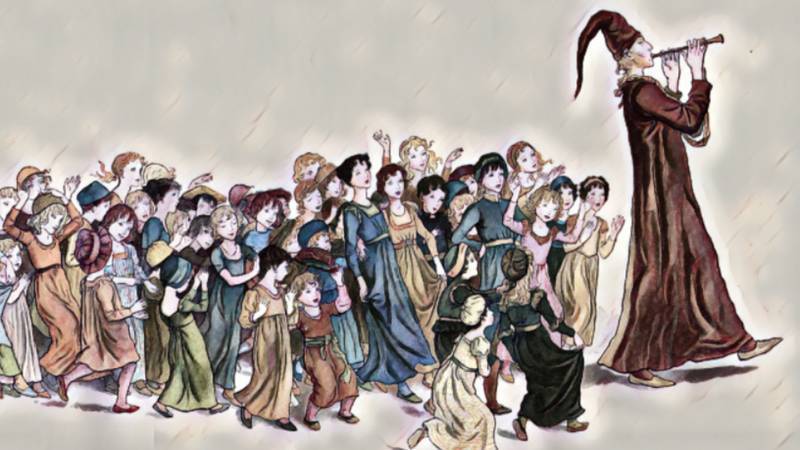
A late-night Facebook post — a passing thought on how democracy, once a promise of reasoned governance, now eroding under the influence of mass manipulation — sparked swift and thoughtful responses from followers and friends. That exchange compelled me to reflect more deeply: have we begun to betray the very spirit of democracy we once cherished?
Across the globe, intellectuals will soon discuss — if they are not already — the bitter irony that democracy, once founded on the noble principle of “collective wisdom”, has had its foundations shaken by populist governments stemming from “collective stupidity”. In an age where loudness is mistaken for leadership and popularity for merit, the very progress that once carried humanity from the tyranny of monarchs and dictators to the ideals of liberty and representative governance now stands at risk.
Democracy was never meant to be a popularity contest. At its philosophical core, it was a system designed to reflect the reasoned will of the people, not the loudest among them. The first democratic council in ancient Rome, the Comitia Centuriata, was built on the idea that governance should be an exercise of informed debate and thoughtful decision-making. Though not open to everyone, with bias in favor of the rich men, the goal was clear: to create a shared space for responsible citizenship and wise decision-making. Decisions were meant to be slow, deliberate, and argued out, not tweeted in haste and applauded by mobs.
Today, we see a very different picture. From the United States to Brazil, from India to Hungary, democracy is increasingly being hijacked by those who prioritise emotion over reason, identity over policy, and slogans over substance — exploiting public fears and biases rather than guiding collective wisdom. Though elected, such leaders often reflect the crowd’s anxieties more than its aspirations, turning democratic mandates into tools of manipulation. For instance, the election of leaders who deny minority rights, dismantle institutions, glorify conflicts and criminalise dissent — all in the name of "the people." In many of these cases, intellectuals, minorities, and dissenters are dismissed as “enemies of the nation.” What was once a marketplace of ideas has now become a battleground of noise?
Revisiting democracy does not mean diminishing the stake of the common citizen; rather, it means refining the systems through which those stakes are exercised
Pakistan is no exception to this global shift. In recent years, political discourse has grown increasingly polarised, social media has turned into a weapon of influence, and reason has been sidelined at every turn. Time and again, we’ve seen how shallow charisma often triumphs over sheer competence.
As populist democracy rises, institutions grow weaker due to constant interference, which ultimately harms public services — especially justice — since such leaders thrive on conflict, not consensus. It is not democracy that is failing — it is our understanding of it that has faltered.
This moment calls for a return to a timeless distinction: governance can be entrusted to the wise who are not popular, but not to the popular who are not wise.
History reminds us of this. Socrates was executed by a democratic Athenian jury, not because he was wrong, but because he was unpopular. Julius Caesar rose to power by appealing to the masses against the Roman Senate, ushering in the fall of the Roman Republic. Centuries later, Hitler too came to power through democratic elections. These are not just historical footnotes — they are warnings etched in the very bones of political philosophy.
These examples reveal how even democratic systems, when driven by unchecked emotion and populist fervor, can sideline wisdom and empower the dangerous.
We must ask ourselves: have we replaced the "informed citizen" with the "influenced consumer"? Are we now choosing leaders not based on their ability to govern, but their ability to go viral?
This shift in citizen psychology — from engagement to entertainment — has paved the way for deeper distortions in how truth itself is received and rewarded.
The digital age has collapsed the distinction between truth and trend. In this new reality, the wise are drowned out by the loud, and the nuanced is overrun by the meme. The very architecture of democracy — debate, deliberation, and dissent — is being replaced by algorithms of outrage.
But it is not too late. The first step is to reclaim the idea that democracy is not just about voting, but about knowing. About investing in education, civic responsibility, media literacy, and critical thinking. About teaching our children that disagreement is not disloyalty, and that governance is a duty — not a theatrical performance.
We must also have the moral courage to accept that the most competent leaders may not be the most charismatic, and that applause is not the only measure of achievement. The best decisions often require the courage to stand alone against popularity, not with it.
This moral clarity must now extend beyond individuals to the systems we uphold.
It is time to return to a democracy that is not just of the people and by the people, but also for their better selves. The time has come for thinkers, reformers, and global institutions to pause and ask: if democracy is to remain the guiding framework of our age, then who is ensuring its soul is intact? If we truly want to make this planet a more livable place, we must not remain passive spectators. We need urgent, meaningful interventions to revisit, reform, and reinforce the democratic idea.
Yet in calling for a reinvention of democracy, we must not misinterpret reform as elitism. Revisiting democracy does not mean diminishing the stake of the common citizen; rather, it means refining the systems through which those stakes are exercised. A healthy democracy must empower its people not just to vote, but to choose wisely, ensuring that the public will uplift society rather than letting biases, fears, or momentary frustrations sabotage its long-term progress. The voice of the people must remain central, but it must be informed, reflective, and anchored in shared responsibility.
Governance must once again become the serious, thoughtful, and visionary endeavor it was always meant to be — not a spectacle of slogans, but a pursuit of substance.