

“Appreciation is the highest form of prayer, for it acknowledges the presence of good wherever you shine the light of your thankful thoughts.”—Alan Cohen.
The air of disappointment and overall atmosphere of depression are so profound that even the slightest whiff of some work well done provides an inlet of freshness. A few precious moments of positivity are sufficient for the optimists to exude confidence in a promising future for the people of Pakistan. Unquestionably, the public feels betrayed by the outcome of the 2024 elections whereafter it is forced to accept a government that was practically forced upon it but perhaps this kind of anomaly is the hallmark of politics in today’s world. It seems that gradually, matters related to governance in many countries are hitting rock bottom, a sure sign of marked improvement in its aftermath.
Since hope is never lost, one should borrow a bit of appreciation from the intense spurts of criticism that are hurled at the existing socio-political systems of our beloved country. Taking a cue from Oprah Winfrey’s statement: “Be thankful for what you have; you'll end up having more. If you concentrate on what you don't have, you will never, ever have enough,” these lines are meant to show gratitude to the present set-up for taking concrete measures about an urgent business that needed immediate attention, from the day it started—waste management.
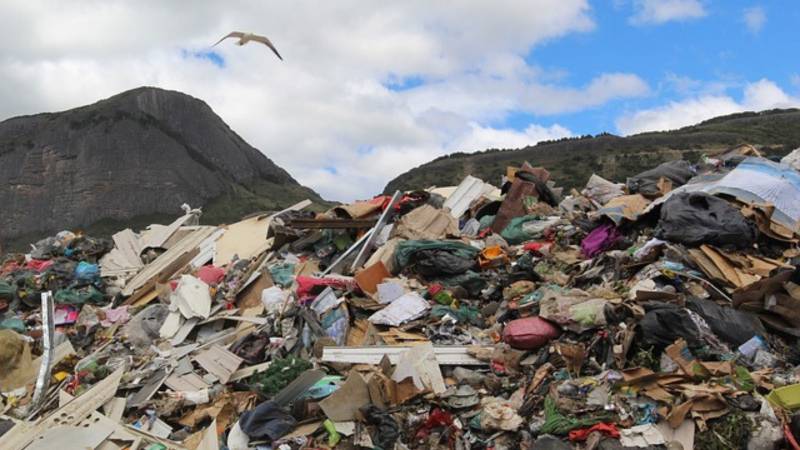
According to a news report the caretaker government called for a feasibility study for converting Mehmood Booti landfill into a solar park and recreational grounds. The “Clean Punjab” project of the incumbent chief minister Punjab is an outcome of this initiative.
Just a reminder that 1998 was the year when the first seed of the mammoth Mehmood Booti landfill, near Lahore Ring Road was sown. Spread over 42 acres, this site became the dumping ground for millions of tons of rubbish generated by Lahoris every day. This landfill, which reached a towering 80 feet level was eventually closed down in 2016 but not before it had forced out many residents living in its vicinity because of the unbearable stench and constant emission of the poisonous methane gas that is known to be much more destructive than carbon dioxide.
The news report further elaborates that this gas is intended to be converted into reusable energy through an investment of five billion rupees (a prudent expenditure indeed). Additionally, under the United Nations Framework Convention on Climate Change (UNFCCC), carbon credits are expected to bring in substantial revenue as companies or individuals can purchase them to offset their emissions thus paying for projects intended to reduce emissions in other regions.
One can only pray that the government remains steadfast in its attempts to manage waste disposal and that the public too cooperates by rationally separating garbage to facilitate authorities rather than cause them circumventable trouble
Besides gas extraction, there is a plan to develop a solar park on 11 acres of land that is expected to generate 5 megawatts of electricity while the 31 acres around it would be converted into an urban forest greatly needed to improve the fast-deteriorating climatic conditions of the city. A BBC documentary highlights the principal features of this project. It is heartening to learn that what was considered as garbage can be a source of economic benefit, health, and joy for the denizens of this city and its surrounding areas.
Collaborating with the Government of Punjab, the Lahore Waste Management Company and Ravi Urban Development Authority (RUDA) are overseeing this project. Here again one cannot emphasise more on the fact that in Pakistan more public-private partnerships are required for rapid development and effective execution for providing the public with a better quality of life. The out-of-control increase in birth rate calls for serious steps to improve the delivery of services necessary for a predominantly urbanized population as more and more people migrate to the cities from villages in search of livelihood.
Some of the large European cities have huge tracts of forests with hiking trails and other facilities that provide people with access to nature while dwelling in concrete jungles. For example, in Berlin, the capital city of Germany, Grunewald Forest is 7,400 acres of green area and almost a third of the city comprises lakes, forests, parks, etc. Our capital city Islamabad too, once boasted of a remarkable green belt that has now completely disappeared giving way to the Seventh Avenue road cutting right across and destroying the city’s true character. One hopes that after demolishing this natural landmark, the Capital Development Authority will plant more trees to compensate for this loss.
The awakening of the government in Punjab to an important issue is highly appreciated. Better late than never! An upcoming new landfill is now in progress located at Lakhodair which is 5 Km from Mehmood Booti but here the Clean Lahore Company’s website claims that especially created two cells LOT-I and LOT-II, have become the first-ever scientific disposal facilities that would help to take care of 2000 to 2500 tons of solid waste per day. This would be imperative in preventing contamination of groundwater and soil on account of landfills and also prove that whenever new measures are undertaken, they must be checked for ensuing after-effects and their proper handling.
Meanwhile, people should independently and consciously work towards reducing the piling up of rubbish by resorting to recyclable materials. Perhaps the older generation has lost its vitality to live with their no-care attitude, but members of the new generation appear more inclined to make this world a better place to live. Another BBC documentary made way back in 2016 shows a ten-year-old entrepreneur Zymal Umer working hard to make and sell bags out of bio-degradable newspaper to avoid the use of cellophane. At that time, she caught the attention of the international media which gave her ample publicity in the hope that more would follow suit.
One can only pray that the government remains steadfast in its attempts to manage waste disposal and that the public too cooperates by rationally separating garbage to facilitate authorities rather than cause them circumventable trouble