

“A rumour can travel halfway around the world while the truth is still putting on its shoes”
Mark Twain
The times surrounding the Partition of India in 1947 were uncertain and scary. We lived in Peshawar where there was absolutely no danger of any violence committed against the local people. This was not true of violence committed against the non-Muslim population of Peshawar by the locals. Setting fires to Hindu and Sikh properties was a common occurrence, and so was occasional stabbing and killing of non-Muslims.
It was towards the end of August 1947 when most of the Hindus and Sikhs had been repatriated from Peshawar to India that a rumour started making rounds of the city to the effect that armed Sikhs paratroopers had landed just outside the city and were poised to invade the city. It started when someone mentioned casually that groups of armed Sikhs were seen in one part of the city. When the rumour spread, it became more specific. There were a whole squad of Sikhs paratroopers who parachuted just outside of the city and were now marching towards the city.
One less-gullible man asked the man spreading the news if he had seen the Sikhs himself. “Yes,” retorted the rumour-spreader, “I saw them with my own sinful eyes marching towards Kabuli Gate.” Once an eyewitness account was attached to the rumour, it became more credible.
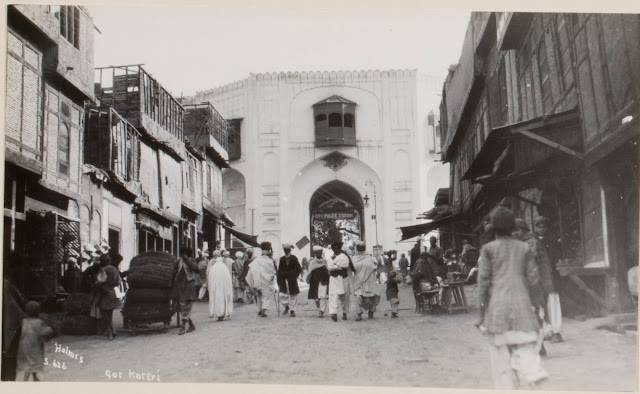
No one asked or thought how was it possible for hundreds of armed Sikhs to parachute in an urban area and then head for a city centre. After all, Peshawar is almost 300 miles from the Indo-Pak border. But when rumours start, they acquire more legs and more speed, and leave logic and reasoning in the dust.
The whole city was in a state of panic. Shopkeepers closed their shops and ran home to safeguard their families and their possessions. Traffic in the city came to standstill.
Our family also panicked. The neighbours gathered in our hujra and planned how to stop the Sikhs from entering our mohalla. Various proposals were entertained; none were practical. There was talk of blocking the street with stacked up charpoys and other sundry furniture. Much later in life, I realized that such a tactic was commonly used in some of Western movies where people in a small town erected barriers to stop the invading marauders from looting and pilfering the town.
That proposal was struck down because of difficulty in procuring enough charpoys.
In the meantime, in our house, the womenfolk were having their own ideas to fight the invading Sikhs. They collected whatever heavy objects they could gather and brought them to the large room overlooking the street. The idea was to rain those objects on the invaders as they passed in the street from the large windows on the second floor. They included poles and legs from old charpoys, stone mortars and pestles, old metal suitcases, and buckets filled with water.
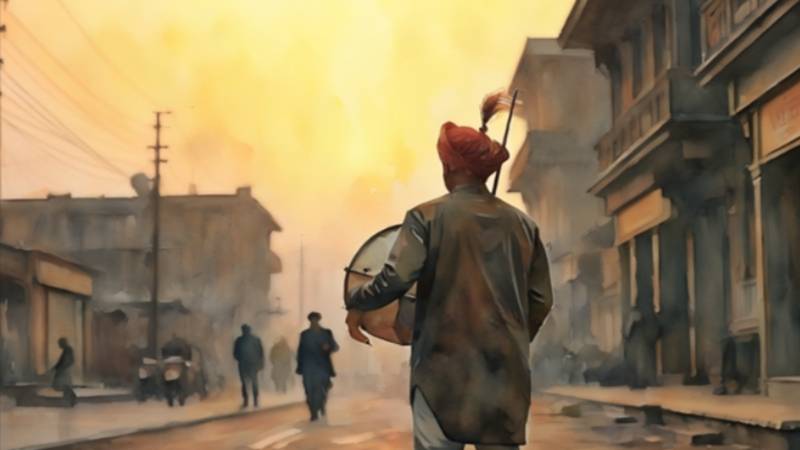
They decided to hire a number of town criers (dhandorchis) to go about various neighbourhoods and inform people. About half a dozen town criers armed with a drum (dhol) spread through the city
As the young and able-bodied men and women gathered the above-mentioned arsenal, the elderly of the family, all of them women, spread their prayer mats, took out the Qurans and started reading the holy book to ward off the impending disaster.
In the meantime, young boys and men went about the main street and side alleys to make sure the neighbourhood was secure.
It was mid-afternoon of a hot August day, and no one knew what was happening. The original rumours of armed Sikhs multiplied and metastasized, adding layers of certainty and eyewitness accounts.
The city fathers met in the municipal building bear Chowk Yaadgaar to discuss the matter. They had no credible account of any invasion. A few phone calls were made to various police stations in the city, and the reports were also negative. They faced the dilemma of how to reach people in the city to allay their fears. Newspapers were not able to provide information because they were published in the morning. They could have used radio announcements, but at that time, not many households had radios. Portable loudspeakers were not available. Television was at least 10-15 years away.
They decided to hire a number of town criers (dhandorchis) to go about various neighbourhoods and inform people. About half a dozen town criers armed with a drum (dhol) spread through the city. They would beat on the drum to get the attention of the people. They went through various mohallas of the old city to announce that there was no truth to the rumours that Sikhs had invaded the city. That brought a sense of calm to the city.
Slow-moving earthquake
The following incident happened about 20 years ago during a particularly harsh winter. An imam announced to the congregation in Peshawar that Afghanistan was struck by a massive earthquake that had flattened the city of Kabul, and that it was moving towards Peshawar. He advised people to leave their homes and head to open spaces, either within the city or to the pastures just outside the city walls.
The news spread like the proverbial wildfire. Those who had cars, got their families packed in cars and headed for open spaces outside the city. Those who did not have their personal transportation took off on foot.
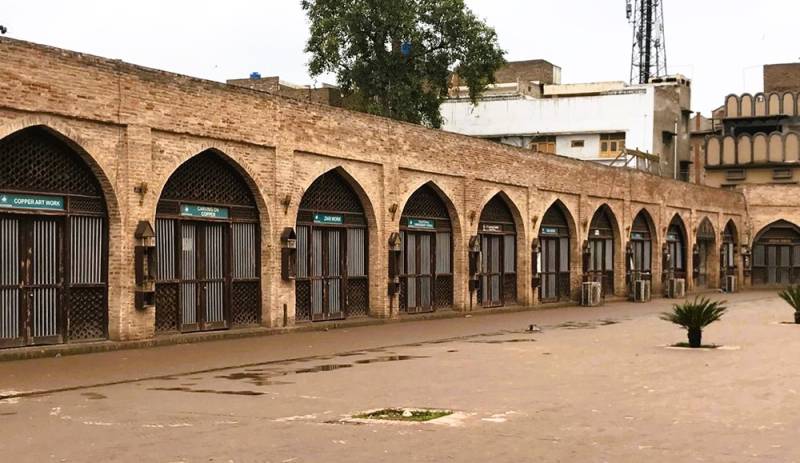
Gorkhatri is a small fort located on a low hill in eastern part of the city. It has open spaces within its walls. People made bee lines towards the fort. Some were carrying blankets, others carrying their disabled parents on their backs.
And as if fleeing their homes in bitter cold was not enough, it started to rain. People were under the open sky with no protection from the cold and rain. According to eyewitnesses, it was a surreal scene. Babies whimpering, children crying, people shivering and muezzins chanting the call for prayers from the mosques, not to invite people for prayers but to ask God’s mercy. This went on for a whole night, with rain coming down at intervals.
It was at dawn that muezzins again took to the minarets and called for early morning prayers. The mosques were filled. People did not mind lining up on the wet pavement to pray and beg for God’s mercy.
At daybreak, most people realized that it was a hoax. People started walking back to their homes after spending a miserable night in the open.
At the bottom of both incidents – Sikhs invading the city and massive earthquake coming towards Peshawar – were hoaxes.
All it takes a charismatic person and a gullible public to believe the impossible. The Sikhs could not under any circumstance land in Peshawar. And if they did, what would they be accomplishing?
Similarly, a large earthquake does not travel at the speed of a slow-moving camel.
Under those circumstances logic takes the back seat to fear and uncertainty.