

Recently President Zardari delivered his speech in the house on March 9 and called for unity to revive the economy and strengthen democracy and the rule of law.
As good and ideal as it sounds, the situation on ground is not depicting any unity. Unless you take all stakeholders on board including PTI, you cannot steer the country out of so many ailments including the scourge of terrorism singlehandedly.
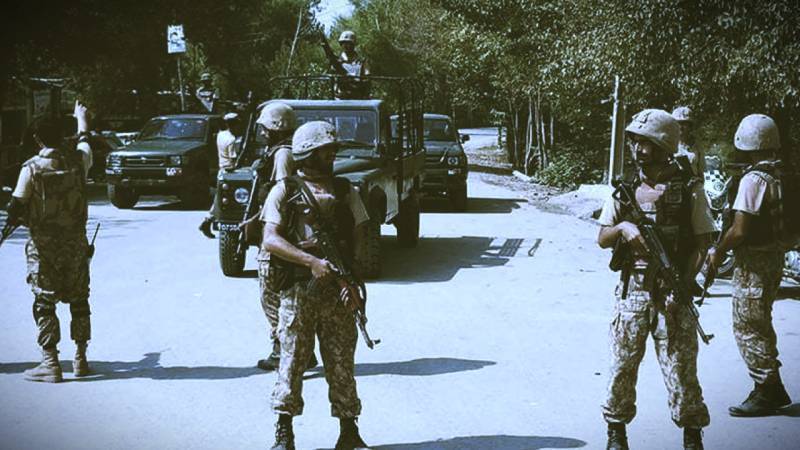
KP is facing terror acts every day and as it appears the provincial government is pulling in an opposite direction than that of the federal government, the military is fighting the terrorists but cannot do it alone without a unanimous approach to have clear objectives and as it is evident from the tug of war between the province and the feds that this is not happening.
A similar grave situation has been seen in Balochistan for a very long, with increased terror activities and insurgency, this province has also been a victim of neglect for a long time and the power corridors are still not realising the daunting fact that using force only is not the answer, our armed forces are so consumed within the country that it could become detrimental to the country’s outer defense in case of any aggression, which is still a cause of concern at the Pak-Afghan border.
Afghans are already battle-hardened and could drag any conflict with Pakistan into a long and hard-fought fight at their whim, with more death and destruction ensuing.
We also have to show respect in recognising and respecting the unique cultural identity of the Baloch people which can further foster a sense of belonging and unity
The Jaffer Express train attack happened just after two days of the President calling for unity. Pakistani leaders should start honest, neutral, and fair talks with the disgruntled elements who have not taken up arms from Baluchistan They should also be pursued rigorously, after all, Balochistan is a part of Pakistan and deserves rightful treatment as other provinces, even a preferable treatment is not a bad idea, considering the suffering and hardship faced by the people of Balochistan, despite being a natural resources, and earth mineral-rich province, it does not get that importance in the larger equation of the country.
When this negotiation attempt is made, it should be made by the civil administration with the backing of the military and security establishment and those grass-level Balochistan leaders should be engaged who have their hands on the nerves of ordinary Baluchis and who are acutely aware of the public mood, concerns, and sentiments. It is enough with the engagement with feudal lords, the tribal leaders, the sardars, and the elite of the province, they could never understand the sentiments of ordinary people.
Governments are made to protect the poor from the high and mighty and from the privileged elite, if you talk to the elite, they will not be able to work for the benefit of the poor class. The approach should change.
It appears that the time is up, especially after the brazen train hijack in which also middle and poor middle-class people travel and they have suffered in the holy month of Ramadan.
The President, being a symbol of federation, should take some practical steps rather than only doing lip service and call upon all stakeholders to sit together for peace in the country and make the country stronger in the face of the changing landscape of the region as well as the entire globe.
One admits that the challenges in Balochistan are deeply rooted in political, economic, and social grievances and that addressing these issues requires a multifaceted approach by empowering local leadership and ensuring fair representation in governance which can help bridge the disconnect between the federal government and the people of Balochistan. We are already investing but the funding needs to be channeled to go to building infrastructure, as the Jaffer express incident once again showed us that many areas of the province present a look of medieval times. Other areas are education, and healthcare while ensuring that the province's natural resources benefit its residents and can help reduce poverty and the increasing resentment.
We also need strengthening of the judicial system and ensuring accountability for human rights violations which can build trust among the people. We also have to show respect in recognising and respecting the unique cultural identity of the Baloch people which can further foster a sense of belonging and unity. These steps require commitment and collaboration from all stakeholders, including the government, local leaders, and civil society.