

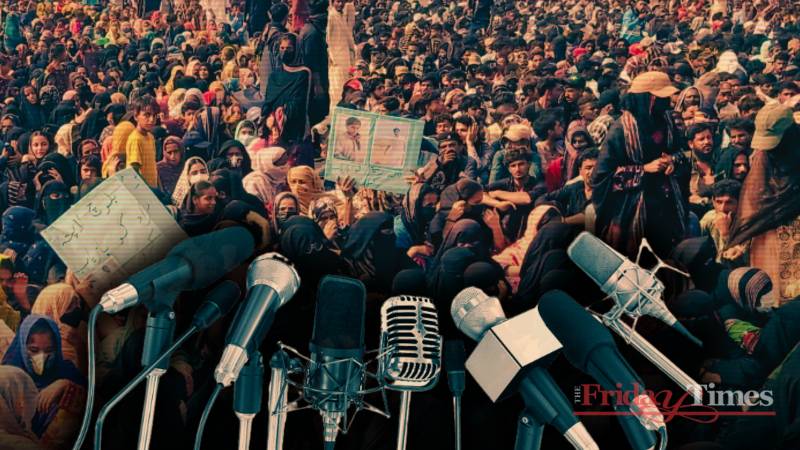
Journalism is often described as the watchdog of democracy. But in many parts of the world, particularly in conflict zones like Balochistan, it is far more than that. Here, journalism becomes a lifeline to the outside world, a fragile act of bearing witness under constant threat. The journalists who choose to tell the stories of Balochistan are not simply reporters, they are survivors, activists, and sometimes, targets.
The rugged province of Balochistan in southwestern Pakistan is home to a complex and deeply rooted conflict. It is a land of strategic importance, rich in natural resources, yet burdened by underdevelopment, ethnic tensions, and a heavy military presence. Journalists covering Balochistan face unique challenges, censorship, harassment, violence, and the omnipresent fear of disappearance or death. Their work is critical not only for the people of Balochistan but for anyone seeking to understand the true human costs of conflict and repression.
Balochistan is among the most dangerous places in the world for journalists. The region is rife with competing powers, state security forces, separatist militants, and criminal groups, each with their own agenda and little tolerance for independent scrutiny. As Daniel Bastard, Former head of Asia-Pacific Desk at Reporters Without Borders (RSF), explains, "Journalists in this region operate under constant threat from multiple fronts. On one hand, they face intimidation and censorship from state authorities, including intelligence agencies that seek to control the narrative and suppress dissenting voices. On the other hand, non-state actors, such as separatist groups, exert pressure through threats and violence to influence media coverage in their favor."
This dual pressure creates an environment of almost impossible complexity for journalists. Bastard points to a particularly chilling example from October 2017, when armed groups issued ultimatums to local media outlets demanding coverage of their activities. "The failure to comply led to attacks on newspaper offices and the closure of several press clubs," he recounts. Such tactics instill a pervasive fear among journalists, many of whom resort to self-censorship just to survive.
The Pakistani government’s response to these threats has often been inadequate. Instead of safeguarding press freedom, authorities have sometimes been complicit in suppressing independent voices. Laws like the Prevention of Electronic Crimes Act (PECA) are frequently wielded to silence critical journalists under vague charges, further shrinking the space for free expression.
John Sweeney, a seasoned British journalist with experience reporting from some of the world’s most authoritarian regimes, puts the risks into stark perspective: "The worst challenge, of course, is the possibility of being killed, and that can happen randomly in a war zone. The advent of drone war and new technologies has made journalists a target." His words resonate deeply with those who report from Balochistan, where journalists are not just observers but potential victims caught in the crossfire.
Tina Carr, Director of the Rory Peck Trust, emphasizes the indispensable role of freelance journalists in conflict zones like Balochistan. "Freelance journalists are being targeted and silenced more than ever in warzones," Carr notes. "This year’s Rory Peck Awards winners and finalists have produced work of the highest quality at a time when freelancers are being targeted and silenced, a testament to their sheer determination, skill, and desire to bear witness and uncover otherwise untold stories."
Freelancers often work without the backing of large media organizations, which makes them more vulnerable to threats, harassment, and violence. Yet their contributions are critical. "Without the work of freelancers, our understanding of the world suffers," Carr argues. "They deserve our recognition, support, and protection."
The Rory Peck Trust was established specifically to support freelance journalists who risk their lives to report from conflict zones. It provides assistance ranging from safety training to emergency medical equipment. Last year alone, the Trust supported over 500 freelance journalists from 30 countries, underscoring both the scale of the problem and the trust’s essential role.
"In regions like Balochistan, where press freedom is severely limited, the role of freelance journalists becomes even more critical," Carr explains. "They are often the only ones bringing stories of human rights abuses and government corruption to light. Their courage and commitment to truth-telling are commendable."
Carr’s words highlight a reality for many journalists in Balochistan, who often work as freelancers due to the scarcity of institutional media presence in the region. These freelancers face not only physical dangers but also economic insecurity, lack of legal protection, and isolation. Yet they continue because their work is crucial for holding power to account and ensuring that the public remains informed.
The consequences of suppressing journalism in Balochistan extend far beyond the journalists themselves. The flow of information from this strategically important but volatile region is vital for both national and international audiences. The lack of reliable reporting undermines public awareness, obscures human rights violations, and hampers accountability.
The Reuters Institute for the Study of Journalism’s Digital News Report (2024) highlights the direct connection between media freedom and political stability. Their findings reveal that in countries where press freedom is curtailed, misinformation fills the void, and public trust erodes. Pakistan’s challenges with media censorship and harassment thus have profound implications for democracy and governance.
Daniel Bastard stresses that Balochistan’s strategic significance and ongoing conflict make it imperative for accurate and independent reporting. Yet, "the current environment makes it nearly impossible for journalists to fulfill their role without risking their lives." This creates a troubling cycle, silenced journalism leads to unchecked abuses, which in turn deepen conflict and suffering.
The international community’s response has been mixed. While organizations like RSF and the Committee to Protect Journalists (CPJ) document abuses and advocate for press freedom, many governments remain reluctant to confront Pakistan over these issues, citing geopolitical interests and security concerns. This leaves local journalists vulnerable and frustrated.
Despite the immense challenges, journalists in Balochistan have developed a range of strategies to continue their work. These include leveraging secure communication tools, forming trusted networks, and collaborating with international media to amplify their stories safely.
The Centre for Investigative Journalism (CIJ) advocates for strengthening these support systems. It emphasizes training journalists in digital security, developing emergency protocols, and creating platforms for sharing verified information. Such measures can mitigate some risks and enable journalists to report more effectively.
John Sweeney’s transition from BBC staffer to independent journalist illustrates another form of adaptation. "Now that I’m freelance, I am more free to choose stories and report without editorial constraints," he says. "But I don’t have somebody that will look after me at the end." His experience highlights both the autonomy and vulnerabilities freelancers face, mirroring those of Balochistan’s reporters.
Furthermore, many Balochistan journalists engage in citizen journalism and social media activism to bypass traditional censorship. Though these tools expose them to digital surveillance and online harassment, they also provide channels to reach broader audiences and document abuses in real time.
The plight of journalists in Balochistan echoes similar experiences in other conflict zones, notably Sri Lanka during its decades-long civil war. Both regions have witnessed severe repression of independent media, targeting of reporters, and systematic censorship.
Archival reports from the British Newspaper Archive reveal that, as in Balochistan, Sri Lankan journalists covering ethnic conflict and military abuses faced threats, disappearances, and attacks. Many were forced into exile or silence. However, international media attention and diaspora activism helped keep these stories in the global spotlight, applying pressure for reforms.
This comparison underscores a key lesson: oppressive tactics against journalists are not isolated phenomena but part of broader patterns of control used by states and armed groups to manage narratives. It also highlights the power of international solidarity and persistent advocacy to protect press freedom.
Beyond statistics and reports, the human cost of reporting in Balochistan is profound. Journalists live with daily fear for their safety and that of their families. Many have been forced to leave homes, abandon careers, or live underground.
These personal sacrifices often go unnoticed. Yet they form the backbone of any hope for transparency and justice in the region.
The voices of Tina Carr, Daniel Bastard, and John Sweeney converge on a common message: the urgent need for coordinated global efforts to protect journalists in conflict zones.
Carr calls for sustained recognition, support, and protection for freelance journalists. Bastard urges the international community to hold governments accountable for press freedom violations.
Organizations like the Rory Peck Trust, RSF, CPJ, and CIJ are critical in this effort. They provide training, legal aid, emergency support, and advocacy. However, these initiatives require adequate funding, political will, and international cooperation to be effective.
Journalism in Balochistan is an act of extraordinary courage and resilience. Reporters and freelancers risk their lives daily to shine light on stories of oppression, conflict, and human suffering. Their work is essential for transparency, justice, and democracy, not only for Balochistan but for the world.
The challenges they face, from state censorship and militant threats to legal repression and economic vulnerability, are immense. Yet, as the testimonies of international experts and local journalists reveal, they persist. The cost of truth is high, but the cost of silence is far greater.
For the sake of human rights, governance, and global understanding, the international community must stand firmly behind these journalists. Their protection is not a matter of charity but of principle, a commitment to the right to know and the power of truth.