

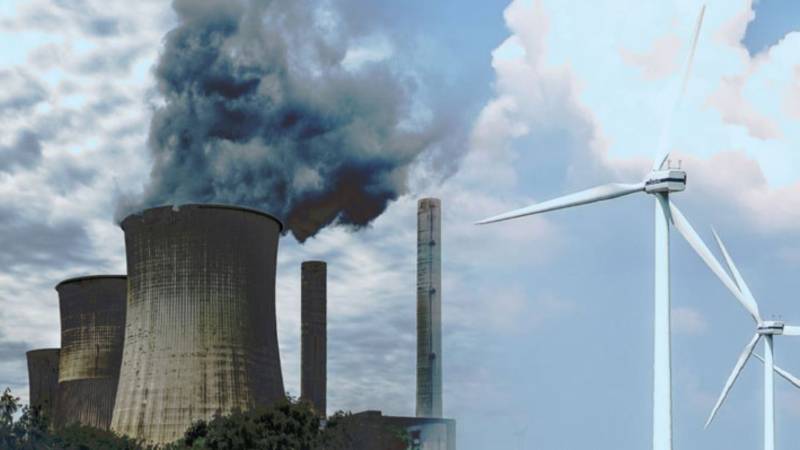
In a time of deepening planetary crisis, Pakistan is doing something few expected from a fossil‑fuel‑dependent developing country: it has become a vocal supporter of, and the first South Asian nation to formally join, the global movement for a Fossil Fuel Non‑Proliferation Treaty (FFNPT). The proposed treaty seeks to end the expansion of oil, gas and coal production worldwide and to help countries transition away from fossil fuels through international co‑operation, financial assistance and technology sharing.
Pakistan’s entry into the initiative in December 2024 was hailed as a turning point. It aligned itself with a bloc of 16 climate‑vulnerable nations—including Vanuatu, Colombia and The Bahamas—and joined more than 120 cities, 3,000 academics and 100 Nobel laureates in calling for a legally binding pact to wind down fossil‑fuel extraction. The vision is sweeping, the ambition historic, but for Pakistan the move raises as many questions as it answers.
On the surface, the timing makes sense. Pakistan is in crisis. The 2022 floods displaced 33 million people and caused more than 30 billion dollars’ worth of damage. The past two summers have brought deadly heatwaves, while glacial melt in the north threatens water security for millions. With climate impacts mounting, the country’s moral and political case for action is undeniable.
Yet a sharp contradiction persists. Pakistan remains heavily reliant on fossil fuels: about 64 per cent of its energy mix comes from coal, oil and gas. While it champions a treaty to end fossil‑fuel expansion abroad, it has quietly approved new domestic coal and gas projects at home, particularly in Thar and Balochistan. This double standard is not lost on energy experts or climate activists.
‘This government talks about climate justice on the global stage but refuses to phase out coal in its own backyard,’ says Sughra Shah, an energy policy analyst based in Karachi. ‘You cannot demand fairness from rich countries and then displace your own communities for coal plants.’
Indeed, while Pakistan pushes for ‘just transition’ financing at international fora, local resistance movements continue to protest against land acquisitions and pollution from domestic extraction. The disconnect between rhetoric and reality suggests the country may be using the treaty to gain leverage in climate negotiations—especially over finance—without committing to deep reforms at home.
That leverage is real. At the Bonn Treaty Symposium in June 2025, Pakistan’s negotiators pressed hard for a grant‑based climate‑finance mechanism, arguing that loans merely deepen the debt of developing countries. With external debt approaching 130 billion dollars, Pakistan is keen to reshape how climate aid is delivered. ‘We are not asking for charity,’ said Romina Khurshid Alam, the Prime Minister’s Climate Co‑ordinator. ‘We are asking for justice—for partnership.’
Justice, however, cuts both ways. If Pakistan wishes to be taken seriously as a leader in the treaty movement, it must confront the absence of a credible national plan to reduce fossil‑fuel dependency. Officials tout solar parks and hydro‑electric projects, yet the pace of renewable‑energy roll‑out remains slow, and fossil‑fuel subsidies persist.
The treaty itself is still in its early stages. Formal negotiations are expected later this year, with a full draft text targeted for mid‑2026. Pakistan will play a key role in shaping sections on debt relief, loss and damage, and just transition. But a core challenge remains: can a country burdened by weak energy governance, chronic political instability and growing fossil‑fuel demand truly lead a treaty designed to phase them out?
Dr Abid Suleri, Executive Director of the Sustainable Development Policy Institute, believes Pakistan’s role is symbolic but significant. ‘This is about shifting the narrative,’ he says. ‘Pakistan may not be ready to eliminate fossil fuels tomorrow, but by stepping into this space it puts pressure on the global system and opens the door to a more equitable energy transition.’
Yet symbolism is not enough. At grassroots level, trust is eroding. Climate‑justice advocates point to the lack of consultation with affected communities, especially in mining zones. Others question whether Pakistan’s elite policy‑makers understand the lived realities of energy poverty, where more than 40 million citizens still lack access to electricity.
Critics also fear that Pakistan’s engagement may be more about securing climate finance and geopolitical relevance than genuine decarbonisation. ‘Let us be clear,’ says one diplomat who requested anonymity, ‘this is as much about optics as it is about emissions.’
Still, there is value in optics—if they translate into action. Pakistan’s leadership in the FFNPT could inspire other South Asian nations, notably Bangladesh and Nepal, to follow suit. Should that happen, the region could emerge as a counterweight to fossil‑fuel heavyweights blocking progress in other climate negotiations.
For now, Pakistan walks a tightrope: balancing climate leadership with energy insecurity, international ambition with domestic contradiction. It has raised its hand in a bold global experiment to end the age of fossil fuels. Whether it becomes a genuine architect of a cleaner future or merely a savvy negotiator in a crowded climate bazaar remains to be seen.
What is certain is this: the world can no longer afford climate diplomacy heavy on speeches and light on substance. If Pakistan truly wants to lead, it must show that its commitments are not merely written in treaties—but etched into the ground at home.